



Bandung, UPI
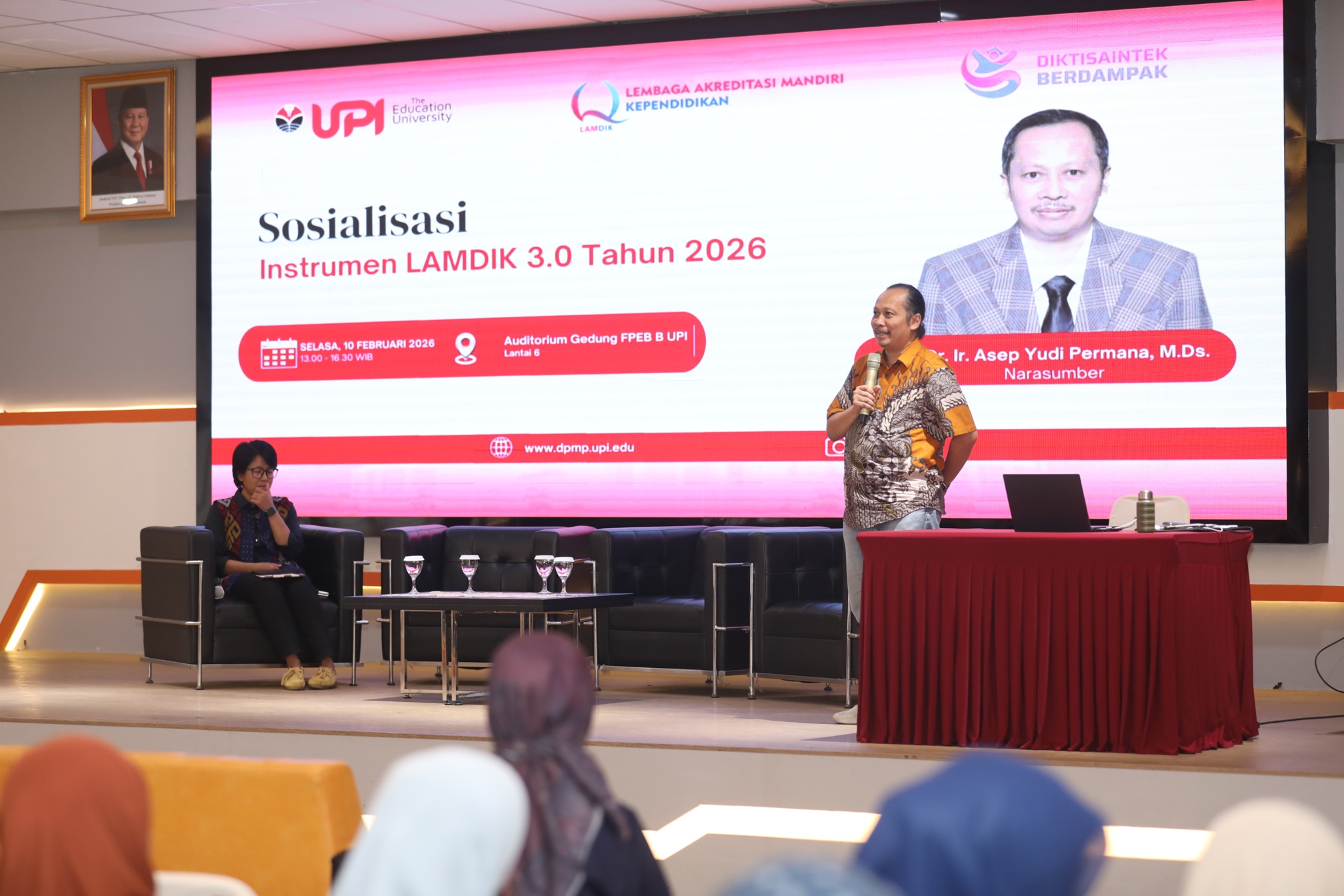
Universitas Pendidikan Indonesia (UPI) has launched a comprehensive socialization of the LAMDIK 3.0 accreditation instruments, preparing its teacher education programs for the latest quality assessment rules that will fully apply from March 2026. The session, held at the FPEB 6th‑floor auditorium on Jl. Dr. Setiabudhi No. 229, Bandung, on Tuesday, February 10, 2026, is a strategic move to ensure all study programs fully grasp the changes, regulations, and scoring indicators in the new framework.
Director of the Directorate of Quality Assurance and Rankings, Prof. Dr. Ratnaningsih Eko Sardjono, M.Si., explained that the LAMDIK 3.0 instruments have been in force since December 2025 and are now in a transition phase before full implementation. Many UPI education related programs currently monitored by LAMDIK are preparing for re‑accreditation as their existing accreditation terms run out between 2026 and 2027, making early familiarity with the new requirements critical.
“Programs must prepare their accreditation documents exactly in line with the latest instrument,” she said. “Therefore, it is essential that faculties and study programs understand in detail the criteria, scoring indicators, and policies embedded in LAMDIK 3.0”.
Prof. Ratnaningsih stressed a crucial new element in the 3.0 instrument: mandatory “must‑have” conditions that must be fully fulfilled. Even if an overall score is high, a program cannot attain the “Unggul” (Excellent) label if any one of these mandatory conditions is missing. “Programs must really internalize this. Don’t end up with a good score but fail to reach ‘Unggul’ because one mandatory item is overlooked,” she emphasized.
She further explained the main differences between the LAMDIK 3.0 and 2.0 instruments. In general, the structure of the assessment criteria and the document format remain largely unchanged. However, under the 3.0 instrument, the “Baik Sekali” (Very Good) category has been removed. Study programs can now only obtain “Unggul (5 years),” “Unggul (3 years),” or “Terakreditasi” (Accredited), depending on their final score and the fulfillment of mandatory requirements.
Through this socialization, UPI aims to push all teacher education programs toward an early mapping and refinement of their performance indicators under the 3.0 framework. Programs whose accreditation windows are still relatively long can use this session as a strategic starting point to design quality‑improvement initiatives that fully meet the new standards.
“Every program must know and implement the indicators embedded in this instrument, so that the ‘Unggul’ status can not only be maintained but also strengthened,” Prof. Ratnaningsih concluded.
By aligning proactively with LAMDIK 3.0, UPI reinforces its commitment to SDG 4 (Quality Education), upgrading internal quality assurance systems and ensuring that its teacher education programs meet and exceed national standards for teaching and learning. (Rija/DN)