



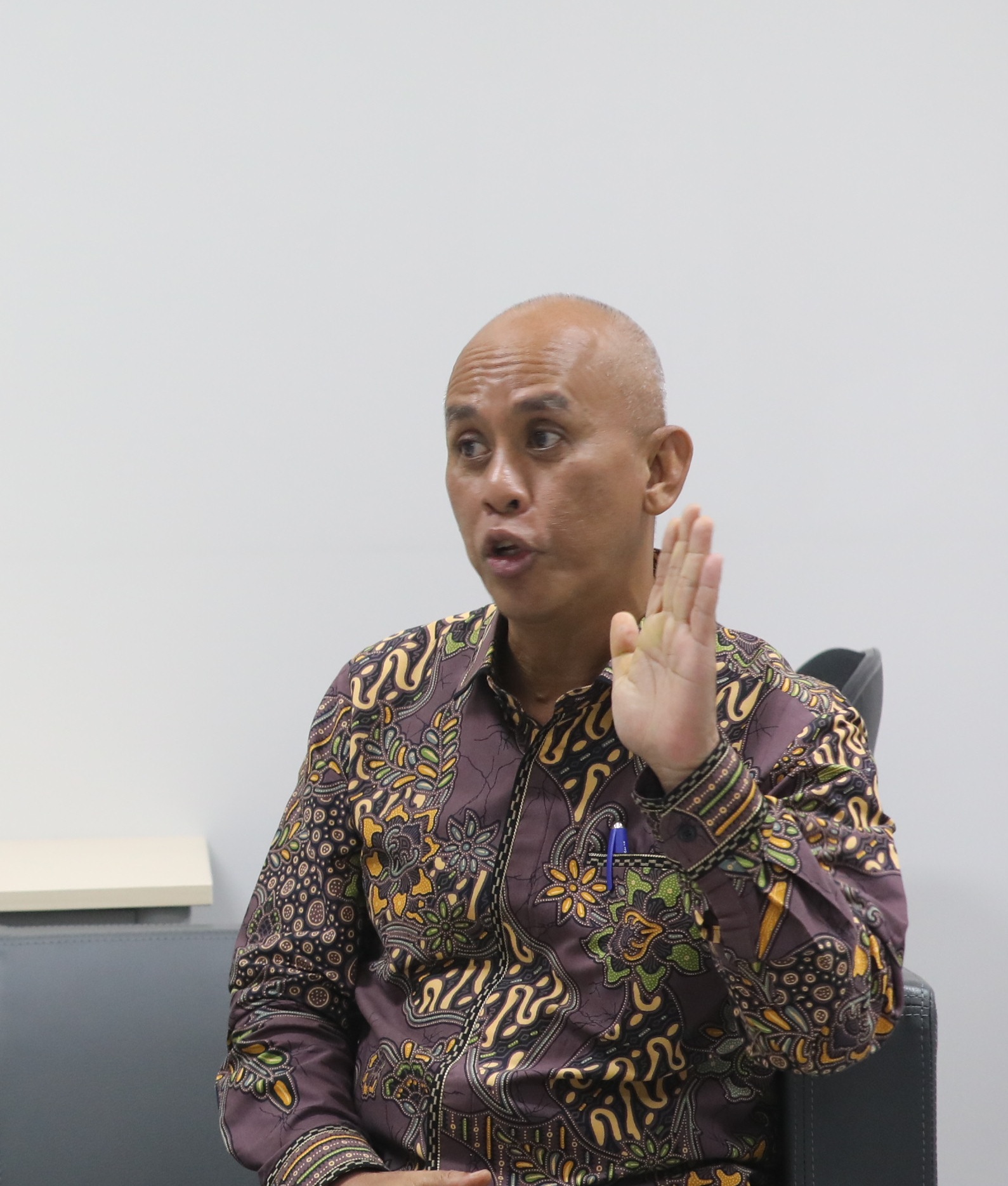
When Syawaludin first walked through the bustling corners of IKIP Bandung in 1993, he was not carrying textbooks or notes in his bag. He was carrying Bangka crackers, ready to be sold. From a narrow lane in Geger Kalong called Gang Cempaka, his path began quietly, almost invisibly. Yet from that modest beginning, he would one day rise to become a Commissioner of the Indonesian Central Information Commission, proving that a life shaped by struggle can also be shaped by purpose.
He entered IKIP Bandung to study Special Education, or Pendidikan Luar Biasa, not because he had long planned it, but because information at the time was limited and he simply made the best choice available to him. Looking back, Syawaludin sees that decision as transformative. In that department, he gained a deeper understanding of equality and human dignity—values that would later guide how he worked, led, and served.
Learning to Survive, Learning to Lead
Life as a student migrant was far from easy. Syawaludin lived in narrow alley called “Gang Cempaka”, near the campus, in a small prayer house that he also helped maintain through religious study groups and communal activities. With limited financial support, he had to think creatively just to stay in school. He did not merely study; he endured, adapted, and built a way forward with remarkable determination.
Each day, he fried crackers and moved from one campus canteen to another, leaving his products on consignment. “My daily routine was selling Bangka crackers. My boarding room was full of crackers,” he recalled. But his entrepreneurship did not stop there. He also started an English translation service, even though he knew he was not yet fluent himself. Rather than treating that as a weakness, he turned it into a network-building strategy, recruiting English students and lecturers and acting as the connector who made the work possible.
At one point, he worked with as many as 20 translators. “I was only the marketer,” he said with characteristic humility. He also sold garlic by cutting out the middleman and supplying bakso (meatballs) sellers directly. In the narrow spaces of Gang Cempaka, Syawaludin created his own ecosystem of survival—one built on initiative, resilience, and a refusal to wait for perfect conditions.
From Rejection to Redirection
After graduation, reality tested him again. He had hoped to become a teacher, but the salary he was offered was only Rp60,000 ($4) per month, far below what he needed to live. The disappointment was real. Yet rather than surrender to frustration, he chose another path. If he could not teach in a classroom, he would teach on a wider stage.
That decision led him into journalism. His entry into the field came not through ease, but through persistence. When a journalism training program at the national tin company (PT Timah) was already full, he still showed up and asked for the chance to join. His determination paid off: he was accepted as the 31st participant. From there, he moved steadily forward, first as a journalist, then as a company leader, and later as a regional election commissioner for two terms.
Eventually, he continued his public service in the Information Commission before earning national selection and taking his seat as Commissioner of the Indonesian Central Information Commission. His career was never simply about titles; it was about consistency, patience, and the quiet discipline of showing up for every opportunity.
Integrity as a Way of Life
Among the principles that have guided Syawaludin throughout his journey, honesty stands at the center. “Honesty is intelligence. People who lie are foolish,” he said firmly. For him, integrity is not an abstract ideal but a daily practice, especially in a role that concerns public trust and access to information.
As a commissioner, he carries forward the spirit formed during his student years, particularly his concern for equitable access to information, including for persons with disabilities. He believes that information is essential to independence. Without it, too many talents remain hidden and too many voices unheard. That conviction reflects the enduring influence of his UPI education, where equality and human values were part of the foundation, not an afterthought.
A Campus That Shaped a Life
Syawaludin still remembers the small acts of kindness and camaraderie that sustained him during his years at UPI. He shared crackers with friends, treated others when he had a little extra, and built relationships that helped him through difficult times. For him, intelligence was never only academic. It was social, economic, and moral.
UPI gave him more than a degree. It gave him principles, a life partner, and even a lasting memory rooted in faith and belonging. He named his child Furqon, inspired by Masjid Al-Furqon, the place where he once prayed and discussed life as a student. In that gesture, the campus became part of his family story, woven into the next generation.
Today, as he looks at UPI’s growth with pride, he offers a simple but powerful message: public trust must be protected through openness. “Transparency is the gateway to trust,” he said. In a time when institutions are constantly tested, his words carry particular weight.
The Power of Small Beginnings
Syawaludin’s life reminds us that greatness does not always begin with privilege. Sometimes it begins with a frying pan, a narrow boarding room, a bag of crackers, and the courage to keep moving. From those early days in narrow-alley accommodationto the national office where he now serves, every step became a lesson in resilience, adaptation, and purpose. His story is a vivid example of how UPI alumni carry the university’s values far beyond campus, transforming hardship into contribution and struggle into service. In his journey, one sees a powerful truth: even the smallest steps can lead to the broadest impact. (VS)