



Bandung, UPI
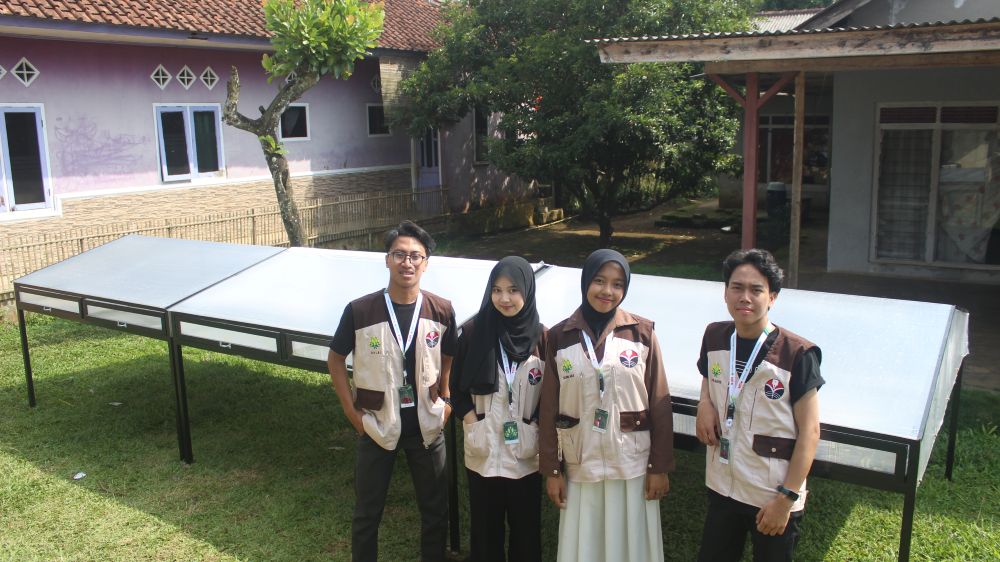
Students from Universitas Pendidikan Indonesia (UPI) have developed a solar-powered cassava dryer named HEATSING (Heating Technology for Singkong) through the 2025 BEM UPI Student Impact Program. The innovation has been implemented in Sukamelang Village, Subang Regency, as part of a community empowerment initiative built around the village’s local cassava potential.
The development of HEATSING marked the culmination of a series of student community service activities, which concluded with a results seminar and the handover of the invention to the village community as a shared asset. The program carried the theme “With UPI, Cassava is Gold,” focusing on strengthening the rural economy through appropriate technology.
Dr. Selly Feranie, M.Si., supervising advisor of the PM-BEM UPI program, explained that HEATSING represents a tangible contribution by students in addressing post-harvest cassava challenges.
“Through this program, students deliver practical innovations with direct impact on society. We hope Sukamelang Village can become more self-reliant with the support of appropriate technology,” she said.
HEATSING is designed as a solar-powered cassava dryer that can continue operating even during cloudy or rainy weather. The device is equipped with an automatic heating system and a battery energy storage unit, allowing the drying process to run more consistently, hygienically, and without relying solely on direct sunlight.
Drying takes place in an enclosed room supported by an exhaust fan to maintain air circulation and prevent condensation. The development process involved Mechanical Engineering Education students from the Faculty of Mathematics and Science Education (Fakultas Pendidikan Matematika dan Ilmu Pengetahuan Alam/FPMIPA) UPI, from design through assembly.
Usep, head of the Sukamelang Village farmers’ group, highlighted the tool’s impact on daily agricultural activities:
“In the past, when it rained we had to rush to move the cassava. Now the drying process can continue, and the results are much cleaner,” he explained.
Beyond saving time, the improved drying quality has increased the product’s market value, offering real economic benefits for farmers.
According to Aep from UPI’s Directorate of Research and Community Service (Direktorat Penelitian dan Pengabdian kepada Masyarakat/DPPM), the program closely aligns with the Sustainable Development Goals (SDGs), particularly SDG 1 (No Poverty), SDG 2 (Zero Hunger), and SDG 8 (Decent Work and Economic Growth). In addition, the initiative supports SDG 9 (Industry, Innovation and Infrastructure) and SDG 12 (Responsible Consumption and Production).
Through the HEATSING innovation, UPI students demonstrate an active role in delivering technological solutions that strengthen rural economic independence while promoting sustainable development. (Ajeng)