



Bandung, UPI
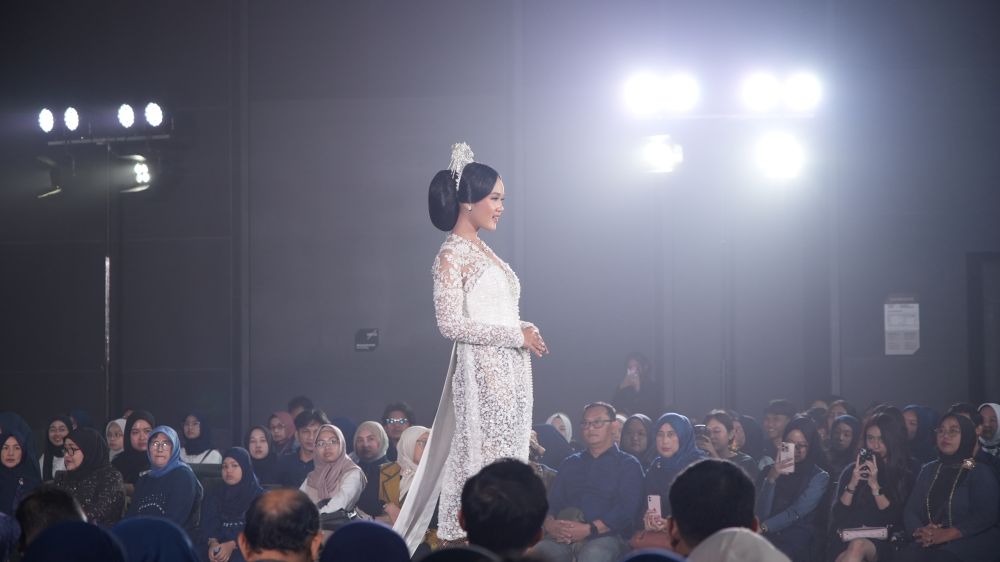
Students from the Fashion Education Study Program (Pendidikan Tata Busana) at Universitas Pendidikan Indonesia (UPI) staged their annual fashion show, Devasana 2026: Evolva, at Cornerstone Bandung on Saturday, January 10, 2026. The event served as a practice based learning outcome and a fashion event project organized by students as part of their event organizer (event management) fashion course.
A total of 54 students, acting as both organizers and designers, presented 57 fashion creations modeled by 30 student models. The show also welcomed external guests, including the Coordinator of Partnerships at Dewan Kerajinan Nasional Daerah Jawa Barat (Dekranasda West Java) and national fashion designer Sonny Muchlison, who attended to appreciate the creative works of UPI’s Fashion Education students.
Head of the Fashion Education Study Program, Dr. Winwin Wiana, S.Pd., M.Ds., explained that Devasana is an integral part of the students’ learning process. “Devasana is the culmination of student learning, where the works presented are derived from classroom outputs in semesters four to six, after students have entered their specialized concentration packages,” she said.
She also noted the distinctive element of this year’s show. “This year’s uniqueness lies in the stronger ethnic nuance, particularly in regional wedding attire, which differs from previous years where Western style bridal looks were more dominant,” she added.
Devasana 2026 showcased a wide variety of fashion pieces, including traditional bridal wear, evening gowns, fantasy costumes, and ready to wear garments. Through the theme Evolva, the show illustrated the evolution of fashion across time, expressed through the students’ creative designs.
By organizing Devasana 2026, the Fashion Education Study Program at Universitas Pendidikan Indonesia continues to encourage students to develop their creativity, technical expertise, and professional readiness in fashion and the creative industry, while also increasing public appreciation for student-designed fashion.
Furthermore, this event supports SDG 4 (Quality Education) by connecting classroom learning with real‑world, creative projects, and SDG 8 (Decent Work and Economic Growth) and SDG 9 (Industry, Innovation and Infrastructure) by strengthening students’ skills for the creative‑fashion industry and promoting innovation in cultural and design based entrepreneurship. (Genda)