



Bandung, UPI
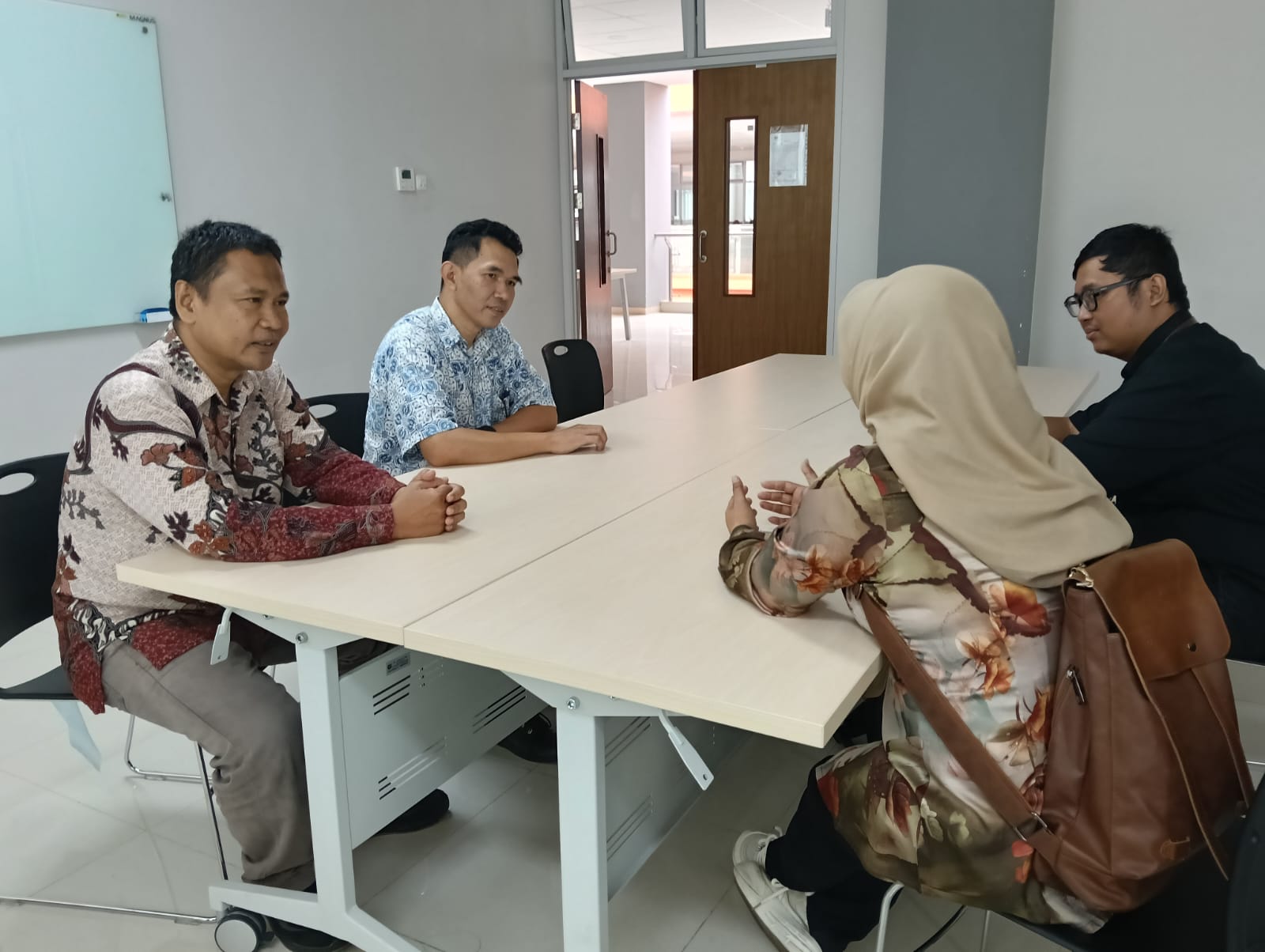
Universitas Pendidikan Indonesia (UPI) held a highly productive Focus Group Discussion (FGD) on Thursday, May 21, 2026, from 13.00 to 15.00 WIB at the Robotics Laboratory on the 7th floor of the FPTI Building. The discussion brought together academics from three different academic units, namely the Faculty of Language and Literature Education (FPBS), the Graduate School (SPs), and the Faculty of Technology and Industrial Education (FPTI), to explore opportunities for interdisciplinary collaboration in developing AI-powered humanoid robots as assistants for English language teaching.
The FGD reflected UPI’s growing commitment to responding proactively to rapid technological developments in artificial intelligence, robotics, and digital education. Participants emphasized that universities, especially educational institutions like UPI, must begin preparing for the future integration of intelligent technologies into classroom learning environments.
The event gathered scholars and researchers from diverse disciplines, including linguistics, computational linguistics, educational technology, artificial intelligence, and robotics engineering. Representing FPBS was Dr. Farida Hidayati, M.Pd. from the English Language and Literature Study Program, whose expertise focuses on Digital Linguistics. From the Graduate School (SPs), Dr. Ruswan Dallyono, M.Pd. from the Linguistics Program shared perspectives from the field of Computational Linguistics. Meanwhile, FPTI was represented by Dr. Erik Hartman, Head of the Industrial Automation and Robotics Education Program (PTOIR), along with Resa Pramudita, S.Pd., M.T., who also contributed insights regarding robotics systems and AI integration.
From the beginning, the discussion was marked by a dynamic exchange of ideas regarding the future of education in the age of AI. Participants agreed that technological transformation is occurring at an unprecedented pace and that educational institutions must actively adapt to these changes rather than merely observe them.
AI and the Transformation of Language Education
One of the central themes discussed during the FGD was the growing role of artificial intelligence in language education. Dr. Farida Hidayati explained that modern language studies are increasingly interconnected with digital technology, machine learning, and human-computer interaction.
According to her, Digital Linguistics provides new possibilities for understanding how language can be processed, analyzed, and taught through intelligent systems. Humanoid robots capable of speech interaction and natural communication may eventually become valuable educational tools in language classrooms.
“Today’s students are digital natives. They are already accustomed to interacting with technology in their daily lives. Educational robots powered by AI may help create more engaging, interactive, and personalized learning experiences,” she explained during the discussion.
She also noted that students often respond positively to interactive technologies because they create a learning atmosphere that feels more dynamic and less intimidating. In the context of English language learning, robots may potentially assist students in practicing speaking skills, pronunciation, vocabulary exercises, and conversational interaction.
Meanwhile, Dr. Ruswan Dallyono emphasized the importance of Computational Linguistics in the development of AI-based educational robots. He explained that creating a humanoid robot capable of natural conversation requires far more than simple pre-programmed responses.
“Natural interaction requires advanced language-processing systems. The robot needs speech recognition, natural language processing, semantic understanding, contextual interpretation, and conversational AI capabilities,” he explained.
He added that one of the greatest challenges lies in enabling robots to understand human communication in a flexible and meaningful way.
“If the interaction is purely scripted, students will quickly lose interest. The goal is to create interaction that feels natural, adaptive, and educationally meaningful,” he added.
Inspiration from China and Finland
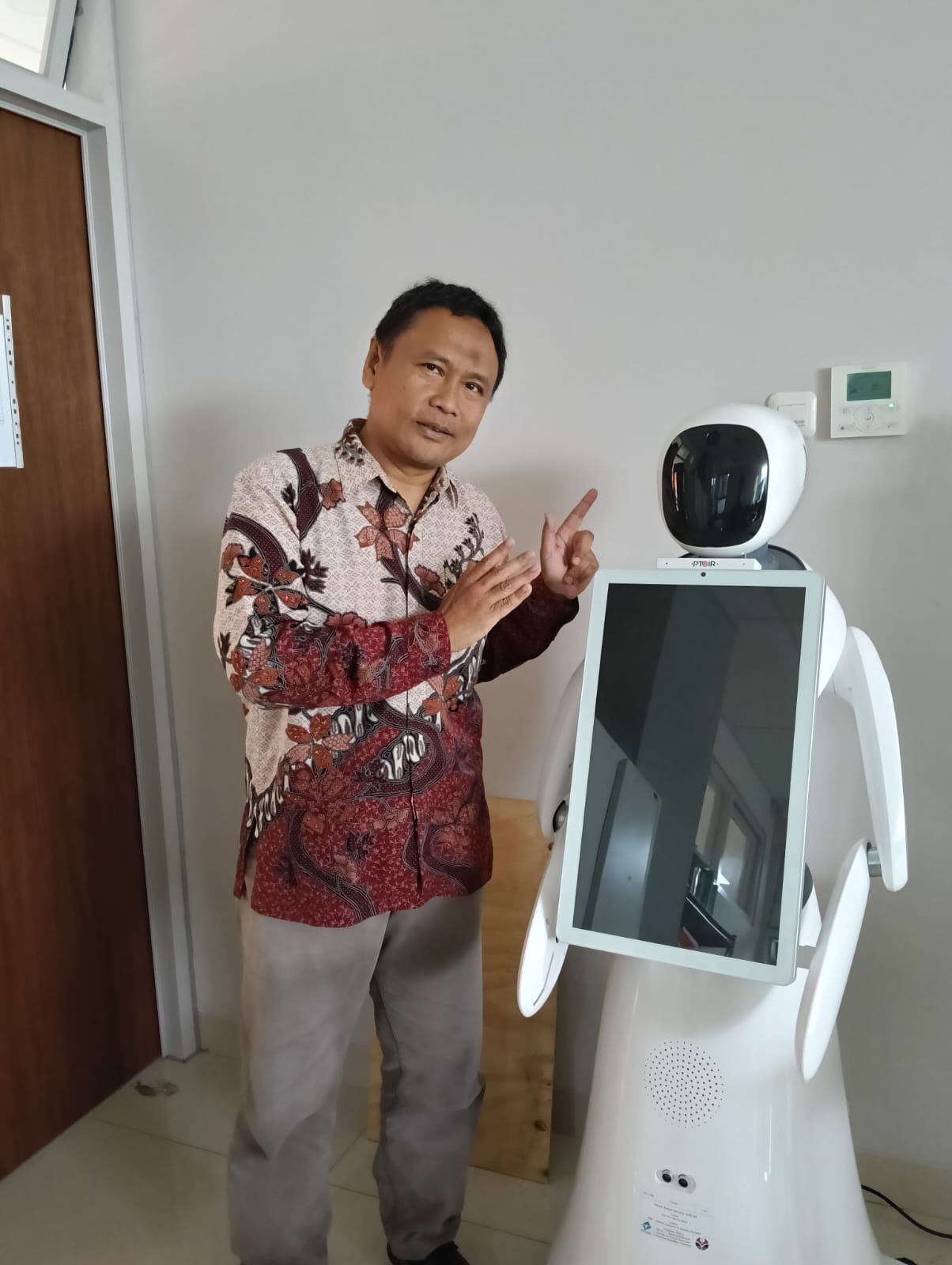
The discussion also highlighted examples from several countries that have begun integrating humanoid robots into educational settings, particularly China and Finland.
Participants discussed how schools in China have started using educational robots in English language learning, mathematics instruction, and STEM education. These robots can deliver instructions, interact with students through simple conversations, assist pronunciation exercises, and provide immediate responses during classroom activities.
Similarly, Finland has explored the use of social robots designed to support personalized and collaborative learning. In Finnish educational settings, robots are often viewed not as replacements for teachers but as complementary tools that enhance student participation and engagement.
The participants agreed that these international developments indicate a broader global trend toward AI-assisted education.
“UPI should not remain passive while educational transformation is happening globally. Universities must become innovators and contributors to future educational technologies,” one participant remarked.
The FGD participants viewed this initiative as an important first step toward establishing interdisciplinary collaboration at UPI that combines expertise from language education, AI, robotics, and digital pedagogy.
The Financial Reality of Humanoid Robot Development
Despite the enthusiasm surrounding the idea of AI-powered humanoid teaching assistants, the participants also discussed the substantial financial and technical challenges involved in such projects.
Dr. Erik Hartman explained that developing a fully dynamic humanoid robot integrated with advanced AI systems is extremely expensive.
“If we are talking about a dynamic humanoid robot capable of natural movement and AI-based interaction, the estimated development cost could reach around IDR 260 million or even more,” he explained.
According to him, humanoid robotics requires integration between sophisticated hardware and software systems, including actuators, motion systems, sensors, computer vision modules, AI processors, microphones, navigation systems, and machine learning infrastructure.
He also pointed out that while Indonesia’s national research funding schemes such as BIMA are very valuable, they are still insufficient for large-scale humanoid robotics development.
“The maximum BIMA research funding of around IDR 150 million is extremely helpful for many projects, but for advanced humanoid robotics, much larger funding is required,” he said.
Because of these limitations, the participants discussed the possibility of seeking support from international funding programs such as Erasmus+ or other international collaborative research grants.
Meanwhile, Mr. Resa Pramudita, S.Pd., M.T. emphasized the importance of designing educational robotics systems that are scalable and adaptable to Indonesia’s educational context. According to him, one of the key challenges in educational robotics is not merely building sophisticated machines, but ensuring that the technology remains practical, maintainable, and accessible for schools and researchers. He noted that early-stage development should focus on modular and experimental robotic systems that allow continuous improvement through interdisciplinary collaboration.
“Technology development must be realistic and sustainable. We should begin with prototypes that are affordable and functional for educational experimentation. From there, the system can gradually evolve into more advanced humanoid platforms,” he explained.
He further highlighted that collaboration between robotics engineering, AI development, and language education researchers is essential for creating educational robots that are not only technologically impressive but also pedagogically meaningful.
The FGD also highlighted the importance of multidisciplinary collaboration. Participants agreed that humanoid robot development cannot rely solely on robotics engineers. Instead, it requires close cooperation between experts in linguistics, AI, machine learning, educational psychology, instructional design, and software engineering.
Starting with Smaller and More Affordable Educational Robots
One of the key conclusions of the FGD was that UPI should begin with smaller-scale experimental projects before attempting to build a fully sophisticated humanoid robot.
Rather than immediately targeting highly advanced humanoid systems, the participants suggested developing affordable educational robots as early-stage prototypes.
Educational and hobby robots currently available in the market generally range from IDR 3 million to IDR 10 million. Examples mentioned during the discussion included coding robots such as TIG and educational robots like Miko.
Although these robots are much simpler than advanced humanoid systems, participants agreed that they could serve as practical starting points for experimentation in AI-assisted language learning.
“The important thing is to build the research foundation first. We can begin with simpler systems to study how students interact with educational robots in language-learning contexts,” one participant stated.
Dr. Ruswan Dallyono added that the linguistic interaction system itself should become an early research priority.
“We can initially focus on conversational AI, speech interaction, and language-processing systems. Once the linguistic model becomes stronger, more advanced hardware can gradually follow,” he explained.
This phased approach was considered far more realistic and sustainable given current financial and technological conditions.
Robots as Educational Assistants
Throughout the discussion, participants consistently emphasized that robots should not replace teachers. Instead, they should function as educational assistants designed to support human educators.
Humanoid robots may offer several practical advantages in language learning environments. They can conduct repetitive speaking exercises without fatigue, provide immediate pronunciation feedback, maintain consistent interaction with students, and create a more engaging classroom atmosphere.
For introverted students or those who feel anxious when speaking English in front of peers, interaction with robots may also reduce social pressure and increase confidence.
Additionally, AI-powered systems can potentially provide adaptive learning experiences tailored to individual student needs and learning progress.
Nevertheless, participants strongly agreed that teachers remain central to education because teaching involves emotional understanding, empathy, ethical judgment, and social interaction that technology cannot fully replicate.
“Teachers remain irreplaceable. Technology should support teachers, not replace them,” Dr. Farida Hidayati emphasized.
Toward Future Research Collaboration at UPI
The FGD concluded with optimism regarding the future of interdisciplinary collaboration at UPI. Participants discussed the possibility of developing collaborative research initiatives involving Digital Linguistics, Computational Linguistics, Robotics, Artificial Intelligence, and Educational Technology.
Potential future projects discussed during the session included: AI-powered speaking assistant robots, automatic pronunciation assessment systems, conversational educational chatbots, social robots for classroom interaction, AI-driven gamified language-learning platforms, and adaptive learning systems based on student linguistic data.
The participants agreed that such collaboration could help position UPI as one of Indonesia’s leading universities in educational AI and robotics research.
Ultimately, the FGD demonstrated that the future of education will increasingly involve interdisciplinary cooperation and technological innovation. By initiating discussions and collaborative planning today, UPI is taking important steps toward preparing for the rapidly evolving educational landscape of tomorrow.
The productive exchange of ideas at the Robotics Laboratory on the 7th floor of the FPTI Building marked not only the beginning of a possible research collaboration but also a broader commitment by UPI to engage actively with the future of AI-driven education. (Ruswan)