



Bandung, UPI
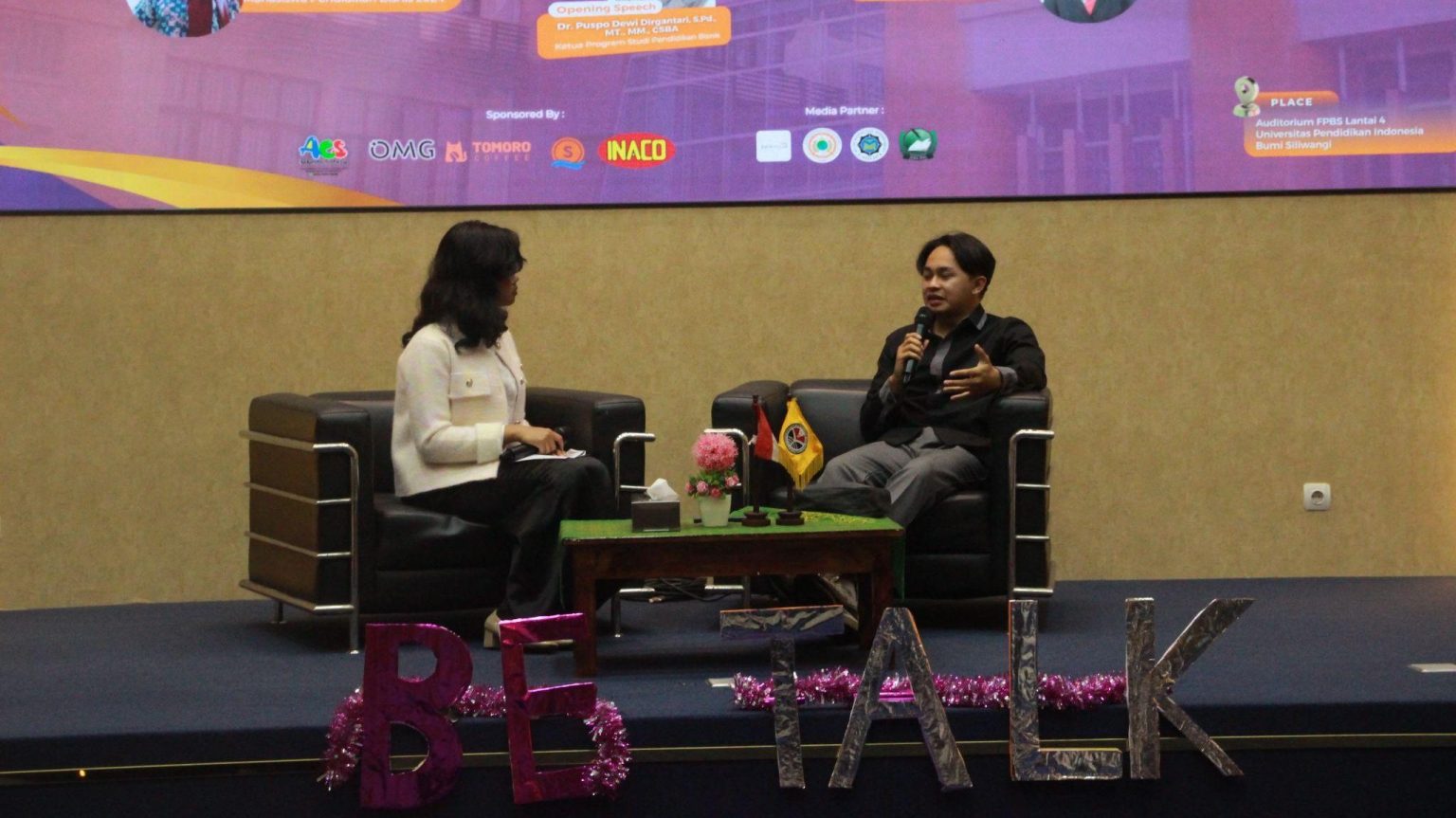
The Business Education Student Association (BESA) of Universitas Pendidikan Indonesia (UPI) invited creative industry practitioners to equip students with insights and practical skills in marketing strategy, branding, and content development in the digital era. The BE TALK 2025 discussion session was held at the Auditorium of the Faculty of Language and Literature Education, UPI, on Tuesday (Sept 30).
The event featured three speakers from the creative and entrepreneurial sectors: Fahrul Fauzi, a content creator from Innovation Heroes; Apina Nahdi, owner of Kylafood and Aksen Coffee; and Azhyra Pinasthika, founder of Arealama and a Master of Management student at Universitas Padjadjaran.
In the first session, Fahrul Fauzi highlighted the importance of creating relevant and valuable content for audiences. He emphasized that digital content is not merely a medium for information, but also a tool to build emotional connections through storytelling.
“Good content is not only informative, but also capable of building an emotional connection with the audience,” he explained.
The second session featured Apina Nahdi, who shared her journey in growing local brands into widely recognized businesses. Through her talk, From Local to Viral, she stressed the importance of consistency and creativity in building a strong brand image. Participants were encouraged to develop promotional ideas that are practical and aligned with their brand identity.
In the final session, Azhyra Pinasthika discussed brand identity and brand storytelling as the foundation for building a resilient brand. She explained that brands must possess authentic values, character, and narratives to survive in the competitive creative industry landscape.
Through BE TALK 2025, students are expected to gain practical knowledge of marketing and digital branding strategies that can be applied in both academic settings and the professional world.
Furthermore, this initiative contributes to the achievement of the Sustainable Development Goals (SDGs), particularly SDG 4 (Quality Education) by providing industry-based learning experiences and practical skill development; SDG 8 (Decent Work and Economic Growth) by equipping students with entrepreneurial and digital marketing competencies relevant to the creative economy; and SDG 9 (Industry, Innovation, and Infrastructure) by fostering innovation and strengthening collaboration between academia and the creative industry. (Ajeng)