



Bandung, UPI
The Bandung Society for Informatics, Electrical Engineering, and Robotics (BSIEER) with the full support from Universitas Pendidikan Indonesia (UPI), once again demonstrated its commitment to interdisciplinary learning by successfully organizing a Modern Web Development Workshop that brought together students from diverse academic backgrounds in an immersive, hands-on experience.
Held from 13:00 to 15:00 at Room 9 on the 4th floor of the FPBS Building, Universitas Pendidikan Indonesia (UPI), the workshop gathered 27 participants from various study programs and institutions, including Universitas Teknologi Bandung and Universitas Komputer Indonesia (UNIKOM). The event reflected BSIEER’s vision of fostering collaboration across disciplines, bridging technology with fields such as linguistics, education, and the humanities.
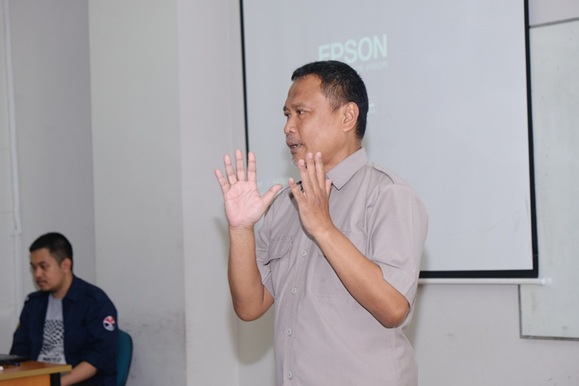
The session was facilitated by Mr. Muhammad Radhi Maulana, a full-stack software engineer and DevOps engineering enthusiast from the Computer Science program at FPMIPA UPI. With a strong emphasis on experiential learning, Mr. Radhi guided participants through a live coding session using Python and the Flask framework. Step by step, he demonstrated how to build a functional website from scratch, while encouraging participants to actively follow along, experiment, and modify the code to suit their own ideas and needs.
The workshop was initiated in response to a growing awareness among students and faculty that digital literacy, particularly in web development, is becoming an essential skill across disciplines. In recent semesters, BSIEER observed increasing interest from non-technical students, especially those in education and language programs, who expressed the need to create their own digital platforms for teaching, research dissemination, and personal projects.
Additionally, the rapid shift toward digital and hybrid learning environments has intensified the demand for educators who can design and manage online content independently. Many students rely on third-party platforms, but lack the knowledge to customize or build their own systems. Recognizing this gap, BSIEER designed the workshop to introduce accessible tools, specifically Python and Flask, that allow beginners to quickly develop functional and customizable websites.
The initiative was also driven by BSIEER’s broader mission to democratize technology and make it approachable for students outside engineering and computer science fields. By offering a hands-on, beginner-friendly session, the organization aimed to reduce the intimidation often associated with coding and to show that web development can be learned and applied by anyone with the right guidance.
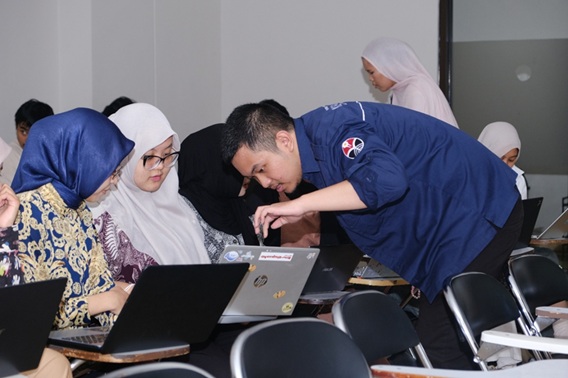
What distinguished this workshop from conventional lectures was its interactive and adaptive nature. Participants were not merely passive listeners; they were co-creators in the learning process. As the code evolved on screen, so did their understanding of backend logic, routing, and dynamic content generation. The opportunity to immediately edit and personalize the code allowed students to see how abstract programming concepts could be translated into practical applications.
The enthusiasm in the room was evident, particularly during the discussion session. Dina, a master’s student in linguistics at UPI, stood out for her active engagement. She raised several insightful questions, including how to integrate Microsoft Excel data into a web application using Python and Flask. Her inquiry opened up a broader discussion on data handling, file processing, and the potential for building educational tools that manage structured data. Mr. Radhi responded by explaining possible approaches, such as using Python libraries to read Excel files and connecting them to web interfaces, sparking further curiosity among participants.
From the undergraduate level, Hasna Salsaabila, a student from the French Study Program at FPBS UPI, shared her excitement about the workshop. She noted that the experience was not only engaging but also highly relevant to her future career as a teacher. According to her, modern educators are increasingly expected to utilize digital platforms, including websites, to deliver teaching materials, interactive media, and even educational games. She expressed that learning how to build a website independently gives her a valuable advantage in designing more creative and accessible learning experiences for her future students.
The event also received strong support from faculty leaders. Prof. Wawan Gunawan, M.Ed., Ph.D., Dean of FPBS, highlighted the importance of integrating digital skills into non-technical disciplines. He remarked that the ability to understand and utilize technology is becoming a fundamental competency for students, regardless of their field of study. He praised BSIEER for initiating a program that equips students with practical skills that extend beyond the classroom.
Ms. Yanty Wirza, M.A., Ph.D., Deputy Dean for Student Affairs, emphasized the significance of student-led initiatives in shaping a vibrant academic environment. She commended BSIEER for creating opportunities that encourage collaboration, innovation, and peer learning, especially among students from different universities and academic backgrounds.
BSIEER President, Mr. Rasyad Hakim, reiterated the organization’s mission to bridge theory and practice. He explained that the workshop was designed not only to introduce technical skills but also to inspire participants to explore how technology can be applied within their respective fields. He expressed hope that such events would continue to nurture a generation of students who are both technically competent and creatively driven.
A member of the BSIEER Advisory Board , Dr. Ruswan Dallyono, M.Pd., also commended the event, noting that the participants’ enthusiasm and engagement were clear indicators of the growing interest in web development and digital skills. The board member expressed hope that such initiatives would inspire students to pursue further innovation and collaboration in the tech ecosystem.
As the workshop concluded, participants left not only with a basic web application they had built themselves but also with a renewed sense of confidence and curiosity. Many expressed interest in continuing to develop their projects and exploring more advanced features in the future.
Through this successful event, BSIEER has once again positioned itself as a catalyst for innovation and interdisciplinary collaboration at UPI. By equipping students with practical digital skills and fostering a culture of active learning, the organization continues to empower the next generation of thinkers, educators, and developers.
Overall, the workshop was met with positive feedback from participants, many of whom appreciated the clarity of the explanations, the relevance of the content, and the opportunity to directly apply what they learned. By the end of the session, students had not only built their own basic web applications but also gained the confidence to continue developing their skills independently.
As the workshop concluded, participants went home not only with a basic web application they had built themselves but also with a renewed sense of confidence and curiosity. Many expressed interest in continuing to develop their projects and exploring more advanced features in the future.
Building on this momentum, BSIEER warmly invites students, aspiring developers, and software engineers to take part in its upcoming workshops and collaborative programs. These events are designed not only as learning spaces, but also as communities where participants can learn from one another, exchange ideas, and grow together in the field of programming. By bringing together individuals from different backgrounds and levels of expertise, BSIEER hopes to cultivate a vibrant ecosystem of knowledge-sharing, innovation, and mutual support in the ever-evolving world of technology. (Ruswan Dallyono)