



KBB, UPI
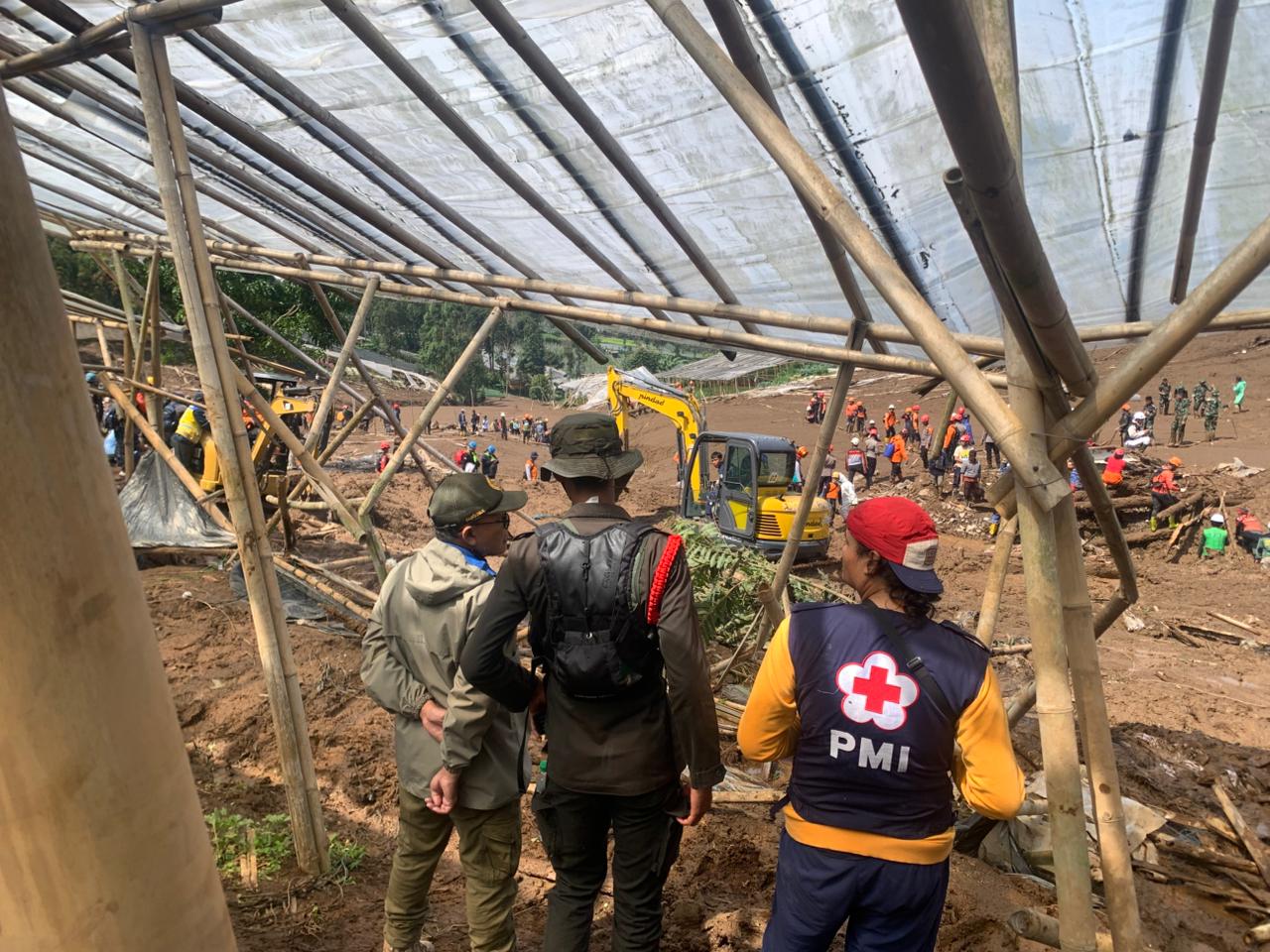
A team of 25 students participating in the Diklatsarmil (basic military training) program of the UPI Corps of Cadets (Menwa) took part in disaster response efforts following a landslide in Pasirlangu Village, Cisarua Sub-district, West Bandung Regency. The volunteer group consisted of 20 students and 5 trainers, who departed from the Menwa UPI headquarters on Sunday, January 25, at 07:30 WIB, arriving at the disaster-response area at 08:30 WIB.
The operation was led directly by the Commander of the UPI Menwa Battalion, ensuring that all activities in the field were well coordinated and carried out efficiently. Once on site, the team was divided into three working units: Field, Command Post (Posko), and Logistics.
Ten male students were assigned to the Field Unit, where they assisted in searching for victims, clearing landslide debris, and supporting evacuation operations. They worked alongside response teams from National Disaster Management Agency of Indonesia (BNPB), National Search and Rescue Agency of Indonesia (BASARNAS), and other volunteer groups. Their participation reflected strong collaboration and solidarity among disaster response actors working to maximize available resources.
Meanwhile, seven female students joined the Command Post Unit, helping with administrative tasks, recording the number of volunteers and affected residents, and assisting with food distribution. The remaining eight female students were assigned to the Logistics Unit, where they supported food preparation at the communal kitchen alongside the General Kitchen Command Post managed by the Bandung City Social Services Agency.
“We’ve received several Menwa UPI volunteers here at the logistics post to help strengthen our kitchen team. The women can assist with food preparation and cooking, while the male students can help with packaging and distribution. It’s flexible, depending on what is needed. Thank you,” said the Head of the General Kitchen Command Post from the Bandung City Social Services Agency.
For evacuation efforts, the Menwa team coordinated closely with the local National Disaster Management Agency of Indonesia (BNPB) to ensure that operations were carried out safely and effectively. With around 300 personnel from various institutions working in the field, the search and evacuation process could be conducted more quickly.
“This is a very positive initiative from Menwa UPI. Even while they are still undergoing basic training, they have contributed 25 additional personnel to support the disaster response. It reflects the spirit of service that Menwa cadets carry,” said Sukendi, a Menwa alumnus, during an interview at the site. “The knowledge and military oriented skills we gain can be directly applied to help the community and create meaningful impact.”
The Commander of UPI Menwa, William Ishaq Juarsyah Gusti N, also emphasized that the experience offers valuable learning for students participating in the training program. According to him, real-world involvement in emergency situations helps students develop quick decision making, teamwork, and coordination skills that are essential in disaster response situations. (DN)
Furthermore, this relief activity contributes to SDG 11: Sustainable Cities and Communities by strengthening local disaster response capacity, supports SDG 3: Good Health and Well-Being through evacuation and community assistance, and promotes SDG 17: Partnerships for the Goals through collaboration between student volunteers, government agencies, and local communities.