



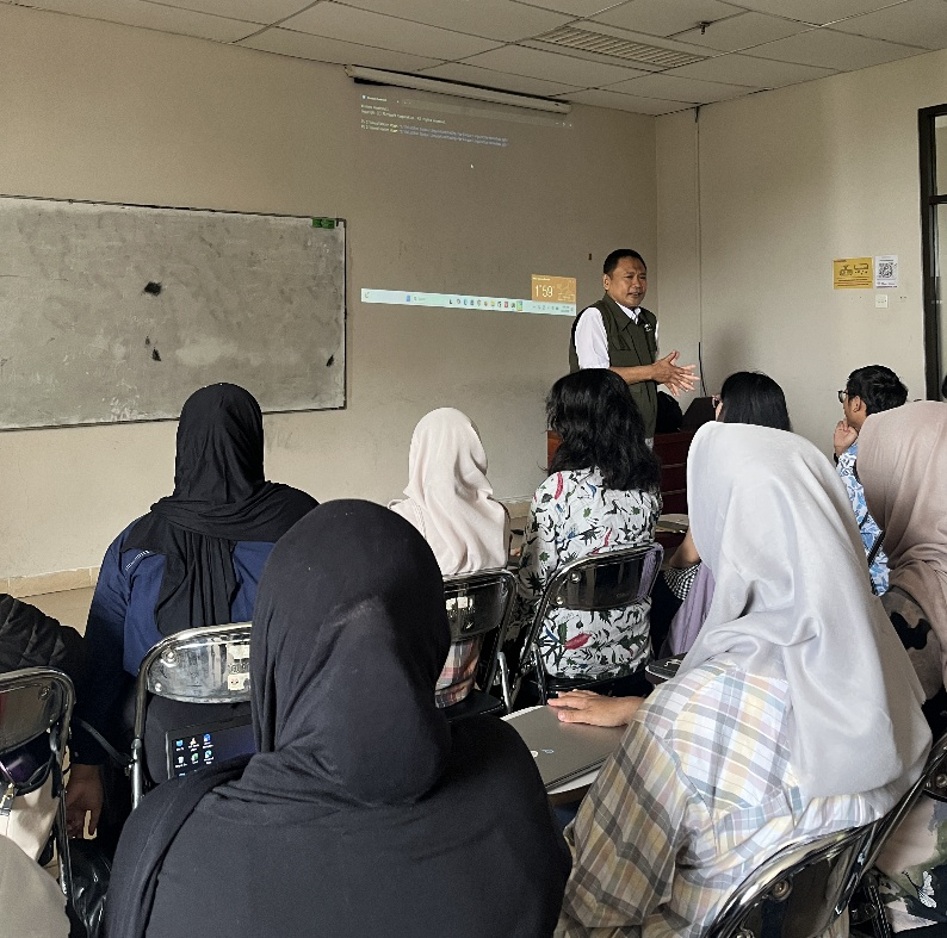
Bandung, UPI
How can computers help researchers uncover hidden patterns in language? How can mathematics and computational methods transform the way scholars investigate communication? These questions were at the heart of a specialized training session organized by the Bandung Society for Informatics, Electrical Engineering, and Robotics (BSIEER) at Universitas Pendidikan Indonesia (UPI), Bandung.
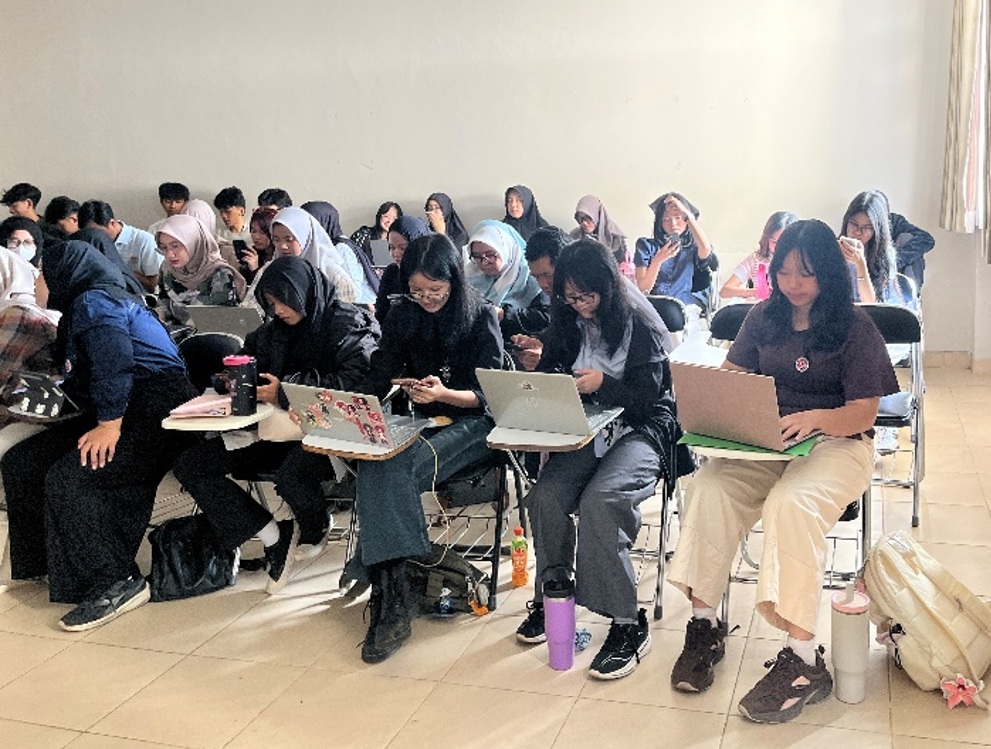
Entitled “Computational Corpus Linguistics: Exploring Language Data Through Computational Methods,” the training brought together 54 participants from the Faculty of Language and Literature Education (FPBS) and the School of Postgraduate Studies (SPs) at UPI. The event took place on October 5, 2026, from 7:00 a.m. to 10:20 a.m. in Room 16, Fourth Floor, FPBS Building.
Organized under the leadership of Alzena Qaddriyah Esta and Keisha Mahya Hazimah, alongside the other committee members—Linda Angelica as the secretary, Fahira Julla Aisha Rahman as the designer and Arsyila Syaza Aurelia as the documenter— led the program that highlighted the growing importance of integrating linguistic knowledge with computational and mathematical approaches. It featured two speakers with complementary expertise: R. Dian Dia-an Muniroh, M.Hum., Ph.D., a specialist in corpus linguistics and forensic linguistics, and Dr. Ruswan Dallyono, M.Pd., whose expertise is in computational mathematical linguistics.
The training reflected an important development in contemporary research: as digital communication generates increasingly large quantities of textual data, researchers need effective ways to organize, analyze, and interpret language systematically.
When Language Meets Computation
Language is everywhere, from newspaper reports and academic publications to social media conversations, literary works, and classroom interactions. These materials offer valuable evidence for investigating how people communicate, construct meaning, and use language in different contexts.
However, analyzing thousands of documents manually can be time-consuming and difficult to reproduce consistently. Computational corpus linguistics offers an approach to addressing this challenge.
Corpus linguistics investigates language through systematically collected bodies of authentic texts known as corpora. Computational methods enable researchers to search, quantify, compare, and analyze linguistic features across these collections.
Researchers can investigate word frequencies, grammatical patterns, recurring expressions, collocations, and differences between genres or groups of texts. Such techniques can reveal patterns that might remain difficult to identify through close reading alone.
Importantly, computational analysis does not replace linguistic interpretation. Computers can identify patterns, but researchers must determine what those patterns mean, whether they are relevant to the research question, and how they should be interpreted within their linguistic and social contexts.
Combining computational efficiency with human reasoning therefore creates new opportunities for systematic and evidence-based language research.
Two Speakers, Complementary Expertise
R. Dian Dia-an Muniroh, M.Hum., Ph.D., from UPI’s Linguistics Study Program, specializes in corpus linguistics and forensic linguistics.
Corpus linguistics provides systematic methods for examining language through authentic textual data. Researchers can use corpora to investigate vocabulary, grammatical structures, discourse patterns, and differences in language use across contexts.
Forensic linguistics applies linguistic knowledge and analytical methods to questions arising in legal and investigative settings. Depending on the evidence and research objectives, this field may involve examining disputed meanings, language in legal contexts, or authorship-related linguistic features.
Corpus-based methods can support forensic linguistic investigations by providing comparative evidence about language use. However, findings must be interpreted carefully, since similarities between texts do not automatically establish common authorship or prove a particular conclusion. Together, these fields demonstrate how systematic language analysis can contribute to both linguistic scholarship and practical applications.
Dr. Ruswan Dallyono, M.Pd., specializes in computational mathematical linguistics, an interdisciplinary field connecting linguistics with mathematics, statistics, and computational methods. This perspective emphasizes the potential of formal reasoning and quantitative analysis to investigate linguistic phenomena. Researchers can use mathematical and statistical techniques to examine distributions, compare linguistic features, investigate relationships, and evaluate evidence.
Programming tools such as Python can support text processing, frequency calculations, statistical analysis, and the visualization of linguistic data. More advanced projects may incorporate natural language processing and machine learning, depending on the research question. Nevertheless, mathematical models and computational tools must be selected carefully. Not every linguistic phenomenon can be adequately represented numerically, and statistical results require appropriate interpretation.
Computational mathematical linguistics therefore connects formal analysis with empirical language research, helping researchers develop systematic methods for investigating linguistic patterns.
From Textual Data to Research Discoveries
The potential applications of computational corpus linguistics extend across numerous academic fields. In media studies, researchers can compare how newspapers describe political events or represent particular social groups. In education, classroom transcripts can be examined to identify patterns in teacher feedback, questioning strategies, and student participation.
Literary researchers can investigate vocabulary, stylistic variation, and recurring expressions across authors or periods. Multilingual researchers can compare grammatical structures and discourse conventions across languages. These applications demonstrate that computational methods can complement established research approaches by providing additional evidence and enabling more extensive comparisons.
A typical investigation may involve collecting texts, preparing the data, selecting relevant linguistic features, conducting computational analysis, and interpreting the results. Researchers must also consider data quality, sampling decisions, and methodological limitations to avoid misleading conclusions. The objective is not simply to process more text. It is to use appropriate methods to answer meaningful research questions.
Computational Corpus Linguistics in the Age of AI
The rapid development of artificial intelligence has further expanded opportunities for computational language research. Natural language processing and machine learning can support text classification, linguistic comparison, information extraction, and investigations of human-written and AI-generated texts.
Corpus-based methods can help researchers evaluate whether AI systems reproduce particular linguistic patterns or perform reliably across different language contexts. However, AI systems can make mistakes, overlook contextual distinctions, or produce explanations that are not adequately supported by evidence. Results therefore require independent evaluation and careful interpretation.
Researchers must distinguish between what the data demonstrate and what an AI system merely suggests. Transparent procedures, reliable datasets, and appropriate evaluation remain essential to responsible computational research. (Linda Angelica)