



Bandung, UPI
What can thousands of words reveal that a researcher might overlook when reading a text line by line? How can artificial intelligence help linguists uncover patterns, investigate language use, and explore questions that once required hours of painstaking manual analysis?
These questions lie at the heart of modern language research, where linguistic theory increasingly meets computational power.
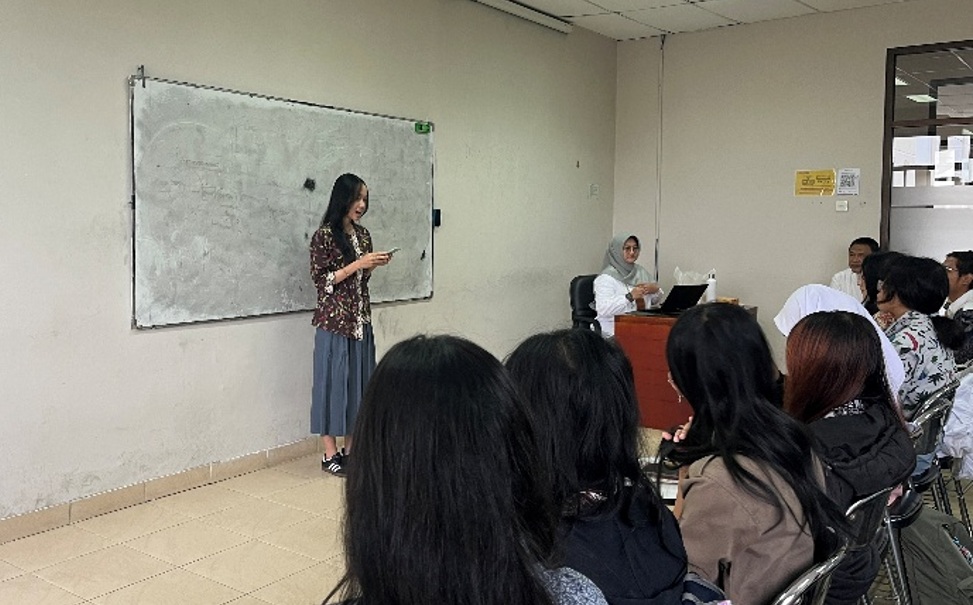
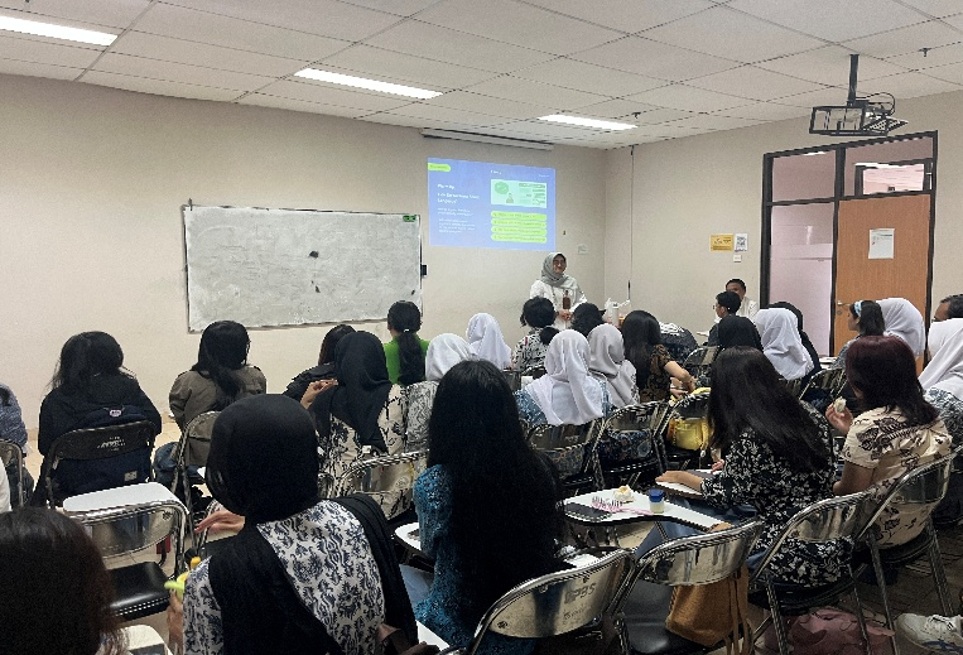
Recognizing the growing importance of this intersection, the Bandung Society for Informatics, Electrical Engineering, and Robotics (BSIEER), associated with the Faculty of Language and Literature Education (FPBS) at Universitas Pendidikan Indonesia (UPI), organized a workshop entitled “Corpus Linguistics and AI in Language Research.” Held in Room 16 on the fourth floor of the FPBS Building, the event brought together 57 participants including the committee members—Alzena Qaddriyah Esta, Keisha Mahya Hazimah, Linda Angelica, Fahira Julla Aisha Rahman, and Arsyila Syaza Aurelia— from FPBS and the School of Postgraduate Studies (SPs) at UPI. The workshop featured two speakers with complementary areas of expertise: R. Dian Dia-an Muniroh, M.Hum., Ph.D., a specialist in corpus linguistics and forensic linguistics, and Dr. Jatmika Nurhadi, S.S., M.Hum., whose expertise includes neurolinguistics and computational approaches to language.
The workshop highlighted an increasingly important message for researchers: understanding language remains essential, but computational tools can expand what researchers are able to investigate.
Under the guiding slogan “Learn • Analyze • Compute • Discover,” the event encouraged participants to consider how authentic language data, computational methods, and artificial intelligence can work together to support more systematic and innovative research.
Session One: From Words to Evidence — Understanding Corpus Linguistics
The first session, scheduled from 07:30 to 09:00 WIB, featured R. Dian Dia-an Muniroh, M.Hum., Ph.D., who presented “A Theoretical Perspective of Corpus Linguistics.”
Rather than treating language as a collection of isolated examples, corpus linguistics examines language through systematically compiled bodies of authentic texts or spoken data. This approach allows researchers to investigate how language is actually used across different contexts, genres, communities, and communicative situations.
Dian introduced the theoretical foundations of corpus linguistics, including what constitutes a corpus, how researchers can construct one, and how corpus data can be used to address linguistic research questions. A carefully designed corpus enables researchers to examine word frequencies, recurring expressions, grammatical patterns, collocations, and differences in language use that may not be immediately apparent through intuition alone.
The value of this approach extends beyond counting words. Frequency patterns can help researchers identify tendencies, while contextual analysis helps them interpret what those patterns mean. In this way, corpus-based research brings together quantitative evidence and qualitative interpretation.
Dian’s expertise in forensic linguistics also offered an important perspective on the practical relevance of language analysis. In legal and investigative settings, linguistic evidence may contribute to the examination of disputed texts, authorship-related questions, threatening messages, or language used in legal documents. Such investigations require careful interpretation, appropriate comparison data, and awareness of the limitations of linguistic evidence.
The broader lesson was clear: language data can become powerful research evidence when it is collected, organized, and analyzed systematically.
For researchers and students, this perspective opens opportunities to investigate questions that might otherwise remain difficult to answer. Instead of relying exclusively on a few selected examples, they can examine broader collections of authentic language and identify patterns that deserve closer investigation.
The session also emphasized the importance of connecting theoretical questions with the design of a suitable corpus. The quality of the findings depends not simply on the volume of data, but also on how the data are selected, prepared, and interpreted.
This theoretical foundation set the stage for the workshop’s next major question: once researchers have assembled meaningful language data, how can technology help them analyze it more efficiently?
Session Two: Bringing Artificial Intelligence into Language Research
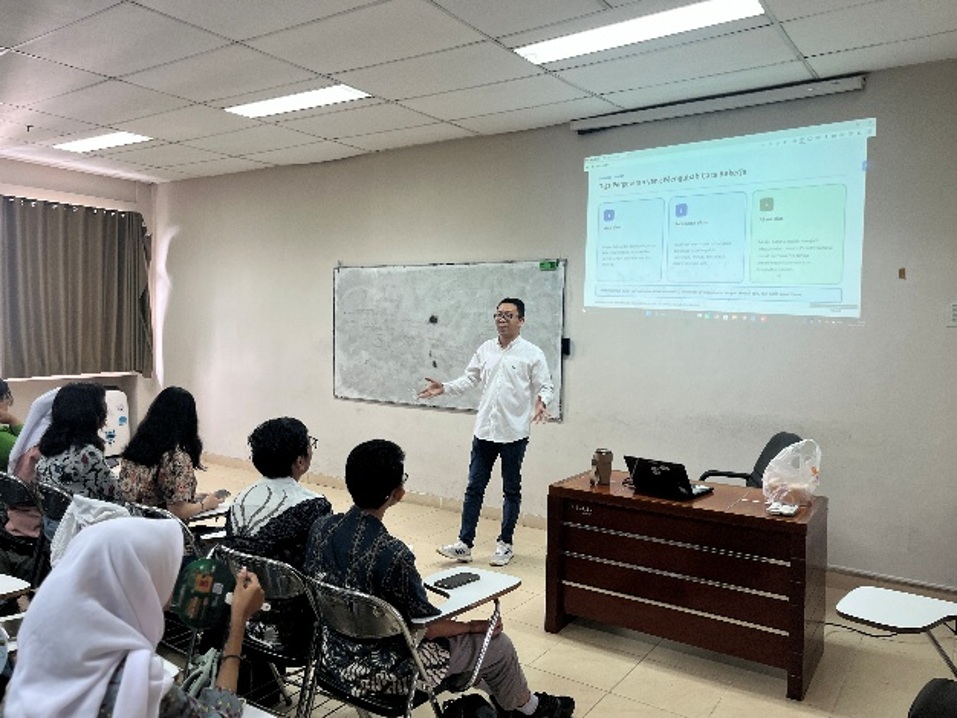
The second session, scheduled from 09:00 to 11:00 WIB, shifted the focus from theoretical foundations to computational applications. Dr. Jatmika Nurhadi, S.S., M.Hum., presented “Implementing Artificial Intelligence Models in Language Research.”
As artificial intelligence continues to influence research across disciplines, language studies are also experiencing significant methodological changes. Techniques associated with Natural Language Processing (NLP), machine learning, and contemporary AI systems can help researchers process large volumes of text, identify recurring patterns, classify linguistic data, and explore relationships that may be difficult to detect manually.
Dr. Jatmika introduced the potential of AI-based approaches for language research and highlighted the importance of understanding the computational processes behind the tools researchers use. AI is not simply a convenient interface that produces answers; its usefulness depends on the data, analytical objectives, model capabilities, and procedures used to evaluate its outputs.
For example, researchers investigating online discussions could use computational methods to organize large text collections and identify recurring themes. Those studying language variation might explore patterns across different groups or contexts. Researchers examining linguistic features could use automated procedures to locate candidate examples before conducting more detailed qualitative analysis.
These possibilities illustrate how computational tools can extend the scale and scope of linguistic inquiry. Tasks that would be time-consuming to perform manually may become more manageable when appropriate methods are applied.
At the same time, computational efficiency does not eliminate the need for linguistic expertise. Automated systems can misclassify data, overlook contextual meaning, reproduce biases in their training data, or generate outputs that appear convincing but are inaccurate. Researchers therefore need to evaluate results critically rather than accept computational outputs without verification.
The discussion also connected AI with broader questions in neurolinguistics, a field concerned with the relationship between language and the human brain. Computational models can provide ways to investigate aspects of language processing, but their behavior should not automatically be equated with the mechanisms of the human brain. Establishing meaningful connections requires carefully designed research and appropriate evidence.
A key takeaway from this session was that modern language researchers can benefit from combining disciplinary knowledge with computational literacy. Understanding how software and AI models work enables researchers to make more informed methodological choices, assess limitations, and design studies that address genuine linguistic questions.
Where Linguistic Theory Meets Computational Power
The two sessions complemented one another by addressing different but closely connected parts of the research process.
Corpus linguistics helps researchers establish what language data they need, how those data should be organized, and which linguistic questions can be investigated. AI and computational methods offer additional ways to process, explore, and analyze those data at scale.
Consider a researcher studying how people express disagreement in online conversations. Corpus linguistics provides a framework for collecting relevant texts, defining the scope of the dataset, and identifying linguistic features worth investigating. Computational tools can then assist in locating recurring expressions or organizing examples for further analysis. Finally, linguistic interpretation is needed to determine how disagreement is expressed in context and whether the computational findings support the research question.
This combination illustrates why technological tools are most useful when guided by a clear theoretical foundation. More data do not automatically produce better research, and more sophisticated models do not guarantee more reliable conclusions. Strong research requires an appropriate dataset, a well-defined question, transparent analytical procedures, and careful interpretation. (Linda Angelica)