



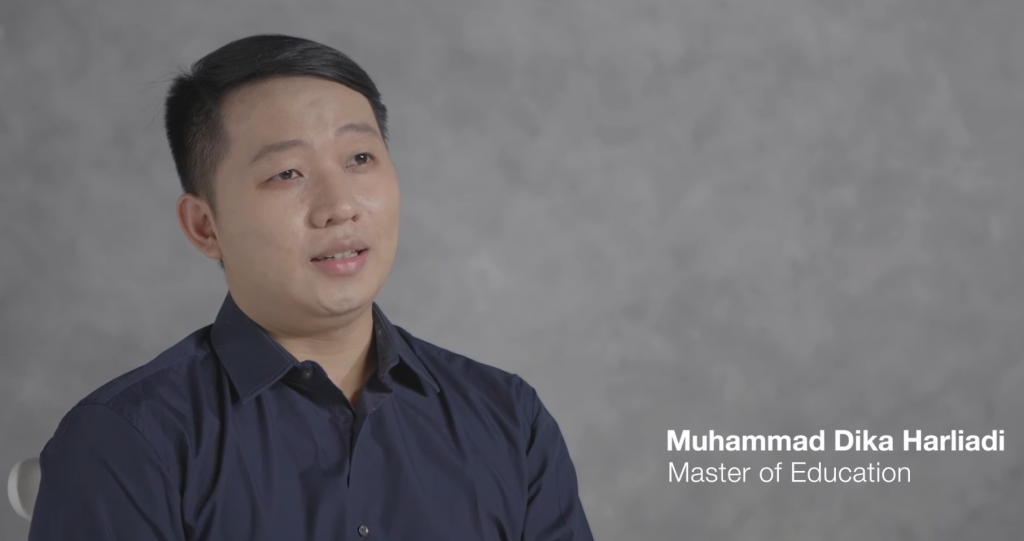
When Muhammad Dika Harliadi, S.Pd., M.Ed., first walked into the biology laboratories of Universitas Pendidikan Indonesia in 2012, he imagined a future in the classroom, not in regional policy rooms and ministerial meetings across Southeast Asia. Yet the foundations laid in FPMIPA UPI, grounded in scientific discipline and human-centred education, would eventually guide him to the ASEAN Secretariat as an Education Officer in the Education, Youth, and Sports Division. Today, from Jakarta, he helps shape policies that touch millions of learners across the region, carrying UPI’s values into every document, dialogue, and decision.
Dika completed his degree in Biology Education at UPI in 2016, firmly rooted in the conviction that education must always humanise. Long hours of practical work in the lab trained him in attention to detail, time management, and systematic problem-solving skills that would later prove essential in high-stakes regional negotiations. His academic formation was complemented by rich experiences beyond the classroom: a community development program (KKN) in Mangkubumi, a teaching practicum at Sekolah Indonesia Singapura (his first overseas residential experience) and active roles in student organisations, including serving as Head of the Department of Creativity Development in Himpunan Mahasiswa Biologi Formica and co-pioneering PARAMPA FPMIPA, a faculty-wide sports, arts, and scientific festival.
Those experiences quietly prepared him for a very different stage. Since 2020, Dika has served at the ASEAN Secretariat, representing ASEAN in high-level international forums such as the Education World Forum 2025 in the United Kingdom and other strategic engagements. His work involves facilitating and providing technical servicing to ASEAN Member States during Education Ministers and Senior Officials Meetings, ensuring that every agreement reflects shared priorities and leads to concrete follow-through. He champions ASEAN’s regional education agenda by advocating key sectoral priorities and nurturing collaborations with global, regional, and intergovernmental partners.
Behind the scenes, Dika has contributed to a series of major strategic documents that define the direction of education and youth in Southeast Asia. These include the ASEAN Leaders’ Declaration on Higher Education: Towards an Inclusive, Sustainable and Prosperous ASEAN, the ASEAN Leaders’ Declaration on Early Childhood Care and Education and its Roadmap, and the Roadmap for the Declaration on Digital Transformation of Education Systems in ASEAN. He has also been involved in the Vientiane Statement on climate resilience in early childhood settings, the Langkawi Joint Statement on out-of-school children and youth, and ongoing work on the ASEAN Work Plan on Education 2026–2030, the ASEAN State of Education Report, and the fifth domain of the ASEAN Youth Development Index on how young people see ASEAN. In addition, he helped shape recommendations of the 1st ASEAN Youth Dialogue and oversees the implementation of education sector Plans of Action and flagship initiatives, ensuring coherence with member states’ long-term priorities.
The path from classroom teacher to regional diplomat was not without challenges. Transitioning from teaching into the diplomatic and development sectors required Dika to adapt quickly to policy-oriented writing, complex stakeholder engagement, and intergovernmental coordination. He describes this shift as a process of cultivating a strategic, diplomatic, and systems-level mindset, essential for supporting regional cooperation and high-level decision-making. To strengthen his capacity, he pursued professional development opportunities such as the Australia for ASEAN Short Course on improving digital readiness and resilience of TVET at RMIT University, Melbourne, and a Development Project Writing Training with Singapore’s Ministry of Foreign Affairs.
Through it all, Dika continues to trace his core principles back to UPI. “UPI instilled in me the fundamental principle of humanising every aspect of the education process,” he reflects. This philosophy underpins his work on regional commitments, strategic documents, and policy frameworks, shaping how he analyses issues, designs solutions, and engages with stakeholders. His most vivid memories of UPI are not just of lectures and labs, but of being formed into a well-rounded individual, where theoretical knowledge and practical values were inseparable.
To current UPI students, his message is both simple and profound: broaden your horizon. “Maximise every opportunity and proactively explore diverse possibilities that contribute to both personal and professional growth,” he advises, urging students to look beyond familiar paths and remain open to new roles and sectors. For his alma mater, Dika hopes UPI will continue to grow as a premier institution that nurtures lifelong learners who are ready to contribute meaningfully to their communities, country, and the world.
From the laboratories of FPMIPA Bandung to the meeting rooms of ASEAN, Muhammad Dika Harliadi’s journey reflects the enduring reach of UPI’s educational philosophy, “melesat” (soaring high), anchoring technical excellence in humanity, and transforming a teacher’s heart into a regional voice for learners across Southeast Asia. (VS)