



Bandung, UPI
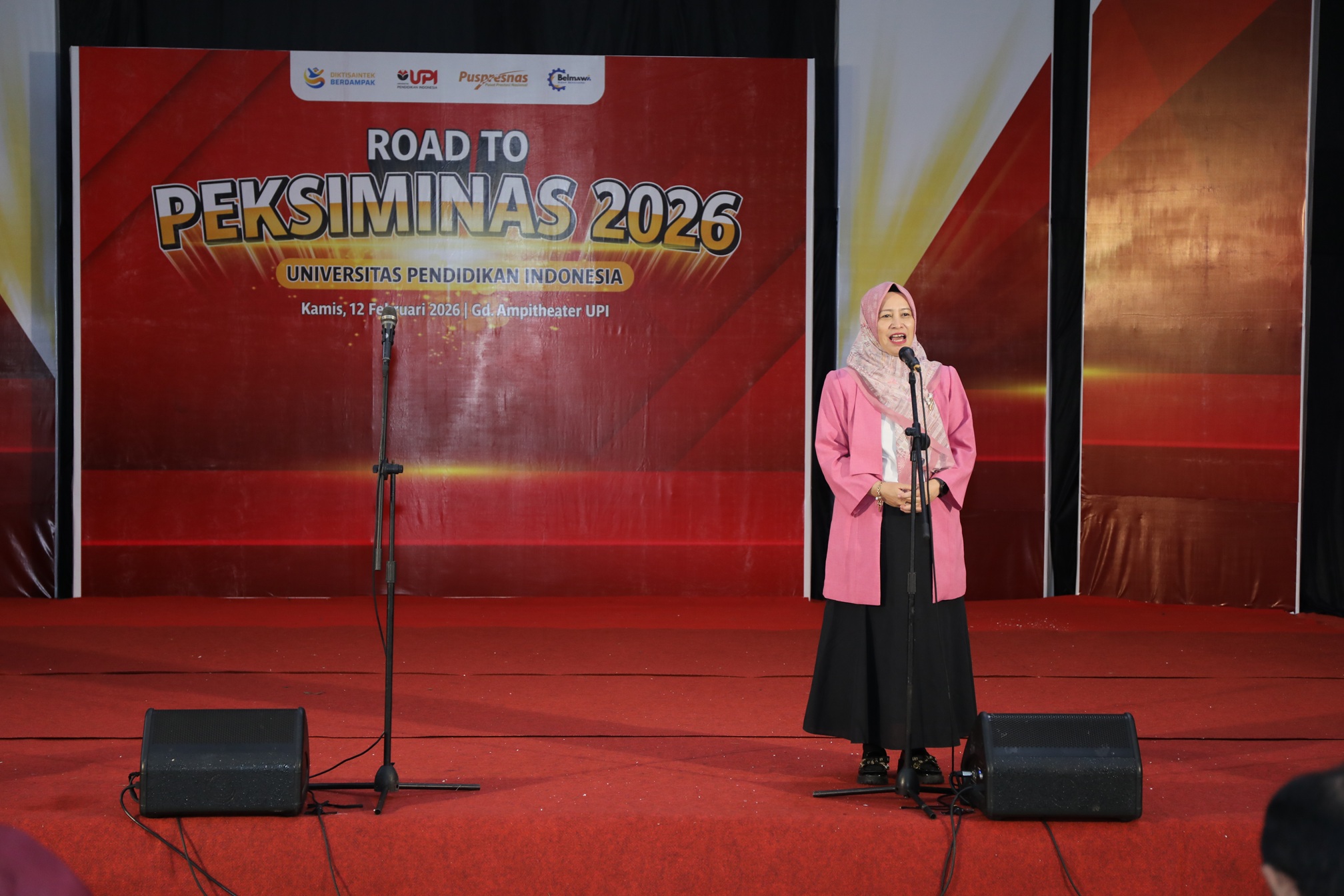
Universitas Pendidikan Indonesia (UPI) has officially launched its internal selection for the 2026 National Student Arts Week (Pekan Seni Mahasiswa Nasional / Peksiminas), as part of its efforts to prepare a competitive student delegation at the national level.
The selection was conducted in an open and structured format at the UPI Amphitheater Auditorium on Jl. Dr. Setiabudhi No. 229, Bandung, on Thursday (Feb. 12), involving participants from various faculties and regional UPI campuses.
Director of UPI’s Directorate of Student Affairs, Prof. Dr. Hj. Siti Nurbayani Kusumaningsih, M.Si., stated that students’ artistic potential is not limited to the Faculty of Art and Design Education (FPSD), but is also found across different study programs and campuses.
“UPI students demonstrate strong artistic potential across faculties and regional campuses,” she said. “For instance, in the previous Peksiminas, the Dangdut category winner came from the Faculty of Sports and Health Education (FPOK), showing that talent can emerge beyond arts-based programs.”
To support sustainable talent development, UPI’s Directorate of Student Affairs (Ditmawa) introduced the “Rumah Prestasi” initiative in 2026. The program serves as a platform for continuous coaching and cross faculty collaboration among high potential students.
UPI also applies a peer mentoring approach by involving senior students as tutors. This method is expected to facilitate the transfer of skills and motivation more effectively.
“We have designed a structured coaching system,” Prof. Siti Nurbayani explained. “Through peer mentoring, senior students can support junior students in developing their confidence and abilities.”
In addition to preparing for Peksiminas 2026, UPI has also begun early preparation for Peksiminas 2028 by focusing on students from the 2025 cohort. This approach provides a longer development period to strengthen their competencies.
Through this selection and coaching system, UPI aims to prepare students who can represent the university and contribute to regional achievements at the national level.
This initiative also aligns with the Sustainable Development Goals (SDGs), particularly SDG 4 (Quality Education), by supporting inclusive and holistic student development, including in the arts and cultural sectors. (Rija/DN)