



Bandung, UPI
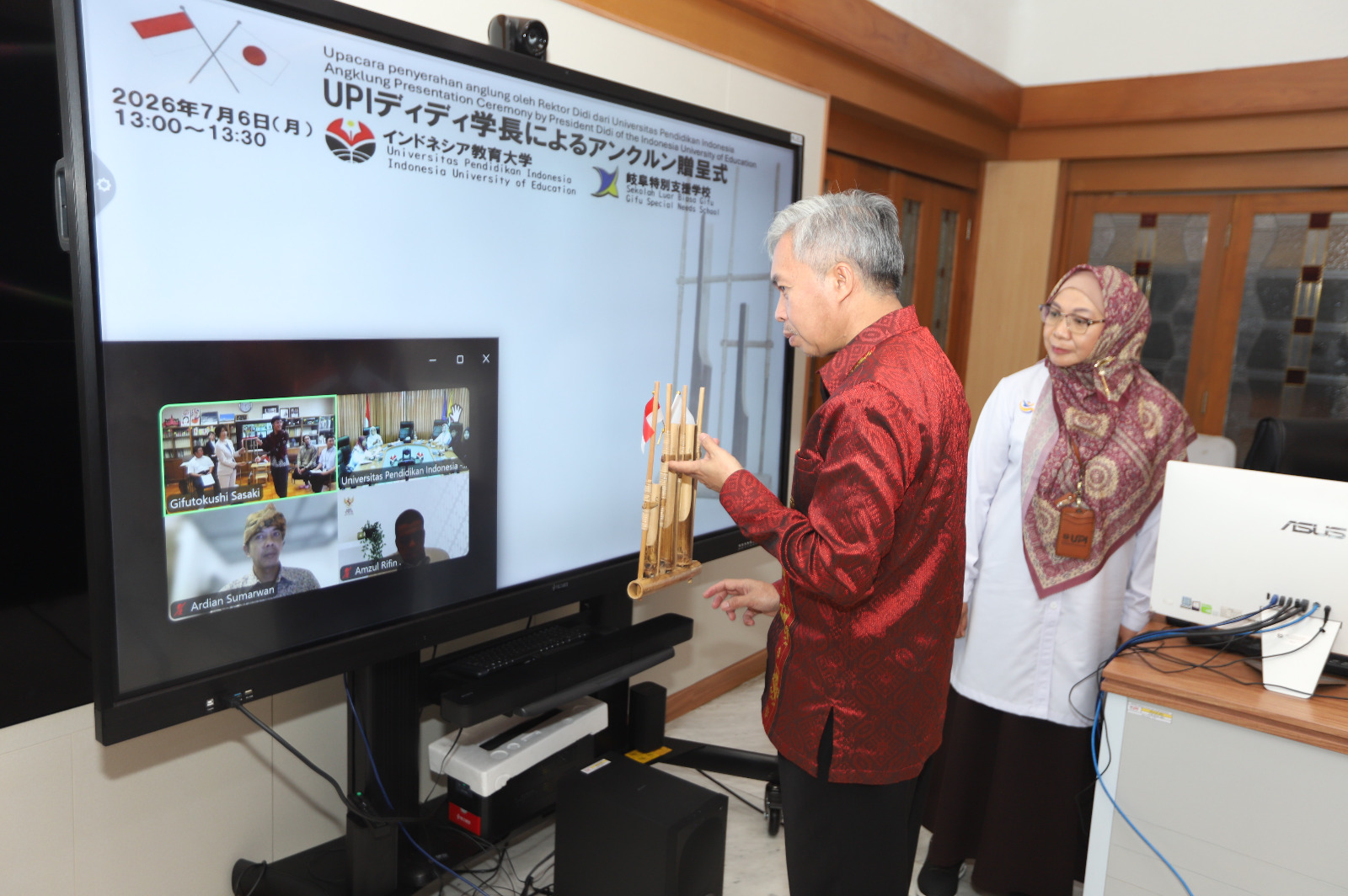
Universitas Pendidikan Indonesia (UPI) continues to promote the internationalization of Indonesian culture through the angklung by donating a set of instruments to its partner in Gifu City, Japan. The donation aims to strengthen cultural and educational cooperation between the two institutions. The handover ceremony took place at the Partere Meeting Room, 229 Dr. Setiabudi Street, Bandung, West Java, on Monday (July 6, 2026).
The Rector of UPI stated that Indonesians should take pride in the angklung, which has been recognized by UNESCO as an Intangible Cultural Heritage of Humanity. Beyond gaining national recognition, the traditional instrument has continued to grow in popularity and is now widely embraced in various countries, including Japan.
“Angklung has been embraced not only by the people of Indonesia but also by the international community as an Intangible Cultural Heritage recognized by UNESCO,” the Rector said.
In Japan, particularly in Gifu City, the angklung has been introduced for many years through educational and community engagement initiatives led by UPI students and alumni. One of the key figures in this effort is Professor Suzuki Yoshitaka, who has promoted the use of angklung among university students and special needs students.
Besides being a traditional musical instrument, the angklung has demonstrated significant therapeutic value. Playing the angklung encourages participants to work collaboratively, develop listening and response skills, and create harmony through collective performance.
During the ceremony, Yukihiro Saito, Director General for Educational Coordination of the Gifu City Board of Education, expressed his appreciation for the donation.
“I am very pleased to hold this ceremony to commemorate the donation of the angklung, to Gifu Special School. I would like to express my sincere gratitude to the Rector of Universitas Pendidikan Indonesia.”
He also noted that the school had already incorporated the angklung into its music classes through collaboration with Professor Suzuki and students from Gifu University.
“I extend my deepest respect for this valuable donation, which has been made possible through this partnership. We hope today’s donation will further strengthen the exchange between Gifu City and the people of Indonesia.”
Sachi Sumi, Principal of Gifu Municipal Gifu Special School, also expressed her sincere appreciation to Universitas Pendidikan Indonesia for donating the angklung.
She explained that the school has incorporated the instrument into its music program since last year.
“Using the angklung has been a wonderful initiative because it enables children with disabilities to produce sound easily, understand musical rhythm, and enjoy making music together with others.”
From here on, the school plans to expand the use of the angklung by integrating it into its secondary school curriculum and introducing it throughout the school.
“This donation is incredibly valuable and will support our efforts to further promote this initiative. We hope to continue strengthening the friendship between Indonesia and Japan while learning from one another in the future.”
Research conducted in Japan has shown that angklung activities can improve the behavioral development and social skills of children with special needs. Participating in angklung performances helps improve teamwork and other essential soft skills.
Recognizing these significant benefits, special needs schools in Gifu have begun incorporating the angklung into their curricula as part of the teaching and learning process.
To support the sustainability of this initiative, UPI has donated a set of Sarinande angklung instruments, which are currently being shipped to Japan. The instruments will be received by Professor Suzuki Yoshitaka and used in educational activities at special needs schools across Gifu City.
Through this initiative, UPI hopes the angklung will continue to grow not only as a medium for learning and therapy but also as a bridge for cultural diplomacy, expanding Indonesia’s presence and cultural exchange on the international stage.
Moreover, this initiative contributes to the United Nations Sustainable Development Goals (SDGs), particularly SDG 3 (Good Health and Well-being), SDG 4 (Quality Education), SDG 10 (Reduced Inequalities), and SDG 17 (Partnerships for the Goals). (KKIPP)