



Bali, UPI
As 21st-century education grows more complex, meaningful change can no longer be driven by a single institution alone. Governments may set the direction, but lasting impact depends on many hands working together. This message resonated throughout the QS Higher Ed Summit Asia Pacific 2026, held in Bali from 3-5 November, one of the region’s largest international higher education gatherings, which brought together policymakers, university leaders, and education experts to discuss the future of education.
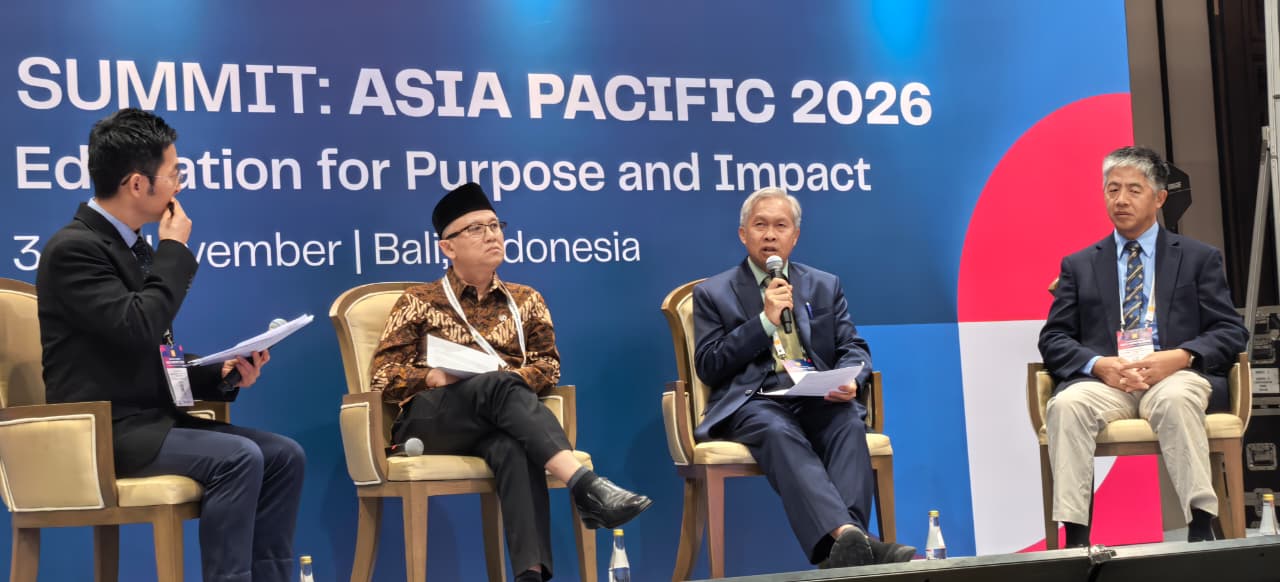
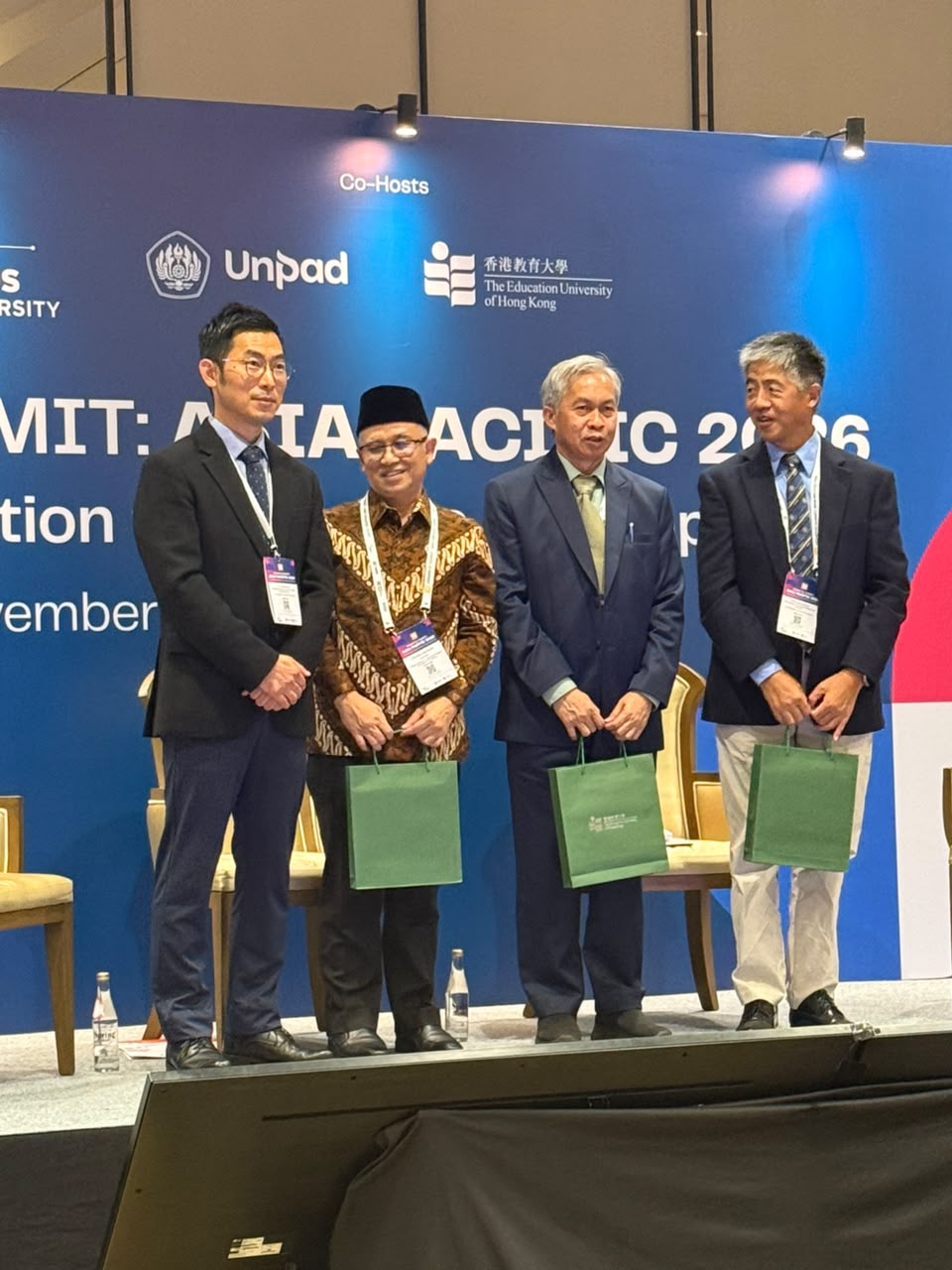
The idea took center stage in a panel discussion titled “Building Resilient Education Ecosystems: Cross-Sector Partnerships for Purpose-Driven Reform,” featuring Prof. Atip Latipulhayat, Vice Minister of Primary and Secondary Education of the Republic of Indonesia; Prof. Dr. Didi Sukyadi, M.A., Rector of Universitas Pendidikan Indonesia (UPI); and Prof. Chuang Wang of The Education University of Hong Kong (EdUHK), moderated by Dr. Ju Seong Lee.
During the discussion, UPI emerged not merely as a participant in an international forum but as a strategic partner in shaping a more inclusive, sustainable, and resilient education ecosystem. A key focus of the conversation was the collaboration between UPI, EdUHK, and the Indonesian government in supporting the implementation of English language education in primary schools through the establishment of a Joint Center backed by both academic and governmental partners.
According to Prof. Didi Sukyadi, meaningful partnerships are not built on ceremonies or paperwork alone. Rather, they must be grounded in shared vision, mutual benefit, trust, and collective responsibility. For this reason, the partnership between UPI and EdUHK has been designed not as a memorandum destined for a shelf, but as a living collaboration translated directly into programs capable of creating tangible impact in schools and communities.
That commitment is already taking shape. This year, initial activities have begun through intensive training and mentoring programs aimed at strengthening English language proficiency among primary and secondary school teachers. As part of the initiative, UPI will contribute its academic expertise in curriculum and materials development, teacher training, assessment design, research, and evaluation. EdUHK will support the evaluation of training outcomes through artificial intelligence-based approaches, while the government will provide policy support, learning resources, and large-scale teacher development programs.
Prof. Didi Sukyadi further emphasized that any educational reform ultimately succeeds or fails with teachers and school leaders. What they need is not simply new policies, but sustained professional support, relevant competencies, and the confidence to lead change within their classrooms and schools. Cross-sector collaboration, therefore, becomes essential to ensure that teachers do not face the challenges of educational transformation alone.
For a vast archipelagic nation as diverse as Indonesia, UPI also underscored the importance of scaling impact rather than merely replicating identical models. Strengthening teacher capacity, leveraging digital technologies, expanding learning platforms, and building networks with local governments and professional associations are among the strategies envisioned to ensure that educational opportunities reach communities that need them most.
From a corner of Badung, UPI shared a clear message: strong education grows from strong collaboration. When governments provide direction, universities contribute expertise, and international partners share knowledge and experience, the result is more than a program. It becomes an ecosystem. A shared space for growth where teachers teach with greater confidence, schools move forward with greater purpose, and children gain broader opportunities to learn and thrive. In the end, the true value of partnership is measured not by the signatures placed on paper, but by the meaningful changes that reach the classroom door. (Vidi Sukmayadi)