



Bandung, UPI
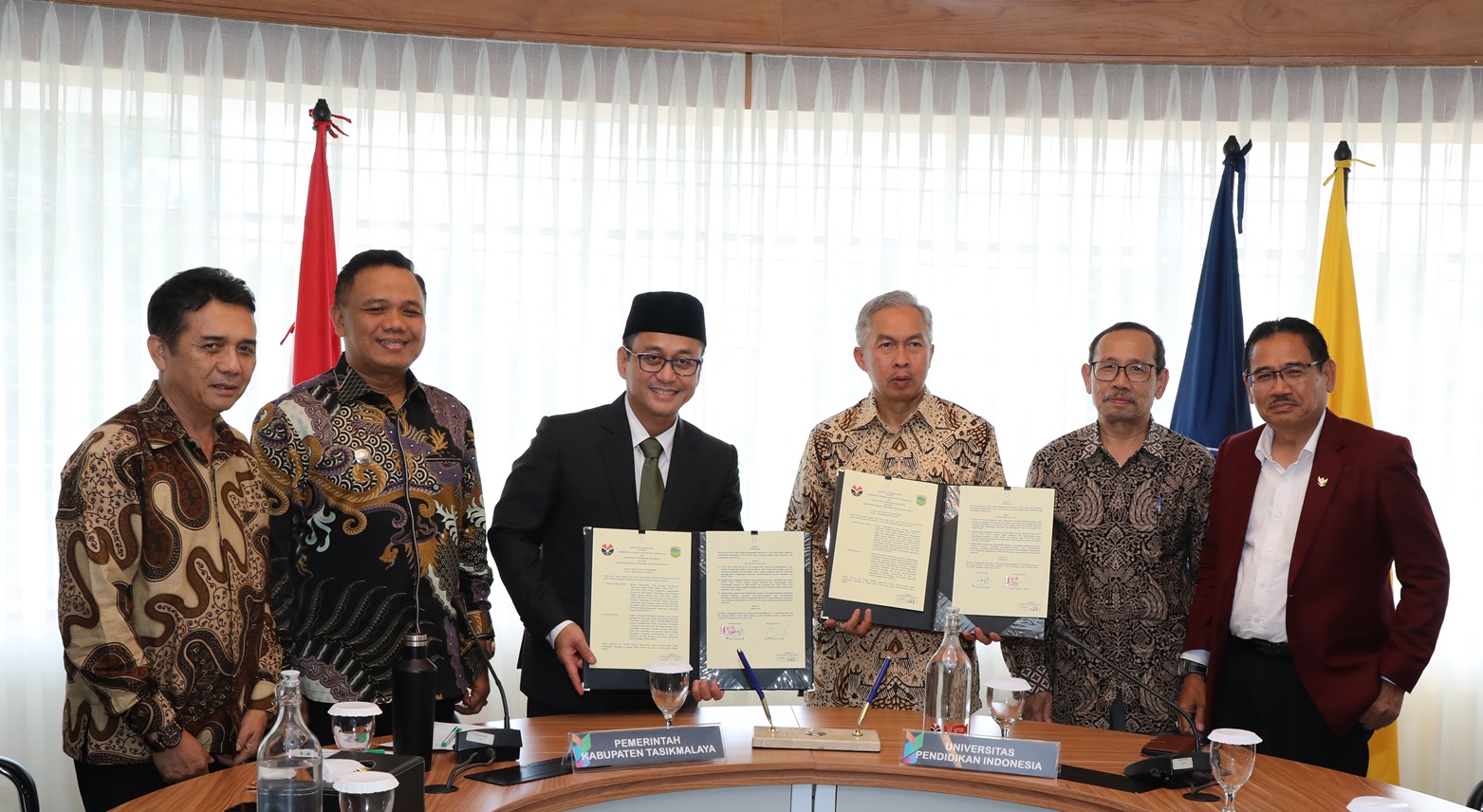
The Regent of Tasikmalaya Regency, together with members of the Regional Leadership Coordination Forum (Forkopimda) and local government officials, paid a working visit to Universitas Pendidikan Indonesia (UPI) to strengthen collaboration in educational development for the region. The meeting, held at the Partere Meeting Room on Jl. Dr. Setiabudhi No. 229, Bandung, on Friday (January 30, 2026), also discussed plans to expand the UPI campus in the Karangnunggal area.
The regent was accompanied by the vice regent, the Speaker of the Regional Legislative Council (DPRD), regional leaders, agency heads, department heads, section chiefs, and other related officials. The presence of a full delegation reflected the strong commitment of the Tasikmalaya Regency Government to supporting higher education development in the region.
UPI Rector, Prof. Didi Sukyadi, M.A., explained that the meeting explored various opportunities for cooperation between the Tasikmalaya Regency Government and UPI, particularly in improving human resource quality and expanding public access to quality higher education.
The UPI leadership also expressed appreciation for the regent’s commitment, noting that he is a UPI alumnus who is currently completing his doctoral studies at the university. UPI also congratulated the regent, Cecep Nurul Yakin, on successfully defending his doctoral dissertation an academic achievement that brings pride to his alma mater.
Beyond his academic success, UPI views the regent’s support for the planned expansion of the UPI campus in Karangnunggal as a concrete contribution to the community. The new campus is expected to become a higher-education hub for Tasikmalaya Regency, enabling local residents to pursue tertiary education without leaving the region.
“Insha Allah, UPI will soon be able to develop its campus in Karangnunggal. In this way, the people of Tasikmalaya Regency will have access to quality higher education at a more affordable cost, without having to leave their hometown,” said the rector.
The planned development of the UPI Tasikmalaya Campus is also expected to support educational equity, improve human resource quality, and contribute to the sustainable welfare of the people of Tasikmalaya Regency.
During the same event, the Regent of Tasikmalaya Dr. H. Cecep Nurul Yakin, S.Pd., M.A.P. affirmed his support for UPI’s plan to establish a campus initiative in Karangnunggal. He made the statement while discussing the potential use of a building complex that had originally been prepared for the Rintisan Sekolah Rakyat (People’s School Initiative).
The regent explained that the initial plan for the Rintisan Sekolah Rakyat in Karangnunggal was later relocated. As a result, the building that had already been prepared in the area is now ready to be used and could be repurposed for other educational activities.
“If UPI wants to start this year, the building in Karangnunggal is actually ready to be used. This can become an initial pilot so there is real activity on the ground and clear evidence that UPI has arrived in Karangnunggal,” the regent said.
Going forward, the regent added that the development of the campus area will be supported by improvements in road access and infrastructure. The local government, together with the National Land Agency of Indonesia (BPN), has begun coordinating plans to straighten and widen roads leading to and within the campus area.
These plans will later be compiled into a comprehensive master plan for the campus zone, including land-parcel arrangements and improved accessibility to optimally support campus activities.
The Tasikmalaya Regency Government hopes the UPI campus initiative can soon be realized and become positive news for higher education development in southern Tasikmalaya. The presence of UPI is expected to bring benefits not only to the education sector but also to regional economic growth and local development.
“Hopefully, this will become good news and the beginning of sustainable collaboration,” the regent concluded. (Rija/DN)
This initiative supports SDG 4: Quality Education by expanding access to higher education in rural areas and strengthening human-resource quality. It also contributes to SDG 8: Decent Work and Economic Growth and SDG 11: Sustainable Cities and Communities through infrastructure development, job creation, and the formation of a knowledge-based hub for local development in southern Tasikmalaya.