English
Indonesia

UPI Hosts Book Discussion of “Baduy: Society of 1001 Taboos,” Advancing Academic Discourse and Global Translation Efforts

18 Feb 2026 • Humas UPI

Serang, UPI

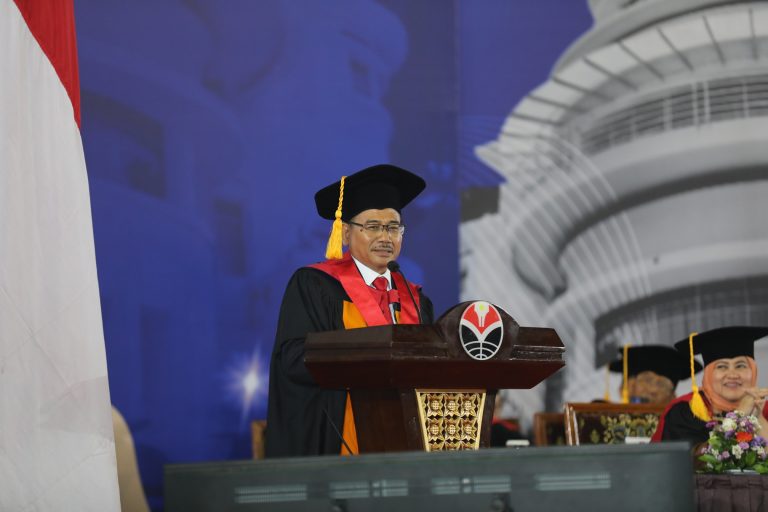
Universitas Pendidikan Indonesia (UPI) held a scholarly book discussion titled “Baduy: Masyarakat 1001 Tabu” on Thursday, February 12, 2026, at Hotel Horison TC UPI, Serang. The forum served as an academic platform to critically examine a work that explores the life, traditions, and cultural values of the Baduy indigenous community.

The discussion featured Prof. Dr. Retty Isnendes (UPI) and Ade Jaya Suryani (UIN Sultan Maulana Hasanuddin Banten) as keynote discussants, with Dr. Syarip Hidayat, M.Pd., serving as moderator. The session unfolded dynamically, offering diverse perspectives that enriched the interpretation and academic value of the book authored by Uday Suhada.

In his opening remarks, UPI Vice Rector for Planning and Finance, Prof. Dr. Rudi Susilana, M.Si., emphasized that the event reflects the university’s commitment to engaging directly with society. He noted that higher education institutions should not remain confined to an “ivory tower,” but must actively contribute to the development of local culture and literacy, particularly in the Banten region.

Prof. Rudi also expressed strong support for the plan to translate the book into English. He stated that UPI is ready to facilitate the process through a qualified linguistic team to ensure the work reaches a broader international audience.

Banten Vice Governor Dimyati Natakusumah also expressed his appreciation for the publication, describing it as an important documentation of Baduy customs and traditions. He highlighted that translating the book into English would be a strategic step in introducing the philosophy of Baduy life to the global community, strengthening cultural tourism in Banten, and ensuring that local narratives gain wider international recognition.

During the discussion, Prof. Dr. Retty Isnendes offered several constructive recommendations. From a technical perspective, she suggested increasing the font size in future editions to improve readability. From a substantive standpoint, she encouraged the inclusion of additional references to strengthen the book’s academic foundation, emphasizing that stronger scholarly grounding would enhance its credibility as a reliable academic resource.

Echoing this view, Ade Jaya Suryani stressed the importance of expanding the analytical perspective of the book. He noted that the work should go beyond descriptive narration by incorporating insights from both national and international research. He added that the Baduy community has been widely studied by international scholars, and integrating such references would further position the book within a broader academic discourse.

Author Uday Suhada expressed his appreciation for the involvement of academic experts in the discussion, stating that their participation is part of his effort to maintain the objectivity of the work. He hopes that the feedback provided will help refine the content and expand its impact. Uday also encouraged universities in Banten to continue playing an active role in promoting literacy rooted in local wisdom, ensuring that higher education contributes meaningfully to society.

Through this initiative, UPI reaffirms its commitment to strengthening literacy culture, enriching academic discourse, and promoting the preservation of local heritage so that it can gain recognition at the global level.

This effort aligns with SDG 4 (Quality Education) and SDG 11 (Sustainable Cities and Communities) by fostering inclusive, culturally grounded education and supporting the preservation of indigenous knowledge amid global development. (Retty Isnendes)

UPI Directorate of Student Affairs and Alumni Announces PEKSIMINAS 2026 Selection Results

13 Feb 2026 • Humas UPI

Bandung, UPI

The Directorate of Student Affairs and Alumni at Universitas Pendidikan Indonesia (UPI) has officially announced the results of the 2026 University Level PEKSIMINAS (Pekan Seni Mahasiswa Nasional) Selection, aimed at identifying the university’s top artistic talents to represent UPI at the West Java provincial level.

The selection process was conducted through an open and multi-stage system, beginning at the faculty level and culminating at the university level. The final round took place at the UPI Auditorium Amphitheater, Jl. Dr. Setiabudhi No. 229, Bandung, on Thursday, February 12, 2026, with a total of 155 participants from various faculties and regional campuses.

Dr. Mokh. Iman Firmansyah, S.Pd.I., M.Ag., Head of the Talent Division, explained that this year’s selection was conducted earlier than usual to allow for a longer and more structured coaching period.

Selected participants will undergo intensive training through the “Rumah Prestasi” program, which involves mentoring from lecturers and professional coaches, as well as mental and psychological preparation ahead of the provincial competition.

“These participants are official representatives of their respective faculties and regional campuses. With earlier selection, we have sufficient time to provide optimal coaching,” he stated.

The selection covered a wide range of artistic disciplines. The first-place winners include:

  • Pop Singing (Male): Fadhillah Rahmanul Hakim (FPSD) – 216
  • Pop Singing (Female): Devita Fauzia Zahra (FPSD) – 225
  • Dangdut Singing (Male): Yogi Firmansyah (FPSD) – 755
  • Dangdut Singing (Female): Nadia Angelina (FPSD) – 773
  • Keroncong (Female): Regina Darmawanti (FPSD) – 253.5
  • Vocal Group: Rizqi Riadil Huda (FPSD) – 257.5
  • Group Dance: Ade Kurniawan (FPSD) – 405
  • Comic Strip: Chairan Nafhan Ramdhani (FPSD) – 96
  • Poster Design: Alisha Putri Husnaini (FPSD) – 80.1
  • Documentary Photography: Farell Caleb Triana (FPIPS) – 85
  • Artistic Photography: Muhammad Rizky Febrian (FPSD) – 85
  • Painting: Taris Barikan (FPSD) – 94.6
  • Playwriting: Lia Anggraeny (UPI Tasikmalaya Campus) – 509
  • Monologue: Vanesa (UPI Sumedang Campus) – 86

With these results, UPI is optimistic about achieving strong performance at the West Java provincial PEKSIMINAS, with the potential to advance to the national level. A structured coaching system is expected to further enhance participants’ artistic quality, technical mastery, and stage performance.

Beyond this selection, UPI continues to strengthen its talent development strategy through early identification and recruitment, including outreach to incoming students with proven achievements in the arts at national and international levels.

Through a selection process that is transparent, objective, and professional, UPI reaffirms its commitment to building a sustainable and competitive student achievement ecosystem, fostering creativity, integrity, and excellence among its students.

PROBUMSIL UPI Candradimuka XIX: Building Synergy, Cultivating Dedication, and Shaping Future Protocol Leaders

13 Feb 2026 • Humas UPI

Bandung, UPI

Universitas Pendidikan Indonesia (UPI), through Protokol Bumi Siliwangi (PROBUMSIL), continues to strengthen the quality of its human resources by organizing the Candradimuka Basic-Level Training Class XIX. Held over one intensive week from January 19 to 25, 2026, the program was designed to develop protocol officers who are adaptive, innovative, and collaborative.

A total of 82 participants took part in the training, which was conducted across two locations: the UPI Bumi Siliwangi campus and the Pusat Pendidikan Hukum Direktorat Hukum TNI AD (Pusdikkum Ditkumad) in Bandung.

The program officially opened on Monday, January 19, 2026, by the Director of UPI’s Directorate of Student Affairs and Alumni, Prof. Dr. Hj. Siti Nurbayani Kusumaningsih, M.Si. In her remarks, she underscored the strategic role of PROBUMSIL as the frontline in maintaining the university’s institutional image.

During the first three days on campus, participants received direct insights into university governance from UPI’s leadership. Beyond classroom sessions, they also visited nine faculties and one postgraduate school to gain a deeper understanding of organizational structures and the role of protocol officers at the unit level.

“The program adopts an experiential learning approach,” stated the official report from PROBUMSIL’s Communications Division. “Participants are directly involved in simulations and hands-on protocol practices, including ceremonial procedures, protocol escort duties, and Aide-de-Camp (ADC) assignments.”

From Campus Training to National-Defense Education

From January 22 to 25, 2026, the program entered its second phase at Pusdikkum Ditkumad, where participants underwent National Defense Education (Pendidikan Bela Negara). This stage focused on strengthening mental resilience, physical endurance, and discipline under the direct supervision of Commander Colonel Chk Heru Budi Susilo, S.H., M.H.

The training included marching drills (PBB) and group-dynamics sessions under the theme “Resilient Teamwork.” Participants also took part in educational visits to the National Heroes’ Cemetery and the Gedung Sate Museum, fostering a deeper sense of nationalism and historical awareness.

In addition, practical sessions led by the Bandung City Government Protocol Office equipped participants with essential skills in effective communication and the management of official events and formal ceremonies.

Advancing SDGs Through Experiential Learning

The implementation of Candradimuka XIX goes beyond internal capacity building. It also aligns with the Sustainable Development Goals (SDGs), particularly:

  • SDG 4 (Quality Education), by delivering structured, experience-based learning that enhances professional competencies
  • SDG 16 (Peace, Justice, and Strong Institutions), by strengthening integrity, discipline, and good organizational governance

The program officially concluded on Sunday, January 25, 2026, with a closing ceremony led by the Head of UPI’s Division of Student and Alumni Organizations, Dr. Hernawan, S.Pd., M.Pd.

With the completion of this training, all 82 participants are expected to be fully prepared to take on strategic roles as university protocol officers, UPI ambassadors, and members of the “Ring 1” team responsible for safeguarding the university’s dignity and public image.

Ramadan, Eclipses, and Cosmic Awareness

13 Feb 2026 • Humas UPI

By Dr. Judhistira Aria Utama, M.Si.
Chair, Centre of Excellence SAINS DATA ASTRONOMI DAN POLUSI CAHAYA (SADAR-POLYA)

As the holy month of Ramadan approaches each year, one familiar question resurfaces across Indonesia: When does 1 Ramadan begin?

The official answer will once again be determined through the Sidang Isbat (Imsyakiah Plenary Meeting) held by the Ministry of Religious Affairs on 29 Sha’aban. Based on astronomical calculations (hisab), the conjunction or New Moon will occur on Tuesday, February 17, 2026, at 19:01 WIB. At that moment, however, the Moon will set before the Sun across Indonesia, meaning the crescent (hilal) will not yet be visible.

As a result, the date will still be counted as 30 Sha’aban after sunset, and 1 Ramadan is expected to fall on the evening of Wednesday, February 18, with the first fasting day on Thursday, February 19, 2026 pending official confirmation.

In practical terms, this means Muslim communities in Indonesia will likely begin tarawih prayers on the night of February 18, followed by the first day of fasting on February 19.

Meanwhile, the Muhammadiyah community is set to begin Ramadan one day earlier. According to Maklumat No. 2/Mlm/I.0/E/2025 issued by its Central Leadership, Muhammadiyah determines the start of Ramadan as Wednesday, February 18, 2026. This difference stems from distinct interpretations of mathla’ the reference point used to determine crescent visibility.

Two Perspectives on the Crescent: Local vs Global Mathla’

The Ministry of Religious Affairs applies a local mathla’ approach, where the sighting of the crescent is tied to a specific geographic region. In Indonesia, a verified sighting in one location can be applied across the archipelago, sometimes in coordination with neighboring countries such as Brunei Darussalam, Malaysia, and Singapore.

In contrast, Muhammadiyah adopts a global mathla’ principle. Under this approach, once the crescent is visible anywhere on Earth, it is considered valid globally. Using precise astronomical calculations and the Global Calendar Parameter (PKG) which requires a minimum Moon altitude of 5° and elongation of 8° researchers have identified regions meeting these criteria, allowing for a unified global date even without direct observation.

Eclipses During Ramadan: A Rare Celestial Alignment

The same conjunction marking the end of Sha’aban 1447 H also signals the beginning of the 2026 eclipse season. When the Sun, Earth, and Moon align near orbital nodes, eclipses become possible.

The first event is an annular solar eclipse on February 17, 2026. However, it will not be visible from Indonesia.

Two weeks later, on Tuesday, March 3, 2026 (13 Ramadan 1447 H), a Total Lunar Eclipse (Gerhana Bulan Total) will occur offering a spectacular sight fully visible across Indonesia, weather permitting.

In Bandung, the peak of totality will occur around 18:33 WIB, with the event ending at approximately 21:33 WIB. Observers will need a clear eastern horizon, as the Moon will appear relatively low in the sky.

This is not an isolated phenomenon. Recent Ramadans have also featured eclipses:

  • 2025: Total Lunar Eclipse (14 Ramadan)
  • 2024: Penumbral Lunar Eclipse (15 Ramadan)
  • 2023: Total Solar Eclipse (29 Ramadan), visible in parts of Indonesia

Over the period from 2000 to 2100, astronomers estimate:

  • 1,274 New Moons
  • 1,274 Full Moons
  • 453 eclipses, with 217 visible from Indonesia
  • Only 19 occurring during Ramadan

These patterns highlight the precision and predictability of the Sun, Earth, Moon system.

Cosmic Awareness and the SDGs

Beyond their scientific significance, the crescent Moon and eclipses offer a gateway to cosmic awareness a deeper understanding of humanity’s place in the universe.

From a cosmic perspective, Earth is just a small planet orbiting an ordinary star within the Milky Way, itself one of billions of galaxies. From space, there are no visible borders only one shared planet.

The Total Lunar Eclipse on March 3, 2026 serves as a powerful reminder of this interconnectedness. Just as eclipses require precise alignment, life on Earth depends on delicate, interdependent systems. The same atmosphere that gives the Moon its reddish hue during an eclipse is also what protects life on Earth.

This awareness aligns closely with the Sustainable Development Goals (SDGs), particularly:

  • SDG 4 (Quality Education)
  • SDG 13 (Climate Action)

Astronomy plays a unique role in advancing these goals. As an observational science, it naturally sparks curiosity and critical thinking. Questions like “Why does the Moon turn red?” or “Why don’t eclipses happen every month?” open the door to scientific inquiry.

Importantly, astronomy is also inclusive. Observing a lunar eclipse requires no advanced equipment, only a clear sky and curiosity. It is a form of accessible, universal education.

A Sky That Teaches

During Ramadan 1447 H, the night sky becomes both a spiritual and intellectual classroom. From the subtle emergence of the crescent Moon to the dramatic total lunar eclipse, the cosmos offers a living lesson in order, balance, and reflection.

Looking up at the sky is more than observing celestial events, it is an invitation to rediscover the harmony of the universe and our responsibility within it.

From this awareness, wisdom may grow: the wisdom to care for our shared home planet Earth.

May this holy month bring not only spiritual blessings, but also a deeper sense of cosmic awareness.

UPI Open Visit in Tasikmalaya Draws Strong Enthusiasm from Students and Teachers

12 Feb 2026 • Humas UPI

Tasikmalaya, UPI

The fifth-floor ballroom of Universitas Pendidikan Indonesia (UPI)’s Tasikmalaya campus was filled with energy on Wednesday morning, February 11, as more than 100 teachers from across East Priangan gathered for the 2026 Open Visit. Representing their respective schools, the teachers came eager to explore information on public university admissions, many accompanied by two or three students to experience campus life firsthand.

The event began with an opening report by Dr. Vidi Sukmayadi, Ph.D., Head of UPI’s Office of Communication, Information, and Public Service (KKIPP). He emphasized that the 2026 Open Visit is part of an integrated series connecting activities at the main campus and UPI’s regional campuses.

“A total of around 7,000 participants joined Open Visit UPI this year—approximately 6,000 at the Bumi Siliwangi main campus and another 1,000 across regional campuses,” Vidi explained. “We truly appreciate the Tasikmalaya campus team for successfully inviting more than 100 teachers and 150 students to get to know UPI more closely.”

The program was officially opened by Dr. Lutfi Nur, S.Pd., M.Pd., M.M., Deputy Director for Education, Student Affairs, and Quality Assurance at UPI Tasikmalaya. In his remarks, he highlighted the importance of the event in providing accurate and comprehensive admission information.

“Welcome to our campus, teachers and students. This activity will provide valuable insights into new-student admissions. As shown in our profile, UPI Tasikmalaya offers excellent study programs, and we hope you can confidently guide students in choosing their future path,” he stated.

Three Part Program: Talks, Education Fair, and Consultation

The 2026 Open Visit in Tasikmalaya featured three main activities:

  • a panel discussion on new-student admissions
  • an education fair showcasing five study programs
  • personalized consultation sessions based on participants’ intended majors

The panel session was led by Prof. Dr. rer. nat. Ahmad Mudzakir, M.Si., Head of UPI’s New Student Recruitment Division. He provided a comprehensive explanation of registration procedures, admission systems, and key considerations for participating in SNPMB 2026. He also introduced the Talent Scouting scheme as part of UPI’s independent admission pathway.

“Students with at least national-level achievements are highly valued by UPI,” Prof. Mudzakir explained. “The SM Talent Scouting pathway serves as a red-carpet route for outstanding students whose achievements are recognized by Puspresnas, KONI, or other relevant institutions. Through this pathway, UPI directly invites high-achieving students without requiring them to go through the standard registration process.”

Following this session, Dr. Vidi Sukmayadi presented UPI’s institutional strengths and recent campus developments. Representatives from each study program also provided insights into career prospects and existing partnerships, helping participants better understand their academic options.

Interactive Experience Through Education Fair

At the same time, the first floor of the campus hosted an interactive education fair featuring flagship programs at UPI Tasikmalaya, including:

  • Primary School Teacher Education (S1 & S2)
  • Early Childhood Education (S1)
  • Entrepreneurship (S1)
  • Digital Business (S1)
  • Industrial Product Design (S1)

Each booth attracted enthusiastic visitors eager to consult directly with lecturers and students, as well as to try out various learning tools on display. The hands-on experience allowed participants to gain a deeper understanding of campus life and academic activities.

One participant, Azis Bahtiar, a vocational high school student from Ciamis, shared his excitement:

“This Open Visit at UPI Tasikmalaya is really exciting. It motivates me to pursue higher education, and I hope I can become a UPI student this year.”

The Tasikmalaya event is part of the broader Open Visit UPI 2026 series, with UPI Sumedang set to host the final session on Saturday, February 14. Students and teachers interested in attending can register through the official link provided by UPI.

By creating direct engagement between schools, students, and higher education institutions, this initiative supports SDG 4 (Quality Education) by expanding access to information and helping students make informed decisions about their academic futures particularly in regional areas. (EA)

Search