English
Indonesia

UPI Opens Call for 2026 Innovation and Commercialization Grant Program

12 Feb 2026 • Humas UPI

Bandung, UPI
Universitas Pendidikan Indonesia (UPI) is turning the spotlight on real world impact with the launch of its 2026 Innovation and Commercialization Development Grant Program. The scheme is now officially open for proposals from members of the UPI academic community whose innovations are ready to be scaled up and implemented in collaboration with partner users marking a decisive step toward transforming research into tangible benefits for society and industry.

As a university with core strengths in education, social humanities, applied technology, and social innovation, UPI has consistently produced practical models, appropriate technologies, innovative products, and policy solutions. Many of these innovations have reached a level of maturity that makes them ready for implementation. However, they require a dedicated funding mechanism to accelerate their development and commercialization, ensuring that communities and industries can fully benefit from them.

Through the Directorate of Innovation, Commercialization, and Science Techno Park (DIHS), this grant is designed to support projects that:

  • are clearly driven by real user needs,
  • are at an advanced stage of development, and
  • already have partnership support or commitments from industry, government agencies, or community groups.

The program explicitly does not target basic or exploratory research, but instead focuses on innovations that are ready for implementation and show strong potential for adoption by partners.

Strengthening Strategic Partnerships and Tangible Impact

The 2026 Innovation and Commercialization Grant Program also aims to strengthen UPI’s collaboration with industry (DUDI), government institutions, and local communities. Through this initiative, UPI seeks to:

  • support the adoption of innovative models by partner institutions,
  • facilitate the implementation of appropriate technologies in real-world settings,
  • promote the development and utilization of innovative products,
  • generate outputs based on intellectual property,
  • enhance public service quality and community empowerment,
  • improve the competitiveness of partner institutions.

UPI has allocated dedicated funding for this program, with a strong emphasis on measurable outcomes and practical impact. The initiative serves as a strategic instrument to reinforce UPI’s contribution to research commercialization and the downstreaming (hilirisasi) of priority-area innovations.

How to Apply

Academic staff and students interested in applying for the 2026 Innovation and Commercialization Grant Program can follow these steps:

  • access the proposal template (TemplateHilirisasiUPI2026)
  • review the program guidelines (Pedoman Program Hilirisasi UPI 2026)

All applications must comply with the official guidelines and submission schedule set by Universitas Pendidikan Indonesia (UPI).

UPI is calling on all campus innovators to step forward and help turn ideas into real-world impact an active contribution to national development and a key step in strengthening Indonesia’s broader innovation ecosystem.

By connecting research, industry, and society, this initiative aligns strongly with SDG 9 (Industry, Innovation, and Infrastructure) and SDG 8 (Decent Work and Economic Growth), promoting inclusive, innovation-driven progress across the country. (Andri)

UPI Launches Peksiminas 2026 Selection, Develops Student Talent through “Rumah Prestasi”

12 Feb 2026 • Humas UPI

Bandung, UPI

Universitas Pendidikan Indonesia (UPI) has officially launched its internal selection for the 2026 National Student Arts Week (Pekan Seni Mahasiswa Nasional / Peksiminas), as part of its efforts to prepare a competitive student delegation at the national level.

The selection was conducted in an open and structured format at the UPI Amphitheater Auditorium on Jl. Dr. Setiabudhi No. 229, Bandung, on Thursday (Feb. 12), involving participants from various faculties and regional UPI campuses.

Director of UPI’s Directorate of Student Affairs, Prof. Dr. Hj. Siti Nurbayani Kusumaningsih, M.Si., stated that students’ artistic potential is not limited to the Faculty of Art and Design Education (FPSD), but is also found across different study programs and campuses.

“UPI students demonstrate strong artistic potential across faculties and regional campuses,” she said. “For instance, in the previous Peksiminas, the Dangdut category winner came from the Faculty of Sports and Health Education (FPOK), showing that talent can emerge beyond arts-based programs.”

To support sustainable talent development, UPI’s Directorate of Student Affairs (Ditmawa) introduced the “Rumah Prestasi” initiative in 2026. The program serves as a platform for continuous coaching and cross faculty collaboration among high potential students.

UPI also applies a peer mentoring approach by involving senior students as tutors. This method is expected to facilitate the transfer of skills and motivation more effectively.

“We have designed a structured coaching system,” Prof. Siti Nurbayani explained. “Through peer mentoring, senior students can support junior students in developing their confidence and abilities.”

In addition to preparing for Peksiminas 2026, UPI has also begun early preparation for Peksiminas 2028 by focusing on students from the 2025 cohort. This approach provides a longer development period to strengthen their competencies.

Through this selection and coaching system, UPI aims to prepare students who can represent the university and contribute to regional achievements at the national level.

This initiative also aligns with the Sustainable Development Goals (SDGs), particularly SDG 4 (Quality Education), by supporting inclusive and holistic student development, including in the arts and cultural sectors. (Rija/DN)

UPI Academic Senate Strengthens Quality and Governance in Higher Education

11 Feb 2026 • Humas UPI

Bandung, UPI

Universitas Pendidikan Indonesia (UPI) reaffirmed its commitment to strengthening academic quality and institutional governance during the First-Wave 2026 Graduation Ceremony held at the UPI Gymnasium on Jl. Dr. Setiabudhi No. 229, Bandung, on Tuesday (Feb. 10).

UPI Academic Senate Chair, Prof. Dr. Yadi Ruyadi, M.Si., emphasized the Senate’s strategic role in ensuring that university policies align with national higher education standards and UPI’s academic vision.

“The UPI Academic Senate is committed to safeguarding academic policies to ensure they continue to uphold quality, academic integrity, and the relevance of knowledge to societal needs,” he stated.

He further highlighted that academic quality extends beyond curriculum and classroom activities. It also includes the development of a strong academic culture, high-quality research, and community service programs that contribute meaningfully to society.

“UPI aims to develop graduates who are not only academically competent but also possess strong character and contribute to national education development,” he added.

The Senate also encouraged all members of the academic community, including lecturers and students, to continue fostering innovation and collaboration. While adapting to digital transformation and evolving learning approaches, UPI remains committed to its role as an institution that prepares educators and professionals capable of competing at the global level.

Through strong coordination between university leadership, the Academic Senate, and the broader academic community, UPI seeks to further strengthen its position as a leading institution in education.

This commitment aligns with the Sustainable Development Goals (SDGs), particularly SDG 4 (Quality Education), by promoting quality assurance and good academic governance to ensure that educational outcomes remain relevant, ethical, and impactful. (Rija/DN)

UPI’s Quality Assurance Directorate Introduces LAMDIK 3.0 Accreditation Instruments

11 Feb 2026 • Humas UPI

Bandung, UPI
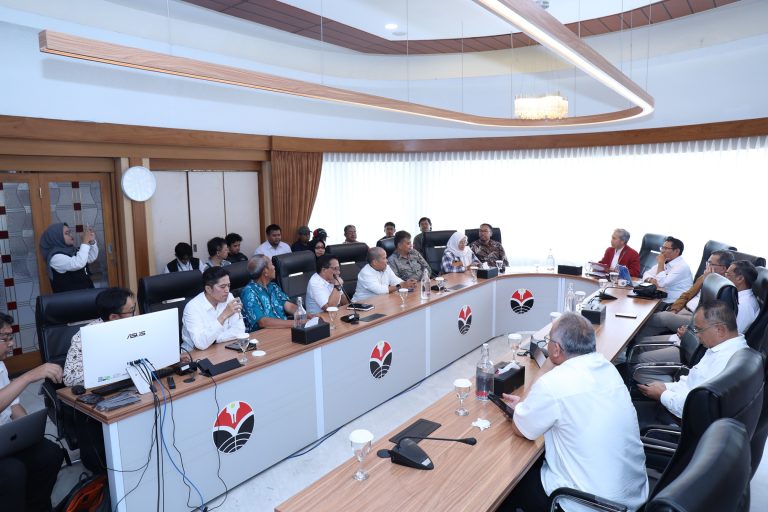
Universitas Pendidikan Indonesia (UPI) has launched a comprehensive socialization of the LAMDIK 3.0 accreditation instruments, preparing its teacher education programs for the latest quality assessment rules that will fully apply from March 2026. The session, held at the FPEB 6th‑floor auditorium on Jl. Dr. Setiabudhi No. 229, Bandung, on Tuesday, February 10, 2026, is a strategic move to ensure all study programs fully grasp the changes, regulations, and scoring indicators in the new framework.

Director of the Directorate of Quality Assurance and Rankings, Prof. Dr. Ratnaningsih Eko Sardjono, M.Si., explained that the LAMDIK 3.0 instruments have been in force since December 2025 and are now in a transition phase before full implementation. Many UPI education related programs currently monitored by LAMDIK are preparing for re‑accreditation as their existing accreditation terms run out between 2026 and 2027, making early familiarity with the new requirements critical.

“Programs must prepare their accreditation documents exactly in line with the latest instrument,” she said. “Therefore, it is essential that faculties and study programs understand in detail the criteria, scoring indicators, and policies embedded in LAMDIK 3.0”.

Prof. Ratnaningsih stressed a crucial new element in the 3.0 instrument: mandatory “must‑have” conditions that must be fully fulfilled. Even if an overall score is high, a program cannot attain the “Unggul” (Excellent) label if any one of these mandatory conditions is missing. “Programs must really internalize this. Don’t end up with a good score but fail to reach ‘Unggul’ because one mandatory item is overlooked,” she emphasized.

She further explained the main differences between the LAMDIK 3.0 and 2.0 instruments. In general, the structure of the assessment criteria and the document format remain largely unchanged. However, under the 3.0 instrument, the “Baik Sekali” (Very Good) category has been removed. Study programs can now only obtain “Unggul (5 years),” “Unggul (3 years),” or “Terakreditasi” (Accredited), depending on their final score and the fulfillment of mandatory requirements.

Through this socialization, UPI aims to push all teacher education programs toward an early mapping and refinement of their performance indicators under the 3.0 framework. Programs whose accreditation windows are still relatively long can use this session as a strategic starting point to design quality‑improvement initiatives that fully meet the new standards.

“Every program must know and implement the indicators embedded in this instrument, so that the ‘Unggul’ status can not only be maintained but also strengthened,” Prof. Ratnaningsih concluded.

By aligning proactively with LAMDIK 3.0, UPI reinforces its commitment to SDG 4 (Quality Education), upgrading internal quality assurance systems and ensuring that its teacher education programs meet and exceed national standards for teaching and learning. (Rija/DN)

215 High‑Achieving UPI Students Receive Genius Scholarship from West Java Provincial Government

11 Feb 2026 • Humas UPI

Bandung, UPI

Universitas Pendidikan Indonesia (UPI) has officially distributed a scholarship grant from the West Java Provincial Government to 215 high-achieving students, marking a significant step toward expanding access to higher education for those from financially disadvantaged backgrounds.

The “Genius Scholarship” was symbolically presented during the first-wave 2026 UPI graduation ceremony at the UPI Gymnasium on Jl. Dr. Setiabudhi No. 229, Bandung, on Tuesday (Feb. 10).

The program is aimed at students who demonstrate strong academic performance while facing financial challenges, reflecting the provincial government’s commitment coordinated through the Regional Welfare Office to widening access to higher education and strengthening human resource development.

UPI Vice Rector for Student Affairs, Alumni, and Business, Prof. Dr. phil. Yudi Sukmayadi, M.Pd., explained that recipients are selected based on both financial need and academic excellence.

“These 215 students have gone through a rigorous proposal submission and document verification process conducted by the Directorate of Student Affairs and Alumni from October to November 2025,” he said.

He added that the scholarship is based on the Regional Grant Agreement (Naskah Perjanjian Hibah Daerah / NPHD), which was signed in September 2025 between UPI and the West Java Provincial Government.

UPI noted that this is not the first time it has received funding under the Genius Scholarship program and expressed hope for increased allocation in 2026, as many students still require support for their Single Tuition Fee (UKT) payments.

To ensure fairness, the scholarship is distributed proportionally across all study programs, allowing equal opportunities for students across faculties.

Through this initiative, UPI continues to support students’ academic journeys while contributing to the provincial government’s broader higher education agenda. The program also aligns with the Sustainable Development Goals (SDGs), particularly SDG 4 (Quality Education) and SDG 10 (Reduced Inequalities), by reducing financial barriers and promoting inclusive access to education. (Rija/DN)

Search