FPEB UPI Hosts The 6th FPEB Summer Program 2025, Strengthens International Collaboration with Universiti Malaya
08 Aug 2025 • Humas UPI
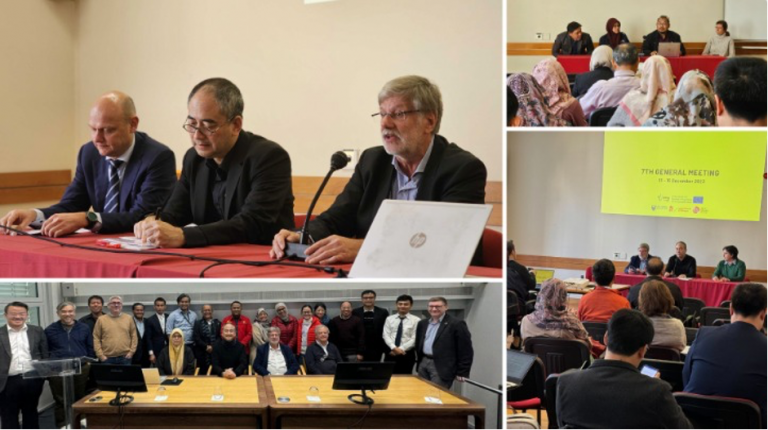
Bandung, August 7, 2025 – The Faculty of Economics and Business Education (FPEB) at Universitas Pendidikan Indonesia (UPI) officially opened The 6th FPEB Summer Program 2025, an annual international academic event bringing together students and academics from FPEB UPI and Universiti Malaya, Malaysia. The program takes place over five days, from August 4 to 8, 2025, at UPI’s Bandung campus.
The opening ceremony, held at the 6th-floor Auditorium of FPEB, was led by Prof. Dr. Ratih Hurriyati, M.P., CSBA, Dean of FPEB UPI. In her remarks, Prof. Ratih highlighted the importance of international collaboration in shaping graduates who are adaptive, critical, and prepared to face global challenges.
According to Dr. Heny Hendrayati, S.IP., M.M., Vice Dean for Academic Affairs at FPEB UPI, the program aims to create a cross-country collaboration space in the fields of education and business, while also serving as a platform for the exchange of knowledge, culture, and global perspectives.
The first day began with a campus tour using the UPI Shuttle, introducing participants to the academic environment and local culture. The day continued with two main sessions held at FPEB’s Smartclass. The first session, Design Thinking for Global Problem Solving, discussed how creativity and innovation can be applied to address cross-border challenges. The second session, We Can Solve By Using The Same Kind Design Thinking and Artificial Intelligence for Sustainable Business Innovation, explored the role of artificial intelligence in supporting sustainable business innovation.
Participants actively engaged in discussions and Q&A sessions, demonstrating strong enthusiasm for the topics presented. Prof. Ratih emphasized that the program offers more than just academic enrichment—it also fosters cultural interaction and the development of soft skills. She expressed hope that the initiative would broaden participants’ understanding of the importance of international collaboration in creating joint solutions to future global challenges. (contributor)
Universitas Pendidikan Indonesia and INTI International University & Colleges Malaysia Discuss Future International Collaboration Opportunities
30 Jul 2025 • Humas UPI
Bandung, July 24, 2025 – Universitas Pendidikan Indonesia (UPI) officially welcomed a delegation from INTI International University & Colleges, Malaysia, to explore various collaboration opportunities in education, research, and international academic mobility. The meeting took place at UPI’s Teacher Professional Education Building (PPG UPI), located on the Bumi Siliwangi Campus in Bandung.
The primary agenda of this visit was to discuss long-term strategic collaborations between the two institutions, forming part of UPI’s efforts to expand its international network and strengthen its strategic position on the global stage.
The delegation from INTI International University included Prof. Dr. Goh Khang Wen, Pro Vice Chancellor for Global Engagement, accompanied by Chen Si Ying, Assistant Director of the International Relations and Collaboration Centre.
Meanwhile, representatives from Universitas Pendidikan Indonesia included:
Dr. rer. nat. Nandi, S.Pd., M.T., M.Sc., Director of the Directorate of International Affairs
Arif Hidayat, M.Si., Ph.D.Ed., Head of the Division of International Cooperation and University Enhancement
Heri Puspito Diyah Setiyorini, M.M., Ph.D., Head of the Division of International Program Development
During their presentation, INTI outlined its institutional profile, history, vision, mission, and international program development. INTI operates under the Hope Education Group, which possesses a global education network in various countries, including Thailand, China, Hungary, Poland, the Philippines, and Indonesia. INTI also has several campuses spread across Malaysia:
Penang
Subang, Selangor
Nilai, Negeri Sembilan
Kota Kinabalu, Sabah
INTI has five main faculties and several educational development centers:
Faculty of Business and Communications (FBC)
Faculty of Data Science and Information Technology (FDSIT)
Faculty of Education and Liberal Arts (FELA)
Faculty of Engineering and Quantity Surveying (FEQS)
Faculty of Health and Life Sciences (FHLS)
INTI Health Management School
Centre for Postgraduate Studies
Centre for Continuing Learning
The programs offered range from formal education at various levels to professional training and continuous development programs. INTI also emphasized the importance of sustainability-based education through green campus initiatives and the development of renewable energy.
In the ensuing discussion, INTI presented various collaboration opportunities open to UPI, including:
Student exchange programs
Short study programs or customized study tours based on students’ fields of study
Lecturer exchange program and visiting scholars
Offline and online teacher training
Academic program collaborations in the form of franchises or dual awards
Invitations to online academic forums and international symposiums
Joint research collaborations
INTI also stated that it was the number one university in attracting inbound exchange students in 2024, reflecting the strength and appeal of its international programs.
Regarding student exchange programs, INTI expressed readiness to accept UPI students for one-semester programs. Students participating in this program will receive institutional support and guidance. It is hoped that UPI students who already possess passports will be interested in participating and be prepared to process student visas, book air tickets, and attend to personal needs during their stay in Malaysia.
Dr. rer. nat. Nandi welcomed the collaboration opportunities and stated that UPI’s international mobility collaborations have generally focused on undergraduate (S1) students. However, if feasible, UPI would open opportunities to expand these collaborations to postgraduate (S2) levels with INTI International University.
Heri Puspito Diyah Setiyorini added that the potential for collaboration could be expanded in various forms, such as joint curriculum development, support for participation in international conferences, the appointment of adjunct professors, the organisation of inbound summer programs, outbound summer exchanges, short courses, and Educational Leaders Visiting Scholar (ELVS) programs. Additionally, thematic training and collaborative research are also deemed capable of enhancing the academic quality of both parties globally.
For information, Universitas Pendidikan Indonesia is currently a leading higher education institution in Indonesia in the field of education, ranking 251–300 globally. UPI has over 150 active international collaborations with main partners from Japan and South Korea, and continues to expand partnerships with China, Europe, the Middle East, and Southeast Asia. Currently, the largest number of international students at UPI comes from Uzbekistan and China.
UPI has nine faculties:
Faculty of Educational Sciences (FIP)
Faculty of Social Sciences Education (FPIPS)
Faculty of Language and Literature Education (FPBS)
Faculty of Mathematics and Natural Sciences Education (FPMIPA)
Faculty of Engineering and Industrial Education (FPTI)
Faculty of Sports and Health Education (FPOK)
Faculty of Economics and Business Education (FPEB)
Faculty of Art and Design Education (FPSD)
Faculty of Medicine (FK)
In addition, UPI has a Postgraduate School (SPs) and five regional campuses located in Cibiru, Purwakarta, Tasikmalaya, Sumedang, and Serang, scattered across West Java. UPI’s study programs are not only focused on education but also include non-educational programs. In the field of publications, UPI has published scientific journals at SINTA 1–6 levels, as well as reputable international journals ranked in Q1 to Q3.
Moving forward, UPI and INTI will continue to discuss further concrete forms of cooperation, including faculty and student exchanges, joint curriculum development, international training, and collaborative research with academic and social impact. With the academic strengths, cooperative spirit, and international vision shared by both universities, it is hoped that this collaboration will develop strategically and provide tangible benefits for the advancement of global education. (Inayah Alawiyyah/Fathan Sofwan Apip)
Wanua Waru Tourism Map Introduced by KKN Kebangsaan XIII Student
27 Jul 2025 • Humas UPI
Maros, July 27, 2025 – Wanua Waru Tourism Village, located in Mallawa District, Maros Regency, South Sulawesi, is known as a hidden gem with diverse tourism potential. Highlights include the prehistoric Leang Panning cave—where the 7,200-year-old skeleton of a woman named Besse was discovered—along with the three-tiered Tuli Baruttung Waterfall, the green panorama of Kacicu Hill, and the adrenaline-pumping Batu Massong paragliding site.
Despite its wealth of natural and historical attractions, the village has lacked a proper tourism navigation system. Visitors have relied on directions from locals, as no official map was available to guide their journeys.
Addressing this issue, Syifa Nurul Jannah, a student of Surveying, Mapping, and Geographic Information Studies at Universitas Pendidikan Indonesia and a participant in KKN Kebangsaan XIII, designed a tourism map for Wanua Waru. The map aims to help both tourists and residents explore the village’s main attractions more easily.
“This map is designed to help local communities and visitors identify each destination. We hope it can serve as both a guide and a marker for tourism potential worth developing further,” said Syifa.
The map combines clear information with engaging visuals, featuring icons of sites such as Leang Panning, Tuli Baruttung Waterfall, Kacicu Hill, and the Batu Massong paragliding point. Printed copies have been framed and displayed at the Wanua Waru Village Office, while roadside information boards ensure visibility for travelers.
With this initiative, visiting Wanua Waru is expected to become a more guided and enjoyable experience. The project also reflects the tangible contribution of KKN Kebangsaan XIII students to village development—not only in education and social aspects but also in tourism promotion and management. (contributor)
The Story of Hydromica Team from UPI: Bronze Winner at S.E.E.D. 2025
25 Jul 2025 • Humas UPI
Yogyakarta – July 18, 2025
HYDROMICA TEAM received the Bronze Award at the International Sustainable Ideas through Education, Engineering, and Design (S.E.E.D.) 2025 competition, one of the three UPI representatives who successfully conveyed their ideas about Hydromica (Hydrological Cycle with Microcontroller) at Sanata Dharma University Yogyakarta on July 16th – 18th, 2025.
The team was led by Sephianti Dwika Ezha from the 2022 Chemistry Education study program, with members De Shila Syailinda Maulida from the 2022 Biology study program, and Khrisna Wahyu Wibisono from the 2022 Computer Science Education study program. It is one of the three UPI contingents who brought their projects to compete in the 2025 International Sustainable Ideas through Education, Engineering, and Design (S.E.E.D.) competition.
The initial idea of this team project was not about the water cycle, but about chemistry on one of the atomic theories. However, after further discussion we decided to create a more general science learning media that has aspects of biology, chemistry, and geography and has a broad impact and can be applied by many students and educators with a high level of complexity such as the water cycle.
We surveyed junior and senior high school in West Java students before making this media, and got a response that many still find it difficult to make this cycle because it has many stages. Also, educators have not been able to maximize in explaining this material due to the limitations of learning media that only describe the water cycle in text and 2D in the form of explanations, images, videos, or even mockups. However, it cannot describe the real process of the water cycle. Increased understanding of education is crucial to advancing Indonesia, because students will become agents of change. As a prospective educator, there are still many things that are difficult to make students understand about water cycle learning.
“I really like to compete and have a lot of ideas, I am interested in making students understand more about what they learn at school, I found this during a teaching internship at one of the Bandung City High Schools. This made me think to be able to help facilitate the teaching and learning process, one of which is by making learning media. Previously, I had also made a flipbook learning media with augmented reality about nanotechnology material which received champion appreciation at the PKM AMLI competition. This time I tried something different, because my brainstorming partner was De Shila from biology so we decided to make media with a science background, namely the water cycle.” said team leader, Sephianti Dwika Ezha.
This media is designed to suit all learning styles – kinesthetic, visual and auditory. All learning styles are adapted and with 3D media we hope that there can be interaction between students and the media we create. We use microcontroller technology to manage the sensors of the running cycle from the initial stage to the final stage and keep repeating.
“In arranging the electricity to manage the microcontroller on the hydromica, I think with tight spaces it is quite difficult due to cable management issues and lack of understanding of the module current load. Thus, it is necessary to perform diagnostics to find the cause of system problems. In addition, components must be kept out of direct contact with water to avoid damage. I was hesitant at first because I had to delve deeper into microcontrollers, but because of the supportive team and surroundings. Finally, I accepted the new challenge and was able to adapt and work together with the team to achieve better results.” said the technician, Khrisna Wahyu Wibisono.
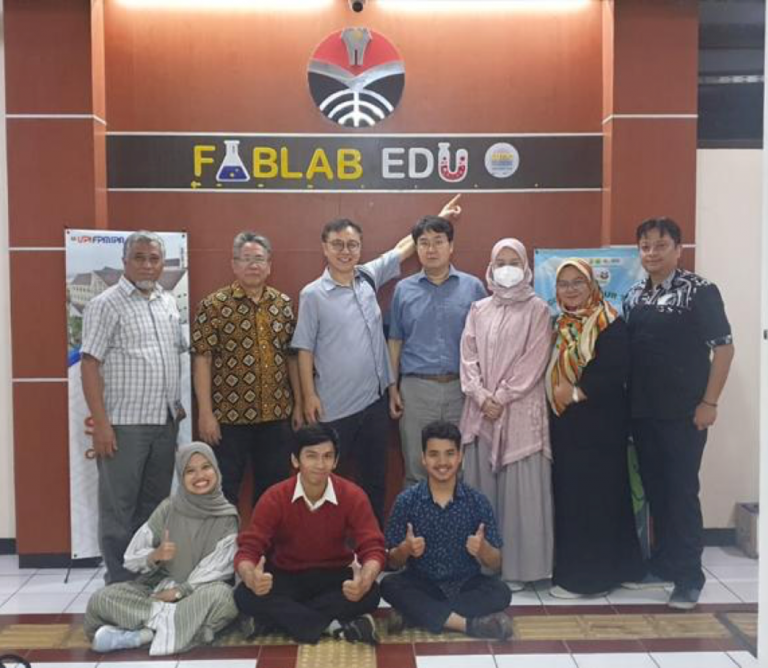
This project was made in Fabrication Laboratory Building C FPMIPA UPI, 1st floor. At first we were not sure with a short time we could complete our project optimally, but we were convinced and optimistic with our efforts and hard work.
“I like new things, even though my background is not from education I am very interested in this learning media because the idea is also a biogeochemical cycle so there is still a connection with biology. In this team I learned a lot of new knowledge of Tinkercad software, Bamboo Studio, Flashprint for 3d printing needs, thanks to the support of my team members, it made it easier for me to learn everything so that projects could run well and be completed on time. “-said the designer, De Shila Syailinda Maulida.
The process of making our project did not escape the help of many parties such as our supervisor Mrs. Triannisa Rahmawati, S.Pd., M.Si., who was always on standby to provide input, assist, and be contacted anytime and anywhere. In addition, we were also accompanied by Dr. rer. nat. Omay Sumarna, M.Si., who gave input on how we presented the background of the problem of the project. This is how he sees our project and cooperation in making hydromica.
“The hydromica team has good cooperation and is compact in doing its work, even though the work is only for a short time, they can complete it well and get satisfying results.” the opinion of Mrs. Triannisa Rahmawati, S.Pd., M.Si.
In addition, we received a sentence of praise from Mr. Omay after our presentation, “Es ist gut gegangen.” he said in German.
In addition to the help of the supervisor, we also discussed with Mr. Rudi who is a person who works in the FPMIPA Workshop Room. And asked for some help in the process of making our project. According to Mr. Rudi, the idea we made was fresh and had good teamwork.
“The media made is new, salute the innovations made in 1 month with excellent teamwork, fortunately our lab is very familiar, thank God you can make it happen, there are some that are missed in making prototype designs, because collaboration can be realized, very proud because it is the first time that there is not much intervention, the creation of MIPA students, grateful and congratulations, hopefully the knowledge is useful, and if you graduate, develop while looking for improvements, hopefully in the future you will be more successful, making UPI proud.” Said Mr. Rudi who is an education staff in the FPMIPA workshop.
We hope that the existence of hydromica can be useful for the surrounding in accordance with our goals, namely facilitating understanding of the water cycle at the junior and senior high school levels. Impact on students, teachers, the education sector, and globally. In addition, we will continue to evaluate hydromica and finalize our next plan so that hydromica is more useful for the surrounding. This work was supported by Leading University Project for International Cooperation (LUPIC) through the National Research Foundation of Korea (NRF) funded by the Ministry of Education (MOE), Korea (NRF-2023H1A7A2A02000090). (SDE)
UPI and Bapperida Hold Initial Meeting, Open Path to Long-Term Collaboration
09 Jul 2025 • Humas UPI
Bandung – July 8, 2025
Universitas Pendidikan Indonesia (UPI) hosted an initial audience with the Regional Development, Research, and Innovation Agency (Bapperida – Badan Perencana Pembangunan, Riset dan Inovasi Daerah) of Bandung City at the Parterre Meeting Room, Bumi Siliwangi Building. The meeting served as an introductory step toward a long-term collaboration in research and innovation between the two institutions.
The discussion focused on joint research initiatives, downstreaming of academic results, and concrete solutions to urban challenges in Bandung. Both UPI and Bapperida expressed commitment to working together in addressing strategic local issues through science-based approaches.
UPI Rector, Prof. Dr. Didi Sukyadi, M.A., emphasized that UPI is open to partnering with Bapperida, recognizing the importance of academic contributions to public policy and city development.
“Bandung is a promising city, but it also faces various challenges. Bapperida, as a research agency, cannot address them alone. Collaborating with universities like UPI is key to finding impactful solutions,” said Prof. Didi.
Anton Sunarwibowo, S.T., M.T., Head of Bapperida, praised the warm reception from UPI and expressed optimism about future collaboration.
“This is a great momentum for us to build a strategic partnership. There are many ideas and programs we can further develop for 2026 and beyond. We hope this synergy will support the realization of the mayor’s vision for Bandung,” said Anton.
He also highlighted the potential of UPI’s strength in education to help shape productive mindsets among residents and to support community development through character-building initiatives.
The two institutions plan to continue the dialogue with more focused discussions in the near future. One of the collaborative agendas includes mapping neighborhood-level (RW) potential and optimizing budget utilization through data-driven innovation pilots.
This initial meeting marks a meaningful start to strengthening collaboration between academia and local government to support sustainable and research-based development in Bandung. (CS)