UPI Accelerates Campus Business Development as Indomaret Point Officially Opens at UPI Dormitory
02 Apr 2026 • Humas UPI
Bandung, UPI
Universitas Pendidikan Indonesia (UPI) continues to demonstrate concrete steps toward strengthening institutional independence through the development of strategic campus-based businesses. One major milestone was marked by the grand launching of Indomaret Point at the UPI Dormitory in Bandung on January 7, 2026.
The inauguration reflects UPI’s commitment to optimizing university assets while providing services that meet the needs of the campus community. The presence of Indomaret Point is expected not only to serve as a supporting facility but also to become a driver of economic activity within the campus environment.
Director of UPI’s Business Directorate, Dr. Ida Farida Adi Prawira, S.E., M.Si., CFP., explained that the partnership with Indomaret represents a strategic step in strengthening UPI’s growing business ecosystem. “We are grateful for the remarkable enthusiasm from the UPI community. This is a strong indicator that campus business development has gained full support,” she said.
She further emphasized that this collaboration is only the beginning. UPI possesses assets across various strategic locations that hold significant potential for future development through partnerships with professional business partners.
UPI Rector Prof. Dr. H. Didi Sukyadi, M.A. highlighted the dual benefits of such business synergy. Beyond stimulating campus economic growth, the presence of Indomaret Point also enhances convenience for lecturers and students in their daily activities.
“With tens of thousands of students at UPI, campus business development holds enormous potential. This is not merely a commercial venture, but part of a broader strategy to improve welfare and strengthen the educational ecosystem,” the Rector explained.
He also underlined the multiplier effects of campus business expansion, ranging from increased student activity and optimized dormitory facilities to future collaboration opportunities such as student internships and scholarship support.
The launch of Indomaret Point at the UPI Dormitory symbolizes UPI’s progress as an adaptive, independent, and forward-looking university—demonstrating that it excels not only in the tri dharma of higher education but also in managing economic potential to support institutional sustainability and the well-being of the academic community.
In addition, this initiative aligns with several Sustainable Development Goals (SDGs), particularly SDG 8: Decent Work and Economic Growth through the development of campus-based economic opportunities, and SDG 17: Partnerships for the Goals through strategic collaboration between higher education and industry. (Ajeng)
Guru Besar dan Dekan FPIPS Universitas Pendidikan Indonesia
At the end of 2025, the public was surprised by the results of the Academic Competency Test (Tes Kemampuan Akademik/TKA) at the senior high school level, which showed that the average scores in core subjects were relatively low. These results sparked widespread debate. Do they reflect a failure of the national education system? Or are they merely a technical anomaly in the assessment process?
However, from a clearer and more constructive perspective, the data is not simply bad news, but rather an objective reflection that compels us to honestly evaluate ourselves. Indonesia’s education system is facing serious challenges, but at the same time, it holds great opportunities for systemic improvement.
On the one hand, the 2025 TKA results can be seen as a strong warning that various education policies, programs, and practices have not fully contributed to improving student learning outcomes. On the other hand, the data provides a healthy space for reflection to improve the direction of education development based on evidence (evidence-based policy).
In this context, the Education Resolution 2026 becomes crucial—not merely as a reactive response, but as a strategic step to reorganize the foundation of national education in a sustainable way.
Technocratically, Indonesia’s education development is not lacking direction. In the National Long-Term Development Plan (Rencana Pembangunan Jangka Panjang Nasional/RPJPN) 2025–2045 and the National Medium-Term Development Plan (Rencana Pembangunan Jangka Menengah Nasional/RPJMN) 2025–2029, education is positioned as a key pillar of human resource development.
The main objective is clear: achieving equitable and high-quality education. The indicators are also comprehensively formulated, including average years of schooling, expected years of schooling, learning outcomes measured through PISA scores and national assessments, as well as the gross enrollment rate in higher education.
Future Challenges in Education
However, when these indicators are compared with current empirical realities, several challenges remain.
In terms of the average years of schooling (Rata-rata Lama Sekolaj/RLS) for people aged 15 and above, national data from BPS RI (2025) shows a figure of 9.41 years. This indicates that, on average, Indonesians aged over 15 have only completed education equivalent to junior high school.
Similarly, the expected years of schooling (Harapan Lama Sekolah/HLS) stands at 13.30 years, suggesting that Indonesian youth are projected to complete formal education only up to the diploma (D-1) level.
This condition reflects a gap between the goals of education development and the actual participation of society.
The situation is further exacerbated by the low gross enrollment rate in higher education. Based on BPS RI (2025), the rate stands at only 32.89%. In the context of global competition driven by knowledge and innovation, this figure presents a serious challenge for Indonesia’s vision of Golden Indonesia 2045.
From the perspective of learning quality, the challenges are equally significant. In the Programme for International Student Assessment (PISA) 2022, Indonesia’s score was 369—lower than neighboring countries such as Thailand (394), Malaysia (404), Vietnam (468), and Singapore (560). This fact shows that Indonesia’s education problem is not only about access and participation, but also about the quality of learning.
Similarly, the 2025 TKA results at the senior high school level remain relatively low. As reported by Media Indonesia (2025), the average scores were 24.93 for English, 36.10 for Mathematics, and 55.38 for Indonesian.
Therefore, these macro-level indicators represent major challenges that must be addressed to achieve Golden Indonesia 2045.
The Way Forward
When viewed comprehensively, these education indicators confirm that Indonesia is facing structural challenges in education development. Therefore, the Education Resolution 2026 is expected to begin with an objective evaluation of previous achievements.
Such evaluation must be accompanied by strong political will to implement breakthrough policies that can accelerate both the quality and quantity of national education.
The resolution must begin with the government’s consistency in following the direction, goals, and targets outlined in the RPJPN 2025–2045, RPJMN 2025–2029, and the Indonesian Education Roadmap 2025–2045. This consistency is essential to ensure that education policies do not constantly shift due to short-term dynamics, but instead move along a long-term national development trajectory.
In addition, future education policies and programs must be inclusive, comprehensive, systematic, participatory, and sustainable. Education should not be designed solely within bureaucratic institutions but must involve teachers, lecturers, parents, professional organizations, universities, and the broader educational community.
Furthermore, education policies must be grounded in academic research and empirical evidence (evidence-based policy), rather than relying on trial-and-error approaches.
The year 2026 also calls for real policy breakthroughs. These breakthroughs must not be partial or sectoral, but should comprehensively address educational issues from upstream to downstream.
One crucial agenda expected in 2026 is the formulation and ratification of the National Education System Bill (RUU Sisdiknas) using a codification method.
This codification approach is expected to simplify and integrate various education regulations that have long been fragmented and overlapping. More than just a legal product, the bill is expected to become a regulatory compass that guides all national education policies and programs.
If ratified in 2026, the bill has the potential to provide a strong foundation for resolving regulatory issues while opening opportunities for measurable and sustainable policy innovation. With a clear and consistent legal framework, Indonesia will have a stronger position to improve its national education index and global competitiveness.
Ultimately, the Education Resolution 2026 must be built on rational optimism. While the data shows significant challenges, it also reveals opportunities for change. Indonesia’s education system is not at a dead end, but at a crucial crossroads in determining its future direction.
With the courage to reflect and evaluate, consistency in implementing development plans, and commitment to policy breakthroughs, Indonesia’s education system is expected to move beyond a “business as usual” paradigm toward a more transformative approach, one that truly improves the quality of education. From this point, the vision of Golden Indonesia 2045 can find a solid foundation.
Importantly, the discussion relates to SDG 4: Quality Education through efforts to improve access to and the quality of education, SDG 10: Reduced Inequalities by addressing gaps in educational participation, and SDG 8: Decent Work and Economic Growth by strengthening human resources through education to support sustainable economic development.
UPI Commits to Becoming an Impactful University Through the 2026 Performance Contract Signing
02 Apr 2026 • Humas UPI
Bandung, UPI
Universitas Pendidikan Indonesia (UPI) has reaffirmed its commitment to becoming a high-impact university by signing the 2026 Higher Education Performance Contract at the Ministry of Higher Education, Science, and Technology building. The agreement marks an important starting point in strengthening effective, transparent, and accountable higher education governance based on measurable outcomes.
The performance contract was signed by UPI Rector Prof. Dr. H. Didi Sukyadi, M.A., representing the university, and Prof. Brian Yuliarto, S.T., M.Eng., Ph.D., representing the ministry.
The contract includes detailed program targets and key performance indicators covering talent development, innovation, community contribution, and integrity-based governance. Through the agreement, the Rector formally commits to achieving the stated performance targets, while the ministry is responsible for providing guidance, evaluation, and recognition and, when necessary, corrective measures based on UPI’s achievements. The document also emphasizes that the success or failure of target attainment will be the responsibility of the university’s leadership.
In addition, the contract outlines several specific indicators, including the proportion of postgraduate students, international students, and doctoral-qualified lecturers. It also sets ambitious targets for Top-Tier and Q1 international publications. Furthermore, UPI aims to improve its standing in global rankings such as the QS World University Rankings and the THE Impact Rankings, key benchmarks of global competitiveness for universities.
The agreement also highlights non-tuition revenue indicators, including research funding and external grants as a share of UPI’s total income. Moreover, the university’s contribution to society is positioned as a core pillar, with funding allocated to public service programs, research, lecturer capacity development, and laboratory strengthening.
Integrity in governance is another major focus, reflected in the regulation of fund utilization and strategies to improve lecturer welfare. These measures are expected to support higher standards of educational quality and institutional performance.
Importantly, the performance contract aligns with several Sustainable Development Goals (SDGs). The initiative supports SDG 4: Quality Education through the enhancement of higher education standards and research output, SDG 9: Industry, Innovation and Infrastructure through innovation and research strengthening, and SDG 16: Peace, Justice and Strong Institutions through transparent and accountable governance.
Through these indicators, UPI is being directed to become a university that excels not only academically but also delivers meaningful social and economic impact. Ultimately, the signing marks a significant step in accelerating UPI’s transformation into a world-class university rooted in strengthening education and improving the quality of Indonesia’s human resources. (Ajeng)
UPI Strengthens Indonesia–Malaysia Student Collaboration through the “Mesra” Program
02 Apr 2026 • Humas UPI
Bandung, UPI
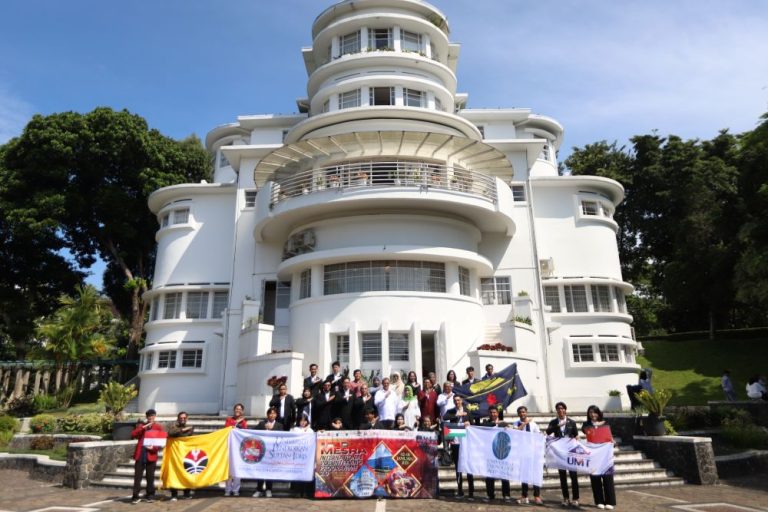
Universitas Pendidikan Indonesia (UPI) welcomed a delegation of students from several Malaysian universities as part of an international collaboration initiative titled the International Volunteering Programme 3.0 – “Mesra” (Students Together with Communities/Mahasiswa Bersama Masyarakat). The group was officially received on Monday (Jan 5) at the UPI Rectorate Building by the Vice Rector for Student Affairs, Alumni, and Business, Prof. Dr. phil. Yudi Sukmayadi, M.Pd.
The collaboration brings together students from Universiti Pendidikan Sultan Idris (UPSI) as the program initiator, alongside participants from Universiti Malaysia Terengganu and Universiti Teknologi Petronas, who are working in partnership with UPI students as hosts.
Prof. Yudi Sukmayadi warmly welcomed the Malaysian delegation, describing the international partnership as a strategic step toward developing student leadership on a global scale.
“This International Mesra Collaboration is not only an opportunity for international friendship but also expected to generate new approaches for nurturing student leadership at the global level,” he explained. Furthermore, he emphasized that the program aligns with UPI’s vision of preparing students to become future leaders who care about society and the environment while contributing to national development.
The Malaysian delegation was led by Assoc. Prof. Ts. Dr. Che Ghani bin Che Kob, Chief/Principal of the Off-Campus Residential College at UPSI in Tanjung Malim, Perak. He explained that Mesra in Malay means students together with the community, which serves as the program’s guiding spirit. “This Mesra Collaboration Program is an international volunteer and community service initiative designed to provide hands-on experience for students from various universities to engage directly with communities,” he said.
UPI was chosen as a partner due to its shared institutional characteristics with UPSI and their long-standing collaboration. This marks the third series of the program, following its previous implementation at Universitas Islam Negeri Sultan Maulana Hasanuddin Banten.
Meanwhile, UPI’s Director of Student Affairs, Prof. Dr. Siti Nurbayani K., M.Si., explained that the initiative combines international volunteering with academic activities and student leadership development.
“This program involves students from UPSI, Universiti Malaysia Terengganu, Universiti Teknologi Petronas, and UPI in volunteer work, academic discussions, and institutional visits as part of benchmarking student affairs management,” she stated.
The program includes lecturer discussions, cross-border student interactions, and community service activities in mosques surrounding the UPI campus. In total, the Malaysian delegation consisted of 22 participants, including 17 students and several lecturers and accompanying officials.
Importantly, the International Volunteering Programme 3.0 – Mesra contributes to several Sustainable Development Goals (SDGs). The initiative supports SDG 4: Quality Education through experiential learning opportunities that enrich students’ global competencies. It also advances SDG 17: Partnerships for the Goals by fostering cross-border collaboration between higher education institutions, and SDG 11: Sustainable Cities and Communities through student engagement in community service.
Through this collaborative approach, students not only gain international exposure but are also encouraged to become change agents equipped with social awareness, global perspectives, and a strong commitment to sustainable development.
UPI hopes that this international partnership will continue to grow and serve as a best-practice model for student development grounded in community engagement and global collaboration. (Ajeng)
Enhancing Education Quality, UPI’s PPG SPs Equips Teachers with AI Literacy and Immersive Technology
02 Apr 2026 • Humas UPI
Bandung, UPI
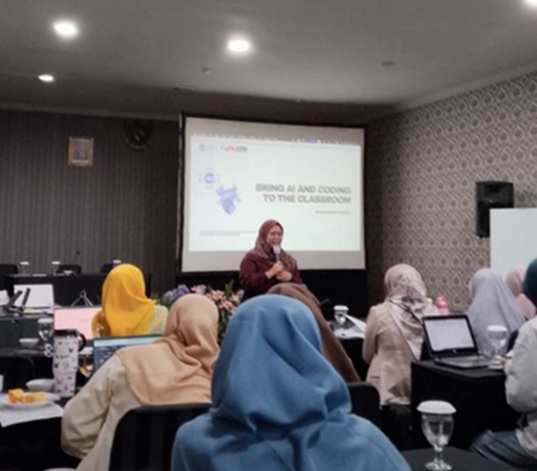
The Teacher Professional Education Program (Pendidikan Profesi Guru/PPG) at the Graduate School (Sekolah Pascasarjana/SPs) of Universitas Pendidikan Indonesia held a seminar and workshop titled “AI Literacy Workshop for Teachers: Applying AI and Immersive Technology to Design Innovative Learning.” The event took place at GH Universal Hotel, Bandung, on Saturday (Dec 20, 2025).
The program drew enthusiastic participation from PPG alumni and students eager to explore the integration of artificial intelligence (AI) and cutting-edge technology into the education sector.
The workshop was officially opened by the Secretary of PPG SPs UPI, who emphasized the growing importance of technological mastery for educators. In the opening remarks, it was highlighted that AI literacy is no longer optional but an urgent necessity for teachers to remain relevant in the digital era.
Serving as keynote speakers were two experts from UPI’s Science Education Study Program, Ai Nurlaelasari Rusmana, M.Ed., and Hanna Nurul Husna, M.Pd. They delivered comprehensive sessions on using AI applications to support lesson preparation and interactive learning platforms designed to enhance student engagement.
Beyond artificial intelligence, participants were also introduced to immersive technologies such as Virtual Reality (VR) and Augmented Reality (AR). These tools are projected to create learning experiences that are more realistic, engaging, and effective for students.
One of the most anticipated segments of the event was the hands-on practice session. During this session, teachers and prospective teachers were given the opportunity to directly explore various AI tools to design innovative learning materials. Collaborative discussions flourished as participants developed creative ideas ready to be implemented in their respective classrooms.
“This workshop is extremely beneficial. We gained new insights into how AI can be used to make learning more engaging and aligned with students’ needs in the digital era,” said one workshop participant.
The free event also provided participants with certificates and refreshments, reflecting the university’s support for strengthening teacher professionalism.
Through this workshop, Universitas Pendidikan Indonesia once again demonstrated its commitment to improving the quality of national education. By equipping educators with the latest technological skills, the university hopes to accelerate and adapt the transformation of Indonesia’s education system to the rapidly evolving times. This initiative strongly aligns with the Sustainable Development Goals (SDG 4: Quality Education) by promoting innovative, inclusive, and future-ready teaching practices. (Ajeng)