English
Indonesia

UPI PPG Program Holds 2026 Wave-1 “Future Teacher” Socialization and Coordination

09 Apr 2026 • Humas UPI

Bandung, UPI

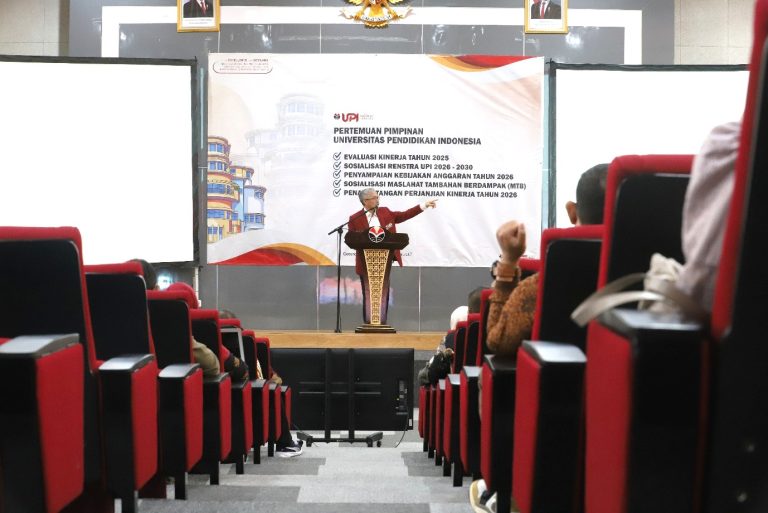
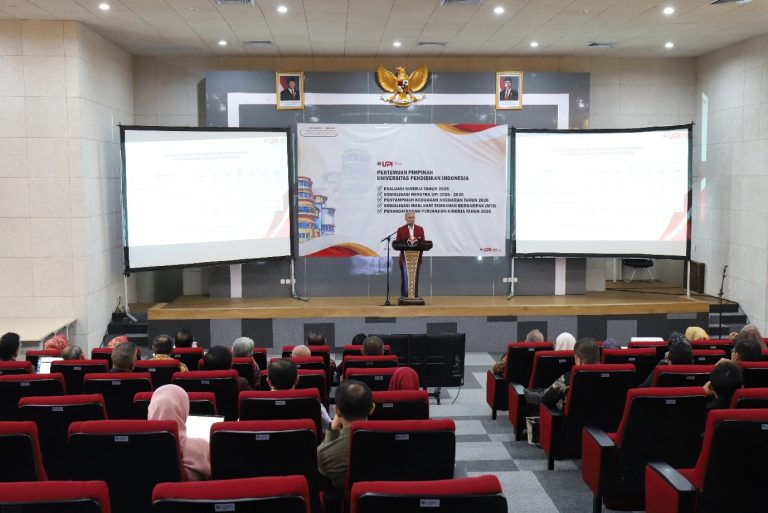
The Teacher Professional Education (PPG) Study Program at the School of Graduate Studies of Universitas Pendidikan Indonesia (UPI) held a socialization and coordination meeting to prepare for the upcoming PPG for Future Teachers (Calon Guru Prajab) Wave 1, 2026. The meeting aimed to ensure academic, institutional, and technical readiness for both classroom learning and Field Practice Experience (Praktik Pengalaman Lapangan / PPL) in accordance with the latest technical guidelines issued by the Directorate General of Teachers, Education Personnel, and Teacher Education under the Ministry of Education, Culture, Research, and Technology of Indonesia.

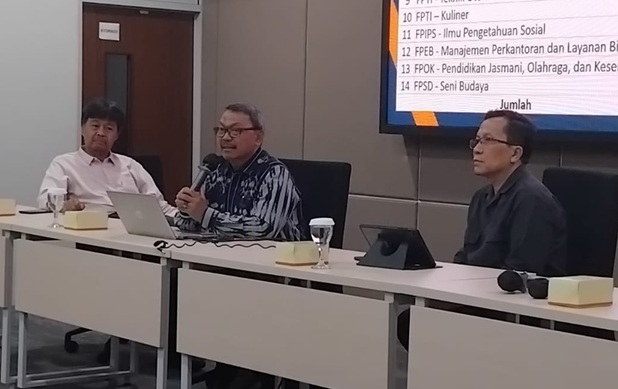
The coordination meeting took place on Thursday, January 22, 2026, at the 6th floor Auditorium of the PPG Building, UPI. It was chaired by the PPG Program Chair, Prof. Dr. H. Asep Herry Hernawan, M.Pd., and attended by program-study leaders, subject-area coordinators, permanent lecturers, and facilitators involved in UPI’s PPG programs.

During the meeting, participants discussed several important aspects of the upcoming program. These included the latest policy updates for the 2026 PPG Future Teacher program, the draft course schedule, readiness of teaching personnel, and the use of the Learning Management System (LMS) along with other instructional technologies. The discussion also covered the number of learning groups (rombel), the distribution of core, selective, and elective courses, as well as the overall academic calendar for the 2026 Wave-1 PPG Future Teacher program.

Particular attention was given to the implementation of Praktik Pengalaman Lapangan (PPL). Dr. Asep Suryana, M.Pd., Head of the Professional Education Division (Probidik), explained the strategy for guided field practice, including the roles of field supervisors (dosen pembimbing) and mentor teachers (guru pamong). He also outlined the monitoring and mentoring mechanisms that will support students during their placements at partner schools. PPL is considered a key stage in developing the professional competence of future teachers through direct classroom and school-based teaching experience.

To further strengthen shared understanding among PPG subject-area managers, an official socialization session for the 2026 Future Teacher PPG Wave 1 was held on Tuesday, January 27, 2026, at the GH Universal Hotel Bandung. The event was opened by the Dean of the School of Graduate Studies at UPI, Prof. Dr. Juntika Nurihsan, M.Pd. In his remarks, he highlighted the importance of moral and ethical character development among participants in the Calon Guru PPG program, emphasizing that this track differs from earlier PPG programs designed for teachers who are already in service.

The socialization session provided participants with detailed information about the 2026 PPG policy for future teachers, the curriculum structure, classroom-learning flow, and the integration of educational philosophy and value-based teaching. Other key topics included case-based learning, deep-learning strategies, assessment systems, and Universal Design for Learning (UDL).

Participants were also introduced to the program’s academic orientation, remedial components (matrikulasi), and the integration of curricular and non-curricular activities aimed at strengthening both the character and professional competencies of future teachers.

Through these coordination and socialization activities, the PPG Program at the School of Graduate Studies, UPIreaffirmed its commitment to implementing the Future Teacher PPG program in a professional, accountable, and quality-oriented manner. The preparation is expected to support the smooth implementation of learning activities in 2026 and contribute to producing professional teachers who are ready to support the improvement of national education quality.

In addition, this preparation initiative contributes to SDG 4: Quality Education by strengthening teacher education and pedagogical competence. It also supports SDG 8: Decent Work and Economic Growth by preparing work-ready teachers, and SDG 17: Partnerships for the Goals through collaboration among universities, schools, and the national education ministry. (Genda)

25 UPI Menwa Diklatsarmil Students Help Disaster Response with a Spirit of Service

09 Apr 2026 • Humas UPI

KBB, UPI

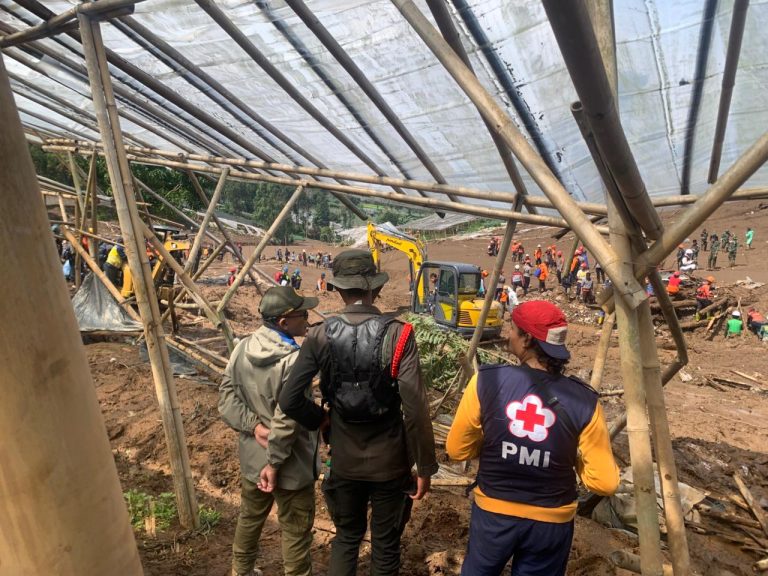
A team of 25 students participating in the Diklatsarmil (basic military training) program of the UPI Corps of Cadets (Menwa) took part in disaster response efforts following a landslide in Pasirlangu Village, Cisarua Sub-district, West Bandung Regency. The volunteer group consisted of 20 students and 5 trainers, who departed from the Menwa UPI headquarters on Sunday, January 25, at 07:30 WIB, arriving at the disaster-response area at 08:30 WIB.

The operation was led directly by the Commander of the UPI Menwa Battalion, ensuring that all activities in the field were well coordinated and carried out efficiently. Once on site, the team was divided into three working units: Field, Command Post (Posko), and Logistics.

Ten male students were assigned to the Field Unit, where they assisted in searching for victims, clearing landslide debris, and supporting evacuation operations. They worked alongside response teams from National Disaster Management Agency of Indonesia (BNPB), National Search and Rescue Agency of Indonesia (BASARNAS), and other volunteer groups. Their participation reflected strong collaboration and solidarity among disaster response actors working to maximize available resources.

Meanwhile, seven female students joined the Command Post Unit, helping with administrative tasks, recording the number of volunteers and affected residents, and assisting with food distribution. The remaining eight female students were assigned to the Logistics Unit, where they supported food preparation at the communal kitchen alongside the General Kitchen Command Post managed by the Bandung City Social Services Agency.

“We’ve received several Menwa UPI volunteers here at the logistics post to help strengthen our kitchen team. The women can assist with food preparation and cooking, while the male students can help with packaging and distribution. It’s flexible, depending on what is needed. Thank you,” said the Head of the General Kitchen Command Post from the Bandung City Social Services Agency.

For evacuation efforts, the Menwa team coordinated closely with the local National Disaster Management Agency of Indonesia (BNPB) to ensure that operations were carried out safely and effectively. With around 300 personnel from various institutions working in the field, the search and evacuation process could be conducted more quickly.

“This is a very positive initiative from Menwa UPI. Even while they are still undergoing basic training, they have contributed 25 additional personnel to support the disaster response. It reflects the spirit of service that Menwa cadets carry,” said Sukendi, a Menwa alumnus, during an interview at the site. “The knowledge and military oriented skills we gain can be directly applied to help the community and create meaningful impact.”

The Commander of UPI Menwa, William Ishaq Juarsyah Gusti N, also emphasized that the experience offers valuable learning for students participating in the training program. According to him, real-world involvement in emergency situations helps students develop quick decision making, teamwork, and coordination skills that are essential in disaster response situations. (DN)

Furthermore, this relief activity contributes to SDG 11: Sustainable Cities and Communities by strengthening local disaster response capacity, supports SDG 3: Good Health and Well-Being through evacuation and community assistance, and promotes SDG 17: Partnerships for the Goals through collaboration between student volunteers, government agencies, and local communities.

KKIPP UPI Gives 2026 PMB Socialization and Motivation at SMAN 2 Cikarang Utara

09 Apr 2026 • Humas UPI

Bekasi Regency, UPI

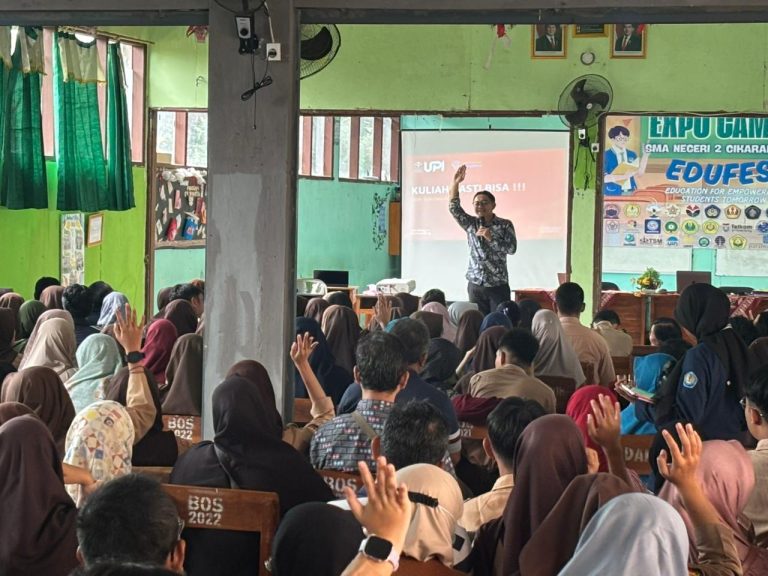
Providing clear and up to date information about the New Student Admission (Penerimaan Mahasiswa Baru / PMB) process is essential for prospective university students. To support this need, Vidi Sukmayadi Ph.D., Head of the Office of Communication, Information, and Public Services UPI (KKIPP), delivered a presentation during Expo Campus EDUFEST at SMAN 2 Cikarang Utara, Bekasi Regency, on Wednesday morning, January 21.

The session aimed to introduce students and parents to Universitas Pendidikan Indonesia (UPI), explain the PMB 2026 admission pathways, and motivate students to pursue higher education. The event began with a welcoming speech by the principal of SMAN 2 Cikarang Utara.

“Basically, we warmly welcome UPI’s visit to our school. We hope this activity can motivate our students to continue their studies at university and be accepted into major state universities like UPI,” was welcomed by Dede, M.Pd., Principal of SMAN 2 Cikarang Utara.

Continuing education at a state university is an opportunity that not all students can easily obtain, considering the limited admission quotas at each institution. During the information session, the KKIPP Head explained that the PMB 2026 admission process generally takes place through three main pathways:
Seleksi Nasional Berdasarkan Prestasi (SNBP),
Seleksi Nasional Berdasarkan Tes (SNBT), and
Seleksi Mandiri UPI (SM-UPI).

“In general, there are three main pathways to enter UPI. We hope prospective students and parents pay close attention to each stage. At the moment, the main focus is on the SNBP process,” he explained.

The school itself has shown strong results in recent years. In 2026, around 40% of SMAN 2 Cikarang Utara graduates were accepted into state universities (PTN). The motivation session and question and answer discussion were met with high enthusiasm from students.

Many questions focused on scholarships, tuition fees, and the status of “eligible” students in the SNBP pathway. The KKIPP Head explained that students categorized as eligible are in a particularly advantageous position, as their academic achievements during high school can provide a direct opportunity to apply through SNBP.

On that occasion, he also reiterated the guidance of the UPI Rector that no student should be forced to drop out of university due to financial limitations. Therefore, information about available scholarships continues to be widely shared to ensure students are aware of these important opportunities.

The event also featured several SMAN 2 Cikarang Utara alumni who are currently studying at UPI. They shared their experiences with younger students and provided information about campus life. Through interactive and creative presentations at the school’s booth, they helped build confidence among students who are considering continuing their studies at university.

This activity is expected to increase students’ interest in pursuing higher education in fields they are passionate about while also providing parents with clearer information about admission pathways and an early picture of university life. (EA)

In addition, this outreach and motivation activity contributes to SDG 4: Quality Education by improving access to transparent and accurate information about higher-education pathways. It also supports SDG 1: No Poverty and SDG 10: Reduced Inequalities by highlighting financial-support opportunities and emphasizing that economic limitations should not prevent students from continuing their education.

2026 Presidential Briefing: UPI Supports Campuses as Locomotives of National Independence Based on Science and Integrity

09 Apr 2026 • Humas UPI

Bandung, UPI

Universitas Pendidikan Indonesia (UPI) has reaffirmed its commitment to contributing to national development through higher education, research, and the strengthening of human resources. This commitment aligns with the message delivered by Prabowo Subianto, President of the Republic of Indonesia, during the 2026 Presidential Briefing (Taklimat Presiden RI 2026) held at the Presidential Palace Jakarta.

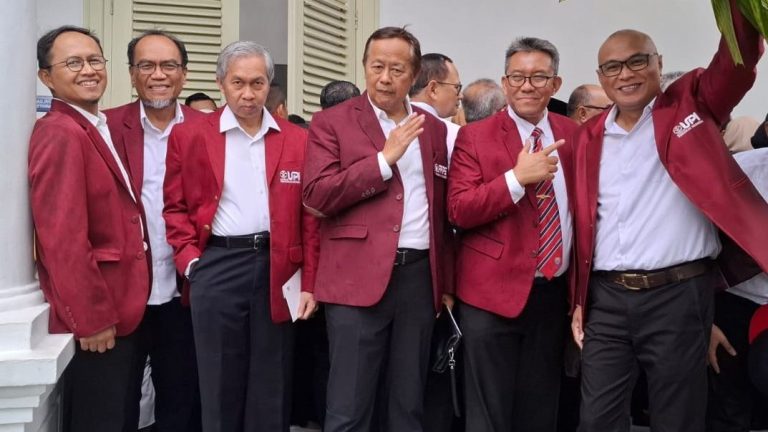
UPI was among the universities invited to attend the briefing, together with university leaders and professors from across the country. The national level event took place in the Central Hall (Ruang Tengah) of the Presidential Palace in Jakarta on Thursday, January 15, from 09:00 to approximately 12:30 WIB.

The forum gathered more than 1,200 university leaders and professors from various higher education institutions throughout Indonesia. It served as an important platform for outlining national policy directions under the theme “Humans, Higher Education, and Science for Indonesia’s Revival.” In his remarks, President Prabowo emphasized the importance of national independence in the face of increasingly dynamic and uncertain global geopolitical conditions.

Universitas Pendidikan Indonesia (UPI) was represented by a university leadership delegation led by Prof. Dr. Didi Sukyadi, Rector of UPI, accompanied by the deans of FPIPS, FPSD, and FPBS, Prof. Dr. Dadang Sudana, two Rector’s Special Staff, and Prof. Dr. Dasim Budimansyah, M.Si., Professor of Civic Sociology at UPI.

The presence of the Universitas Pendidikan Indonesia (UPI) delegation reflects the university’s position as a higher education institution ready to contribute to national dialogue, while also serving as a strategic partner of the state in preparing excellent and integrity driven human resources.

According to Brian Yuliarto, Minister of Higher Education, Science, and Technology, the President highlighted the rapid shifts in global geopolitics that require every country to strengthen its independence and resilience. In this context, universities are expected to become locomotives for the advancement of science and technology, while also serving as centers for developing excellent human resources capable of addressing global challenges.

The President also emphasized the importance of integrity, nationalism, and commitment to the public interest in higher education. This vision resonates with UPI’s mission as a university that not only advances academic excellence but also strives to nurture citizens who are knowledgeable, ethical, and socially responsible.

The Ministry views the 2026 Presidential Briefing as an important moment to align national policy with the agenda of higher education transformation and research ecosystem strengthening. The President stressed that Indonesia’s revival should not rely solely on economic growth but must also be supported by high quality human resources, mastery of knowledge, and the ability to transform research into real benefits for society and industry.

As part of this commitment, the government also announced stronger support for university research by increasing the national research and innovation budget to 4 trillion rupiah. This policy signals a major mandate for universities and professors to contribute actively to national progress.

Prof. Dr. Dasim Budimansyah, M.Si., viewed the Presidential Briefing as a clear reminder that the academic community cannot remain distant from national issues. Universities, including UPI, are expected to participate in public policy spaces through research, critical analysis, and community service. He added that strong synergy between the government and higher education institutions is essential to ensure development that truly prioritizes public welfare and social justice.

Through its participation in the 2026 Presidential Briefing, UPI reaffirmed its commitment to:

  • Producing high quality human resources who uphold strong character and integrity,
  • Developing relevant research and innovation that address national needs, and
  • Strengthening national values and civic awareness through education.

The forum also served as a reminder that universities hold a strategic role as guardians of national development and as critical partners of the state in building an Indonesia that is independent, sovereign, and just.

Writer/Source: Prof. Dasim Budimansyah
Reference: Bureau of Press, Media, and Information of the Presidential Secretariat (BPMI Setpres), Ministry of Higher Education, Science, and Technology of Indonesia

In addition, this engagement contributes to SDG 4: Quality Education by strengthening higher-education institutions as centers of knowledge and ethical leadership. It also supports SDG 9: Industry, Innovation and Infrastructure through science- and technology-based innovation, and SDG 16: Peace, Justice and Strong Institutions by promoting integrity, nationalism, and people-centered policies in national development.

UPI Fashion Education Students Host Devasana 2026: Evolva

09 Apr 2026 • Humas UPI

Bandung, UPI

Students from the Fashion Education Study Program (Pendidikan Tata Busana) at Universitas Pendidikan Indonesia (UPI) staged their annual fashion show, Devasana 2026: Evolva, at Cornerstone Bandung on Saturday, January 10, 2026. The event served as a practice based learning outcome and a fashion event project organized by students as part of their event organizer (event management) fashion course.

A total of 54 students, acting as both organizers and designers, presented 57 fashion creations modeled by 30 student models. The show also welcomed external guests, including the Coordinator of Partnerships at Dewan Kerajinan Nasional Daerah Jawa Barat (Dekranasda West Java) and national fashion designer Sonny Muchlison, who attended to appreciate the creative works of UPI’s Fashion Education students.

Head of the Fashion Education Study Program, Dr. Winwin Wiana, S.Pd., M.Ds., explained that Devasana is an integral part of the students’ learning process. “Devasana is the culmination of student learning, where the works presented are derived from classroom outputs in semesters four to six, after students have entered their specialized concentration packages,” she said.

She also noted the distinctive element of this year’s show. “This year’s uniqueness lies in the stronger ethnic nuance, particularly in regional wedding attire, which differs from previous years where Western style bridal looks were more dominant,” she added.

Devasana 2026 showcased a wide variety of fashion pieces, including traditional bridal wear, evening gowns, fantasy costumes, and ready to wear garments. Through the theme Evolva, the show illustrated the evolution of fashion across time, expressed through the students’ creative designs.

By organizing Devasana 2026, the Fashion Education Study Program at Universitas Pendidikan Indonesia continues to encourage students to develop their creativity, technical expertise, and professional readiness in fashion and the creative industry, while also increasing public appreciation for student-designed fashion.

Furthermore, this event supports SDG 4 (Quality Education) by connecting classroom learning with real‑world, creative projects, and SDG 8 (Decent Work and Economic Growth) and SDG 9 (Industry, Innovation and Infrastructure) by strengthening students’ skills for the creative‑fashion industry and promoting innovation in cultural and design based entrepreneurship. (Genda)

Search