English
Indonesia

UPI Hosts Open Visit 2026 to Attract Prospective Students

09 Apr 2026 • Humas UPI

Bandung, UPI

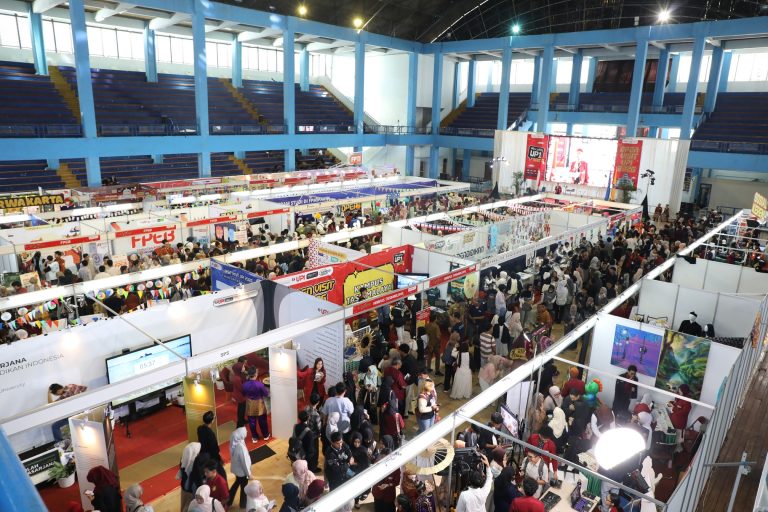
Universitas Pendidikan Indonesia (UPI) once again held Open Visit UPI 2026 as part of its effort to introduce the university comprehensively to prospective students, particularly those from senior high schools and equivalent institutions (SMA/SMK/MA). The event marked the second edition following the success of last year’s program, which received strong public interest. The activity took place at the UPI Gymnasium Building, Jl. Dr. Setiabudhi No. 229, Bandung, on Saturday, January 31, 2026.

UPI Rector Prof. Didi Sukyadi M.A explained that the program was organized again due to its significant impact in helping prospective students better understand UPI’s academic environment, study programs, and education system. Through this event, UPI aims to attract high quality students from its key stakeholders, particularly the community and learners at the secondary education level.

During the event, participants received direct information about UPI at the main activity hall and were also given the opportunity to explore various faculties and study programs according to their interests. The program was designed to provide a holistic introduction to UPI, including its faculties, study programs, and supporting units such as the Directorate of Student Affairs, the Directorate of Education, and other academic support bodies that assist students throughout their academic journey.

Public enthusiasm for the event was remarkably high. By the day of the event, more than 6,000 participants had registered. The Open Visit was conducted in several sessions, each attended by around 1,500 participants. The Rector expressed his appreciation for the strong public interest and hoped the event would help prospective students make informed decisions about their future education.

“Regarding student capacity, UPI currently maintains an intake of around 12,000 students per year across undergraduate (S1), master’s (S2), and doctoral (S3) programs. Although UPI has added new buildings and recruited additional lecturers, this policy still takes into account recommendations from both academic and medical perspectives,” he said.

“In terms of capacity, UPI could actually accommodate between 13,000 and 14,000 students per year, supported by new building developments at the Faculty of Economic and Business Education, the Faculty of Technology and Industrial Education, the Faculty of Art and Design Education, as well as facility expansions at campuses in Tasikmalaya, Cibiru, and Sumedang,” he added.

Regarding institutional development, UPI has not opened any new faculties yet, as the university is preparing for its upcoming institutional accreditation, which will expire next year. In the future, the university plans to strengthen the establishment of new study programs, particularly at the master’s and doctoral levels, focusing on multidisciplinary and STEM-based fields that support national priorities in food, energy, and water. Some of UPI’s flagship areas include renewable energy and robotics.

On the same occasion, Prof. Didi Sukyadi also addressed “Meanwhile, regarding the policy on the use of the Academic Ability Test (TKA) in university admissions, UPI emphasized that it will follow the joint decision established through the Forum of Rectors of Indonesian State Universities. The Rector of UPI views the TKA as having positive value as a benchmark and point of comparison that can enhance the validity of assessments in the new student selection process.”

Through Open Visit UPI 2026, UPI reaffirms its commitment to providing transparent and informative services for prospective students while ensuring that admitted students are well-prepared individuals ready to grow and contribute to society and national development.

Moreover, this initiative supports SDG 4 (Quality Education) by expanding equitable and transparent access to higher-education information, particularly for secondary-school students, and by strengthening an inclusive admission ecosystem that encourages lifelong learning and national development. (Rija/DN)

Tasikmalaya Regent Encourages Expansion of UPI Campus in Karangnunggal

09 Apr 2026 • Humas UPI

Bandung, UPI

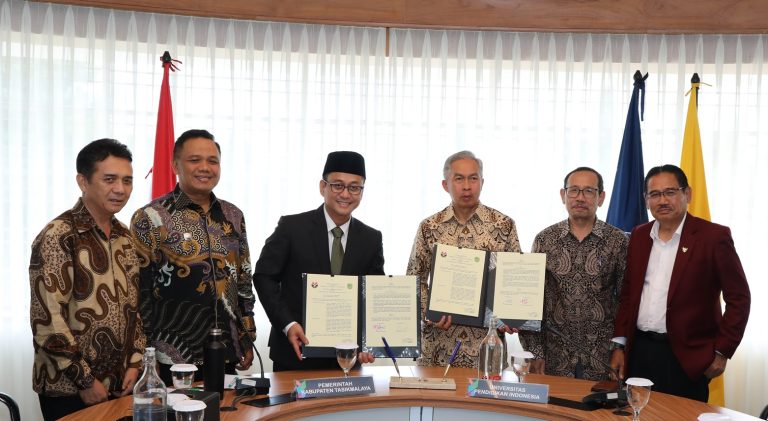
The Regent of Tasikmalaya Regency, together with members of the Regional Leadership Coordination Forum (Forkopimda) and local government officials, paid a working visit to Universitas Pendidikan Indonesia (UPI) to strengthen collaboration in educational development for the region. The meeting, held at the Partere Meeting Room on Jl. Dr. Setiabudhi No. 229, Bandung, on Friday (January 30, 2026), also discussed plans to expand the UPI campus in the Karangnunggal area.

The regent was accompanied by the vice regent, the Speaker of the Regional Legislative Council (DPRD), regional leaders, agency heads, department heads, section chiefs, and other related officials. The presence of a full delegation reflected the strong commitment of the Tasikmalaya Regency Government to supporting higher education development in the region.

UPI Rector, Prof. Didi Sukyadi, M.A., explained that the meeting explored various opportunities for cooperation between the Tasikmalaya Regency Government and UPI, particularly in improving human resource quality and expanding public access to quality higher education.

The UPI leadership also expressed appreciation for the regent’s commitment, noting that he is a UPI alumnus who is currently completing his doctoral studies at the university. UPI also congratulated the regent, Cecep Nurul Yakin, on successfully defending his doctoral dissertation an academic achievement that brings pride to his alma mater.

Beyond his academic success, UPI views the regent’s support for the planned expansion of the UPI campus in Karangnunggal as a concrete contribution to the community. The new campus is expected to become a higher-education hub for Tasikmalaya Regency, enabling local residents to pursue tertiary education without leaving the region.

“Insha Allah, UPI will soon be able to develop its campus in Karangnunggal. In this way, the people of Tasikmalaya Regency will have access to quality higher education at a more affordable cost, without having to leave their hometown,” said the rector.

The planned development of the UPI Tasikmalaya Campus is also expected to support educational equity, improve human resource quality, and contribute to the sustainable welfare of the people of Tasikmalaya Regency.

During the same event, the Regent of Tasikmalaya Dr. H. Cecep Nurul Yakin, S.Pd., M.A.P. affirmed his support for UPI’s plan to establish a campus initiative in Karangnunggal. He made the statement while discussing the potential use of a building complex that had originally been prepared for the Rintisan Sekolah Rakyat (People’s School Initiative).

The regent explained that the initial plan for the Rintisan Sekolah Rakyat in Karangnunggal was later relocated. As a result, the building that had already been prepared in the area is now ready to be used and could be repurposed for other educational activities.

“If UPI wants to start this year, the building in Karangnunggal is actually ready to be used. This can become an initial pilot so there is real activity on the ground and clear evidence that UPI has arrived in Karangnunggal,” the regent said.

Going forward, the regent added that the development of the campus area will be supported by improvements in road access and infrastructure. The local government, together with the National Land Agency of Indonesia (BPN), has begun coordinating plans to straighten and widen roads leading to and within the campus area.

These plans will later be compiled into a comprehensive master plan for the campus zone, including land-parcel arrangements and improved accessibility to optimally support campus activities.

The Tasikmalaya Regency Government hopes the UPI campus initiative can soon be realized and become positive news for higher education development in southern Tasikmalaya. The presence of UPI is expected to bring benefits not only to the education sector but also to regional economic growth and local development.

“Hopefully, this will become good news and the beginning of sustainable collaboration,” the regent concluded. (Rija/DN)

This initiative supports SDG 4: Quality Education by expanding access to higher education in rural areas and strengthening human-resource quality. It also contributes to SDG 8: Decent Work and Economic Growth and SDG 11: Sustainable Cities and Communities through infrastructure development, job creation, and the formation of a knowledge-based hub for local development in southern Tasikmalaya.

UPI Deploys ProDBK Team to Carry Out Trauma-Healing Program in North Aceh

09 Apr 2026 • Humas UPI

Bandung, UPI

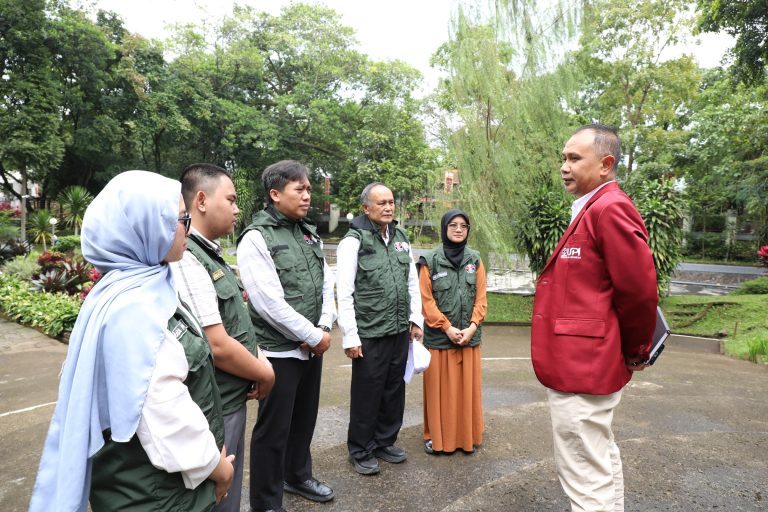
Universitas Pendidikan Indonesia (UPI) is reaffirming its commitment to humanitarian action by sending a second phase aid mission to communities affected by disaster in North Aceh Regency, Aceh. In this follow up stage, UPI is focusing on trauma healing support to assist the psychological recovery of affected communities, particularly students. The coordination and deployment ceremony took place at Taman Baretti, Jl. Dr. Setiabudhi No. 229, Bandung, West Java, on Thursday (January 29, 2026).

The Vice Rector for Research, Community Service, and Partnerships, Prof. Dr. Agus Setiabudi, M.Si., explained that UPI had previously dispatched a joint team in mid December consisting of medical personnel, trauma healing specialists, and staff from the Faculty of Physical Education and Health. The team provided medical services and psychological assistance to residents and students in disaster affected areas.

“In the initial phase, alongside medical services, we also distributed aid funded by the ministry and donations that we managed to collect. In this second phase, we see that the need for psychological recovery remains very high, while the available support is still limited,” he said.

The follow up program is being implemented in collaboration with Aceh Berdaya, an education volunteer community that is part of the Indonesia Mengajar movement. This partnership aims to strengthen trauma healing activities through direct engagement with students in several schools.

In addition, the program also involves local universities, including Universitas Malikussaleh and Universitas Jabal Ghafur, creating cross institutional collaboration to support post disaster recovery.

Prof. Agus expressed hope that the program would bring lasting positive impacts.
“We hope this accompaniment can help restore the psychological well-being of the community, especially students, so they can return to their studies and daily activities with greater ease,” he said.

At the same event, the Head of the ProDBK (Program Dosen Berkarya) Team, Prof. Dr. Nandang Rusmana, M.Pd, announced that the team would conduct a trauma healing program for communities affected by the disaster in North Aceh.

The ProDBK team deployed to the field consists of eight members: two lecturers and six trained students and alumni. Over the course of approximately eight days, they will provide psychosocial support in several targeted locations across North Aceh.

The UPI ProDBK Team will work closely with Indonesia Mengajar Aceh Berdaya, which will serve as the field partner and assist in mapping program locations and identifying community needs.

The trauma-healing program applies an Adventure Based Counseling (ABC) approach an experiential counseling method centered on adventure activities and structured games. The activities are designed in three stages: introduction, core activities, and closure, aiming to cultivate positive values and strengthen participants’ emotional resilience.

“Each activity is designed to help participants understand the disaster experience, accept reality with patience and trust, and rebuild their motivation to move forward,” explained Prof. Nandang. Through this process, participants are expected to develop resilience, the psychological strength to recover and continue life after traumatic experiences.

Furthermore, the program also seeks to encourage post traumatic growth, enabling individuals not only to recover from trauma but also to become stronger, more optimistic, and better prepared to live healthier lives without being burdened by past traumatic memories.

Through this initiative, UPI reaffirms its role as an educational institution that extends beyond academic development to actively support communities in rising and moving forward toward a better future after disaster. (Rija/DN)

In addition, this humanitarian initiative contributes to SDG 3: Good Health and Well‑Being by strengthening mental-health recovery, SDG 4: Quality Education by restoring safe learning conditions for students, and SDG 11: Sustainable Cities and Communities by building community resilience and promoting cross-sector collaboration in disaster-affected areas.

39 IKU and 80 IKK Become UPI’s 2026 Performance Benchmarks down to Unit Level

09 Apr 2026 • Humas UPI

Bandung, UPI

Universitas Pendidikan Indonesia (UPI) has strengthened its performance measurement system for 2026 by setting 39 Main Performance Indicators (IKU) and 80 Activity Level Performance Indicators (IKK) as benchmarks for all work units across the university. This framework was reaffirmed during the UPI Leadership Meeting held at the SPs New Building Auditorium on January 29.

The meeting discussed several strategic agendas, including the evaluation of UPI’s 2025 performance, the introduction of the UPI Strategic Plan (Renstra) for 2026–2030, the 2026 budget-policy briefing, and the launch of the Maslahat Tambahan Berdampak (MTB) scheme. A central focus of the meeting was ensuring that the university’s goals can be clearly measured and monitored from the institutional level down to individual units.

During the session, Dr. Yatun Romdonah Awaliah, M.Pd., Director of the Planning and Organization Directorate, explained that the indicators used by each unit are derived directly from the Performance Agreement (Perjanjian Kinerja) signed between the UPI Rector and the Ministry of Education. This alignment ensures that institutional goals remain consistent and connected across all levels of the university.

The performance-indicator framework consists of 39 IKUs and 80 IKKs, which will serve as the main references for evaluating UPI’s achievements in 2026.

At the institutional level, IKU UPI indicators are designed to synchronize the targets outlined in the university’s strategic plan with those agreed upon with the ministry. Meanwhile, IKK UPI indicators are further developed from the IKUs or adjusted according to the specific duties and functions of each unit. This system helps clarify responsibilities so that every unit understands how its work contributes to achieving the university’s broader goals.

Following the signing of the performance agreements, unit leaders were instructed to immediately prepare quarterly action plans and performance targets. These plans will support regular monitoring and evaluation throughout the year.

UPI is also strengthening its monitoring system by integrating e-planning, e-reporting, and e-performance platforms, allowing programs and achievements to be tracked and evaluated more systematically.

UPI Rector, Prof. Dr. H. Didi Sukyadi, M.A., emphasized that strengthening performance governance also requires a clear cascading system. Unit level Performance Agreements must be broken down further into sub-unit agreements. UPI has set February 26 as the deadline for this cascading process from the university level to units, and from units to their respective sub-units.

These sub unit agreements will later serve as the foundation for drafting individual performance targets (SKP) for lecturers and administrative staff. They will also become the basis for quarterly monitoring and evaluation throughout the year.

The Rector also highlighted that the 2026 performance assessment will place greater emphasis on actual outcomes rather than merely focusing on budget absorption. Achieving IKU and IKK targets will become the main measure of success.

In addition, unit performance results will be directly linked to the MTB scheme, particularly within the “unit performance” component. This approach reinforces the idea that strong performance management is a shared responsibility among all leaders and units within the university.

UPI emphasized that institutional targets should not remain as formal documents alone. Instead, they must be translated into measurable action plans, regularly monitored, and integrated into performance-evaluation systems as well as performance-based welfare schemes.

Through this approach, every work unit is expected to move in the same direction toward achieving UPI’s 2026 targets while strengthening the university’s overall competitiveness. (CS)

This institutional-performance framework contributes to SDG 4: Quality Education by promoting accountability and evidence-based management in higher education, and supports SDG 16: Peace, Justice and Strong Institutions by strengthening transparent, systematic, and results-oriented governance at the university level.

UPI Holds Leadership Meeting to Solidify 2026 Direction and Performance Agreement Signing

09 Apr 2026 • Humas UPI

Bandung, UPI

Universitas Pendidikan Indonesia (UPI) held a Leadership Meeting at the New Graduate School Building Auditorium on January 29, bringing together university leaders to consolidate strategies and strengthen institutional direction for the coming year. The meeting served as a platform to review the university’s 2025 achievements while preparing the operational roadmap for 2026.

The forum focused on strengthening institutional commitment through several key agendas, including the evaluation of UPI’s 2025 performance, the introduction of the university’s Strategic Plan (Renstra) for 2026 – 2030, the 2026 budget policy briefing, the rollout of the Maslahat Tambahan Berdampak (MTB) incentive scheme, and the signing of 2026 Performance Agreements (Perjanjian Kinerja) between the Rector and leaders of each work unit.

During the 2025 performance review session, Prof. Dr. Rudi Susilana, M.Si., Vice Rector for Planning and Finance, reported that UPI achieved 90.9% of its 2025 performance agreement targets. Out of 11 indicators, 10 were either achieved or exceeded. One indicator still requires improvement: the percentage of lecturers carrying out Tridharma activities outside their own study program, other universities, or industry, as well as mentoring students involved in off program activities. This indicator reached 77.1% of the 80% target.

In terms of governance performance, UPI also recorded a strong achievement in the 2025 Government Institution Performance Assessment (AKIP) with a score of 93.95, earning the AA rating. Fourteen units within the university also received the same AA status. The meeting highlighted the importance of continuing to accelerate unit level performance improvement and maintaining consistent reporting to ensure institutional targets are achieved with greater impact.

Looking ahead, Dr. Yatun Romdonah Awaliah, M.Pd., Director of the Planning and Organization Directorate, explained that the approved UPI Strategic Plan (Renstra) 2026 – 2030 positions the university as an Asia level reference institution in education and several leading fields. This vision is supported by five strategic priorities, including strengthening the quality of education and graduates, enhancing research and innovation, and improving financial independence through optimal asset management.

Meanwhile, Prof. Dr. Tri Indri Hardini, M.Pd., Vice Rector for Human Resources and Information Systems, introduced the MTB policy, which aims to strengthen performance based remuneration within the university. Beginning in 2026, MTB payments will include a base salary component and a unit performance component, while the individual performance component is scheduled to be implemented in 2027 based on performance achievements in 2026.

UPI Rector Prof. Dr. H. Didi Sukyadi, M.A., emphasized the need for a shift in work culture to enable UPI to achieve significant progress in performance and competitiveness. In outlining the university’s strategic direction, the Rector highlighted the importance of strengthening research capacity by increasing research and community-service funding. As part of this effort, UPI aims to move toward a total research budget including unit support of approximately Rp70 billion to support its competitiveness strategy.

The leadership meeting concluded with the signing of the 2026 Performance Agreements, reaffirming the commitment of each work unit to translate university targets into operational programs. The process will be supported by integrated monitoring systems across planning, reporting, and performance platforms, ensuring that the university’s 2026 achievements are not only measurable but also meaningful in their impact. (CS)

This leadership and governance initiative contributes to SDG 4: Quality Education by strengthening institutional management that supports educational quality and graduate development. It also advances SDG 16: Peace, Justice and Strong Institutions by promoting transparent, accountable, and performance based governance within one of Indonesia’s leading universities.

Search