English
Indonesia

UPI Mathematics and Mathematics Education Students Hold PROYEKSI 2025 Gathering

02 Apr 2026 • Humas UPI

Bandung, UPI

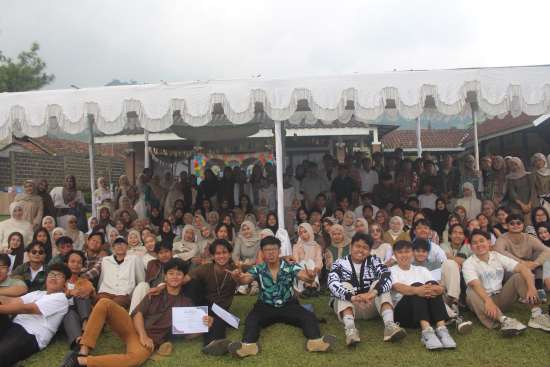
Students from the Mathematics and Mathematics Education Study Programs at Universitas Pendidikan Indonesia (UPI) held the “Tak Hingga” Gathering as the culminating event of the PROYEKSI 2025 program on Saturday (Dec 7). The event took place at the UPI Labschool Junior High School Field and was attended by new students as part of their cadre development process.

The PROYEKSI 2025 Gathering was designed as a platform to strengthen togetherness and interaction among students of the Mathematics and Mathematics Education programs. The event featured a variety of activities, including team games, a cabaret performance, and a singing together session.

The cabaret performance, presented by the 2025 batch, carried the theme of “Social Media,” highlighting the importance of caution and responsible behavior in the use of digital platforms. The singing together session served as a relaxing closing activity after participants completed the entire cadre development series.

PROYEKSI 2025 Chief Organizer Rizki Maulana stated that the event not only marked the conclusion of the cadre development program but also strengthened relationships among different student batches.

“PROYEKSI 2025 has been a memorable experience, from social projects that positively impacted the surrounding environment to the gathering that strengthened bonds across batches,” he said.

He also expressed appreciation for the support of all parties involved in the event’s organization, noting that the trust given to new students became a valuable learning experience in organizational development. Through the “Tak Hingga” Gathering, PROYEKSI 2025 is expected to reinforce solidarity and foster a strong sense of community among students in the Mathematics and Mathematics Education programs at UPI.


Moreover, this initiative contributes to the Sustainable Development Goals, particularly SDG 4 (Quality Education) by fostering student development and organizational learning, SDG 3 (Good Health and Well-being) through activities that promote social connection and student well-being, and SDG 17 (Partnerships for the Goals) by strengthening collaboration and solidarity within the academic community. (Ajeng)

Lembang Fault Earthquake Risk: UPI Edu Action Strengthens Disaster Preparedness of Cigugur Girang Residents

02 Apr 2026 • Humas UPI

Bandung, UPI

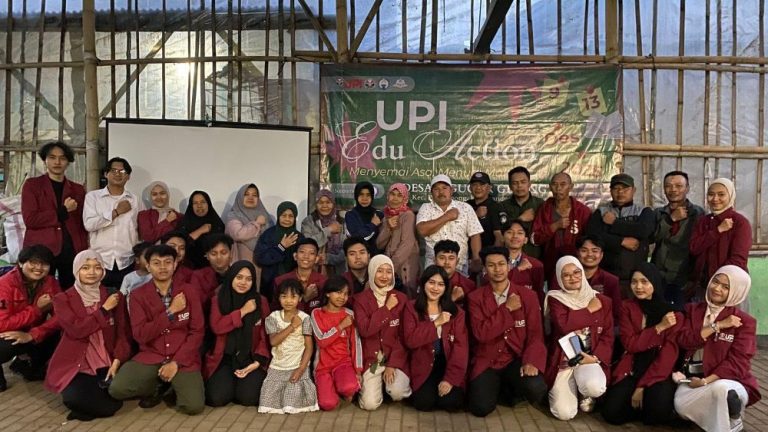
The UPI Edu Action team conducted an earthquake disaster mitigation outreach program for residents of Cigugur Girang Village, Parongpong District, West Bandung Regency—an area located near the Lembang Fault line. The initiative aimed to enhance community preparedness in facing potential earthquakes.

The socialization program, which involved local residents and village officials, covered hazard awareness, pre-disaster preparedness, safety actions during an earthquake, and post-disaster recovery procedures. The materials were delivered in an interactive manner and supported by hands-on practice of emergency techniques applicable in real-life situations.

Community enthusiasm was evident throughout the activity. Discussions between facilitators and residents continued even after the session ended, despite interruptions from rain. One resident of RW 01 Cigugur Girang shared that the outreach provided new understanding about disaster preparedness.

“Now we better understand what to do when an earthquake happens, so we won’t panic,” the resident said.

Another resident emphasized the importance of such activities, given that Cigugur Girang lies in a seismically vulnerable area.

“Programs like this need to be held regularly so residents become more prepared and alert,” the resident added.

Beyond earthquake education, the UPI Edu Action program in Cigugur Girang also included area mapping based on Geospatial Information Agency (BIG) standards, reforestation through tree planting in landslide-prone areas, and recycling education for children. The entire program was designed to strengthen community capacity and resilience against potential natural disasters.

Importantly, this initiative contributes to the Sustainable Development Goals, particularly SDG 4 (Quality Education) by providing community-based disaster education; SDG 11 (Sustainable Cities and Communities) by strengthening disaster preparedness and resilience in vulnerable areas; SDG 13 (Climate Action) through reforestation and environmental awareness; and SDG 17 (Partnerships for the Goals) by fostering collaboration between universities, local authorities, and communities. (Ajeng)

BE TALK 2025 Brings Creative Industry Practitioners to Strengthen UPI Students’ Digital Marketing Strategies

02 Apr 2026 • Humas UPI

Bandung, UPI

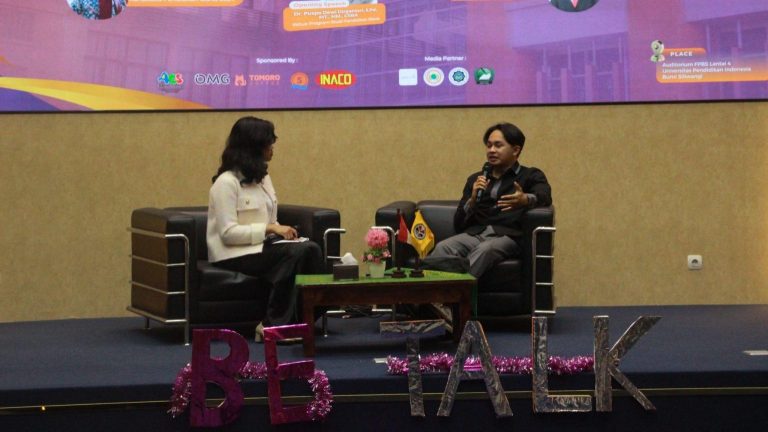
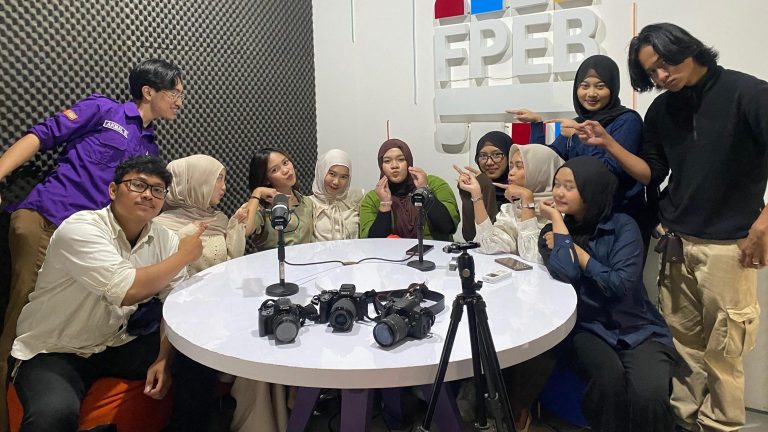
The Business Education Student Association (BESA) of Universitas Pendidikan Indonesia (UPI) invited creative industry practitioners to equip students with insights and practical skills in marketing strategy, branding, and content development in the digital era. The BE TALK 2025 discussion session was held at the Auditorium of the Faculty of Language and Literature Education, UPI, on Tuesday (Sept 30).

The event featured three speakers from the creative and entrepreneurial sectors: Fahrul Fauzi, a content creator from Innovation Heroes; Apina Nahdi, owner of Kylafood and Aksen Coffee; and Azhyra Pinasthika, founder of Arealama and a Master of Management student at Universitas Padjadjaran.

In the first session, Fahrul Fauzi highlighted the importance of creating relevant and valuable content for audiences. He emphasized that digital content is not merely a medium for information, but also a tool to build emotional connections through storytelling.

“Good content is not only informative, but also capable of building an emotional connection with the audience,” he explained.

The second session featured Apina Nahdi, who shared her journey in growing local brands into widely recognized businesses. Through her talk, From Local to Viral, she stressed the importance of consistency and creativity in building a strong brand image. Participants were encouraged to develop promotional ideas that are practical and aligned with their brand identity.

In the final session, Azhyra Pinasthika discussed brand identity and brand storytelling as the foundation for building a resilient brand. She explained that brands must possess authentic values, character, and narratives to survive in the competitive creative industry landscape.

Through BE TALK 2025, students are expected to gain practical knowledge of marketing and digital branding strategies that can be applied in both academic settings and the professional world.

Furthermore, this initiative contributes to the achievement of the Sustainable Development Goals (SDGs), particularly SDG 4 (Quality Education) by providing industry-based learning experiences and practical skill development; SDG 8 (Decent Work and Economic Growth) by equipping students with entrepreneurial and digital marketing competencies relevant to the creative economy; and SDG 9 (Industry, Innovation, and Infrastructure) by fostering innovation and strengthening collaboration between academia and the creative industry. (Ajeng)

HEATSING Innovation by UPI Students Promotes Eco-Friendly Cassava Drying

02 Apr 2026 • Humas UPI

Bandung, UPI

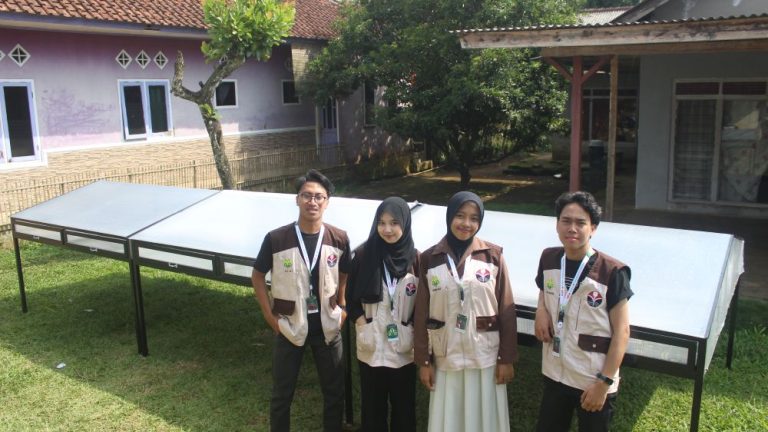
Students from Universitas Pendidikan Indonesia (UPI) have developed a solar-powered cassava dryer named HEATSING (Heating Technology for Singkong) through the 2025 BEM UPI Student Impact Program. The innovation has been implemented in Sukamelang Village, Subang Regency, as part of a community empowerment initiative built around the village’s local cassava potential.

The development of HEATSING marked the culmination of a series of student community service activities, which concluded with a results seminar and the handover of the invention to the village community as a shared asset. The program carried the theme “With UPI, Cassava is Gold,” focusing on strengthening the rural economy through appropriate technology.

Dr. Selly Feranie, M.Si., supervising advisor of the PM-BEM UPI program, explained that HEATSING represents a tangible contribution by students in addressing post-harvest cassava challenges.

“Through this program, students deliver practical innovations with direct impact on society. We hope Sukamelang Village can become more self-reliant with the support of appropriate technology,” she said.

HEATSING is designed as a solar-powered cassava dryer that can continue operating even during cloudy or rainy weather. The device is equipped with an automatic heating system and a battery energy storage unit, allowing the drying process to run more consistently, hygienically, and without relying solely on direct sunlight.

Drying takes place in an enclosed room supported by an exhaust fan to maintain air circulation and prevent condensation. The development process involved Mechanical Engineering Education students from the Faculty of Mathematics and Science Education (Fakultas Pendidikan Matematika dan Ilmu Pengetahuan Alam/FPMIPA) UPI, from design through assembly.

Usep, head of the Sukamelang Village farmers’ group, highlighted the tool’s impact on daily agricultural activities:

“In the past, when it rained we had to rush to move the cassava. Now the drying process can continue, and the results are much cleaner,” he explained.

Beyond saving time, the improved drying quality has increased the product’s market value, offering real economic benefits for farmers.

According to Aep from UPI’s Directorate of Research and Community Service (Direktorat Penelitian dan Pengabdian kepada Masyarakat/DPPM), the program closely aligns with the Sustainable Development Goals (SDGs), particularly SDG 1 (No Poverty), SDG 2 (Zero Hunger), and SDG 8 (Decent Work and Economic Growth). In addition, the initiative supports SDG 9 (Industry, Innovation and Infrastructure) and SDG 12 (Responsible Consumption and Production).

Through the HEATSING innovation, UPI students demonstrate an active role in delivering technological solutions that strengthen rural economic independence while promoting sustainable development. (Ajeng)

Business Camp 2025 BESA FPEB UPI Encourages the Strengthening of Students’ Entrepreneurial Spirit

02 Apr 2026 • Humas UPI

Bandung, UPI

The Business Education Student Association (BESA) of the Faculty of Economics and Business Education (Fakultas Pendidikan Ekonomi dan Bisnis/FPEB), Universitas Pendidikan Indonesia (UPI), organized Business Camp 2025 on November 29–30, 2025, at Villa RD, Bandung. This activity was attended by students of the Business Education Study Program as an effort to strengthen entrepreneurial competencies.

Carrying the theme “Building Creative Young Entrepreneurs,” Business Camp 2025 was designed to strengthen students’ understanding of entrepreneurial practices, foster creativity, and encourage the emergence of innovative and sustainable business ideas.

The Chairperson of Business Camp 2025 stated that this activity provided practice-based entrepreneurial training involving Business Education alumni as speakers. This program is expected to bridge the gap between the theories learned in lectures and the realities of the business world.

The first day of activities began with an opening session and remarks from the BESA FPEB UPI board, followed by an entrepreneurship seminar featuring Amanda Azalia, S.Pd., as the speaker. In this session, the speaker shared experiences and strategies for facing business dynamics, while emphasizing the importance of innovation and adaptability to technological developments.

The activity continued with cohort performances and student business project presentations. In this session, participants presented their business ideas in front of mentors and other participants as a form of actualizing creativity and business thinking skills.

On the second day, Business Camp 2025 featured an interactive talk show titled “Build and Bloom – The Business Creation Session,” with Novti Nurlaila Ramadhanti, S.Pd., as the speaker. This session discussed business development strategies, market innovation, and business sustainability through interactive discussions with participants.

The Business Camp 2025 activity was concluded with the awarding of certificates to participants and the organizing committee, followed by a joint documentation session for the entire series of activities.

Importantly, this initiative relates to several Sustainable Development Goals (SDGs). It supports SDG 4: Quality Education through strengthening students’ competencies and practical learning experiences, SDG 8: Decent Work and Economic Growth by fostering entrepreneurial skills, and SDG 9: Industry, Innovation and Infrastructure through the encouragement of innovative and sustainable business ideas. (Ajeng)

Search